
Atlas · Practices of attention
Sacred Traditions
Accounts of awakening, prayer, self-inquiry, and the names traditions give to the one who watches.
Sacred Traditions
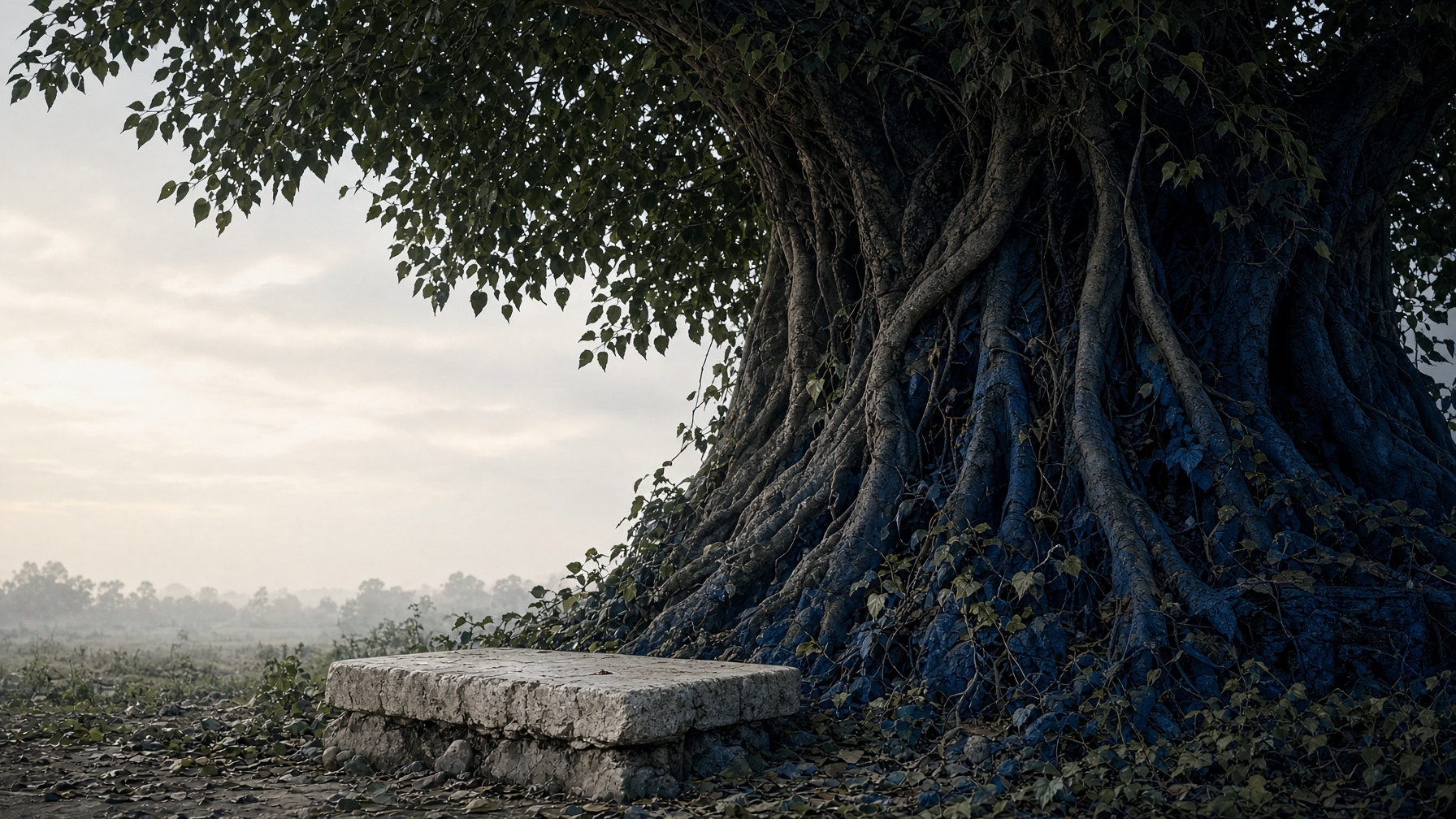
Beneath the Fig
A man sits down and vows not to rise until he has seen through the trouble of existing.
Uruvelā, later Bodh Gayā · c. 5th century BCE
Sacred Traditions
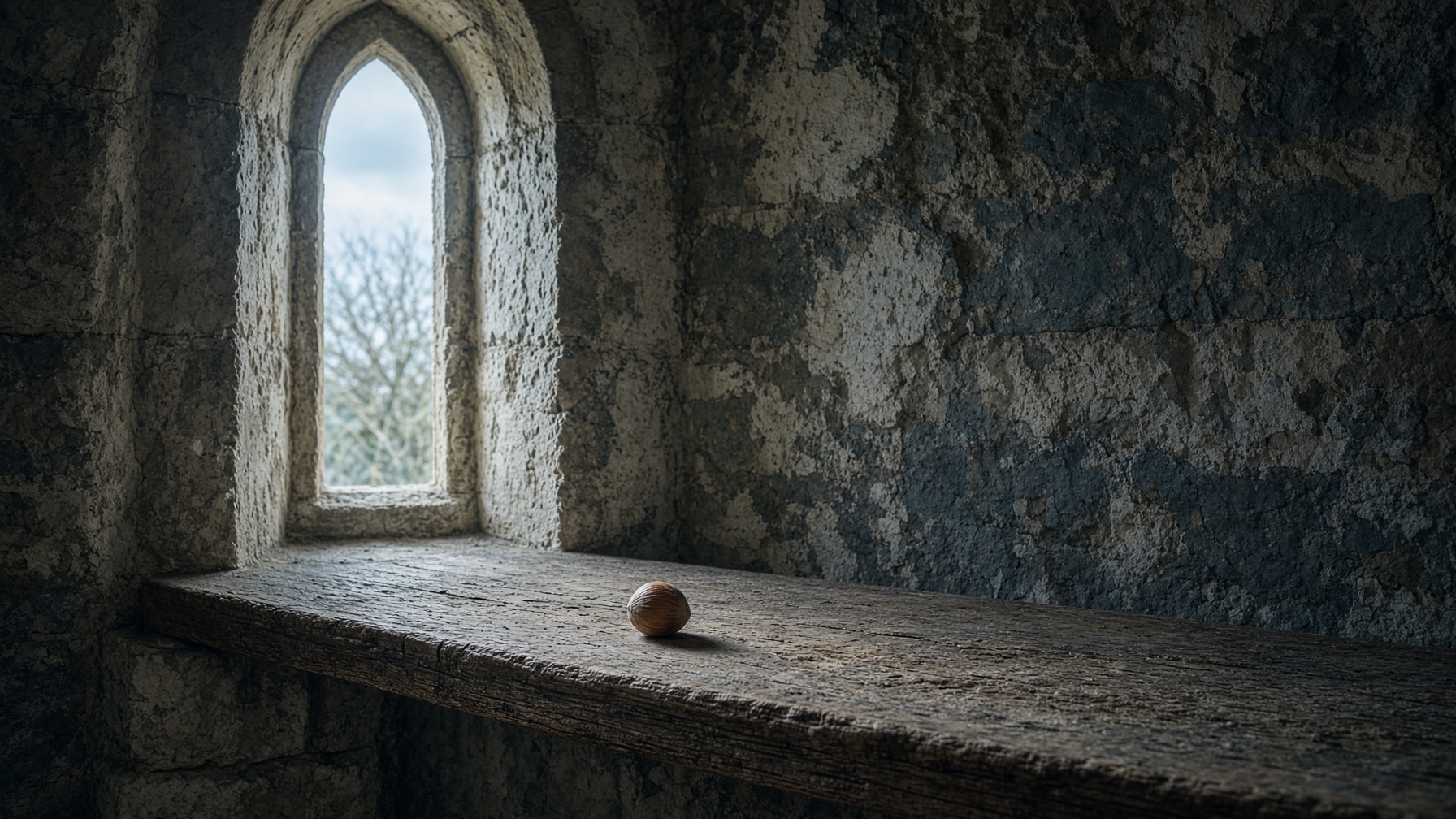
A Little Thing, the Size of a Hazelnut
A woman in a sickbed is shown the world in her palm, and it does not fall.
Norwich · May 1373
Sacred Traditions
A sixteen-year-old lies down as if dead, and a question becomes a life.
Who Is Asking?
Madurai, then Arunachala · 1896
Philosophy
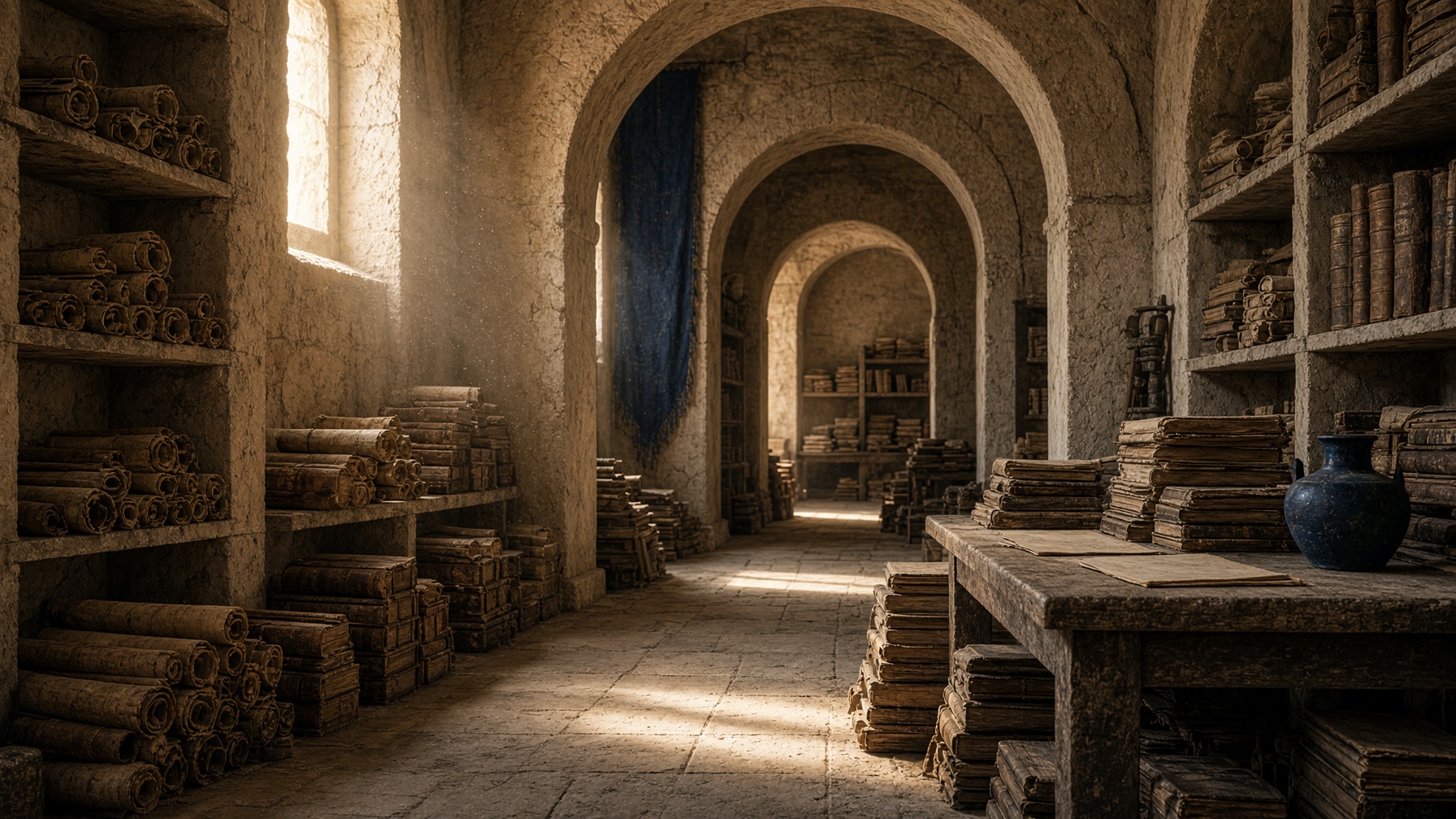
The Palaces of Memory
A bishop walks the inner rooms of his own mind and cannot find their floor.
Hippo Regius · c. 397–400
Sacred Traditions
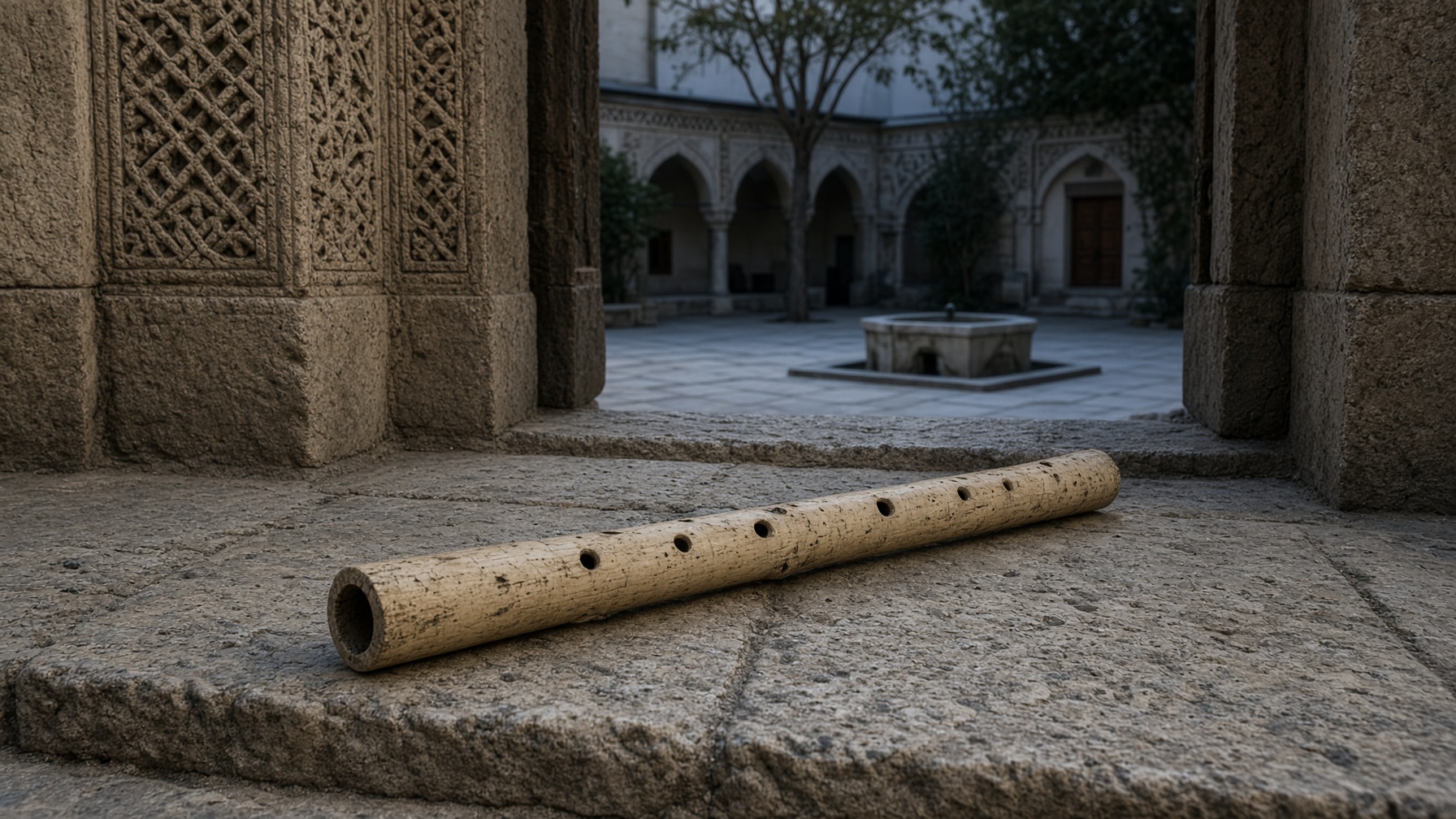
The Reed’s Complaint
A flute begins a long poem by remembering the reed-bed it was cut from.
Konya · c. 1258–1273
Sacred Traditions
Interior Castle
A woman describes the soul as a diamond castle of many dwellings, and a journey inward that is not escape.
Ávila / Toledo · 1577
Sacred Traditions
The most celebrated teacher in Baghdad can no longer trust that he knows, and walks away from the lectern.
When Knowledge Would Not Sit Still
Baghdad, then Damascus and Tus · 1095
Philosophy
The Floating Man
A physician-philosopher asks you to imagine a person created at once in mid-air, with no senses, and still knowing that they are.
On the page, from Bukhara to Hamadan to Isfahan · c. 1027

Sacred Traditions
Mountains Walking
A thirteenth-century Soto Zen teacher says that mountains walk, and that to know this is not a metaphor you can keep at arm’s length.
Eihei-ji, Echizen · 1240
Philosophy
Twenty Verses, Not a Simulation
A monk answers the charge that if there are only presentations, nothing could bump into anything else.
Gandhāra, as later tradition seats him · 4th–5th century CE
Art & Literature
A playwright tells actors that the mask must be worn until a different kind of looking becomes possible.
The Flower Is Not the Face
Yamato sarugaku, in the orbit of the Ashikaga court · c. 1402
Sacred Traditions
A Light That Did Not Stay Outside
A Benedictine woman writes visions she calls living light. The book is theology, not a laboratory of inner glow.
Disibodenberg, then Rupertsberg · 1141–1151
Philosophy
The Street Is Full of Sages
A Ming official, after a night of failure at bamboo, turns the search for principle inward. Knowing, he later says, is already a kind of doing.
Jiangxi, and later on the page from remaining works · 1508 / later teachings
Philosophy
An Inquiry in Ge'ez
A treatise from the Ethiopian highlands puts reason to inherited faith. Whether its author is the man it names is itself an open scholarly fight.
A cave of exile, in the text’s own telling · 1667
Sacred Traditions
A monk at court uses a golden lion to show an empress that each part of the world is the whole, without the parts vanishing.
The Lion Was Gold
Chang'an, in the palace telling · c. 699–704
Sacred Traditions
The Inner Head
A Yoruba scholar of Ifá explains ori: the physical head, and the inner head one is said to have chosen, which is not a European soul in disguise.
Ilé-Ifẹ̀, and on the page · 1976
Philosophy
I and You
A book says the world can be met as an It, or addressed as a You. Consciousness, here, is a kind of relation, not a sealed lamp.
Germany and later Jerusalem, on the page · 1923
Philosophy
Things Are Lights
A philosopher in Aleppo writes a metaphysics in which things are degrees of light. He will be killed. The book remains.
Aleppo · 1186 / 1191
Sacred Traditions
A later Korean Buddhist biography says a monk drinks rain in the night and finds, at dawn, that the bowl was a skull. The mind had sweetened the water. Treat the tale as a tale.
Water, Then a Skull
A roadside shelter, in the biographies · Later lives of a seventh-century monk

Philosophy
For Those Who Are Perplexed
A physician in Fustat writes a guide for readers caught between philosophy and the Law. The mind has to know how not to smash one with the other.
Fustat (Cairo) · c. 1190
Philosophy
The Child and the Gazelle
A philosophical novel from al-Andalus imagines a child raised by a gazelle who comes, without a teacher, to intellect and then to a God.
An island, on the page · c. 1160s
Philosophy
The Flight of the Alone
A philosopher in Rome writes of a turning inward that is also a going up, until there is no longer a pair of seer and seen.
Rome, of the seminars Porphyry later edited · c. 250–270
Sacred Traditions
An anonymous English book tells a student to put a cloud of forgetting between the self and every created thing, and to beat on a cloud of unknowing with a little naked intent.
A Cloud of Forgetting
The Midlands, on the page · c. 1370s
Philosophy
Waiting, Not Seeking
A woman in Marseille writes that schoolwork is training for prayer: attention is a waiting, not a clenched effort.
Marseille · 1942
Philosophy
Empty of Own-Being
A verse treatise refuses to let things, including the mind that knows them, stand on their own. The refusal is an argument, not a mood.
South India, on the page of the *Mūlamadhyamakakārikā* · c. 2nd–3rd century CE
Sacred Traditions
Light That Is Not a Creature
On Athos, a defense is written: the light seen in prayer is not a metaphor and not a created lamp. It is God, they say, as energy, not as essence.
Mount Athos, and Constantinople of the controversy · 1330s–1351
Sacred Traditions
A Murcia-born Sufi describes a realm that is neither spirit nor body: the barzakh, where imagination is a world, not a mistake.
The Isthmus
Damascus, after Andalusia and Mecca · 1200–1240
Sacred Traditions
No Mirror, No Dust
A verse contest in a monastery: one poem wipes a mirror. Another says there was never a mirror. The second is the one the tradition keeps.
Huangmei, then Shaozhou, on the page of the Platform Sūtra · c. 7th–8th century, as later told
Sacred Traditions
Thirty Birds
A Persian poem sends the birds across seven valleys to find their king. The king they find is the thirty who arrived: sī murgh, Simurgh.
Nishapur, on the page of *Manṭiq al-ṭayr* · c. 1177
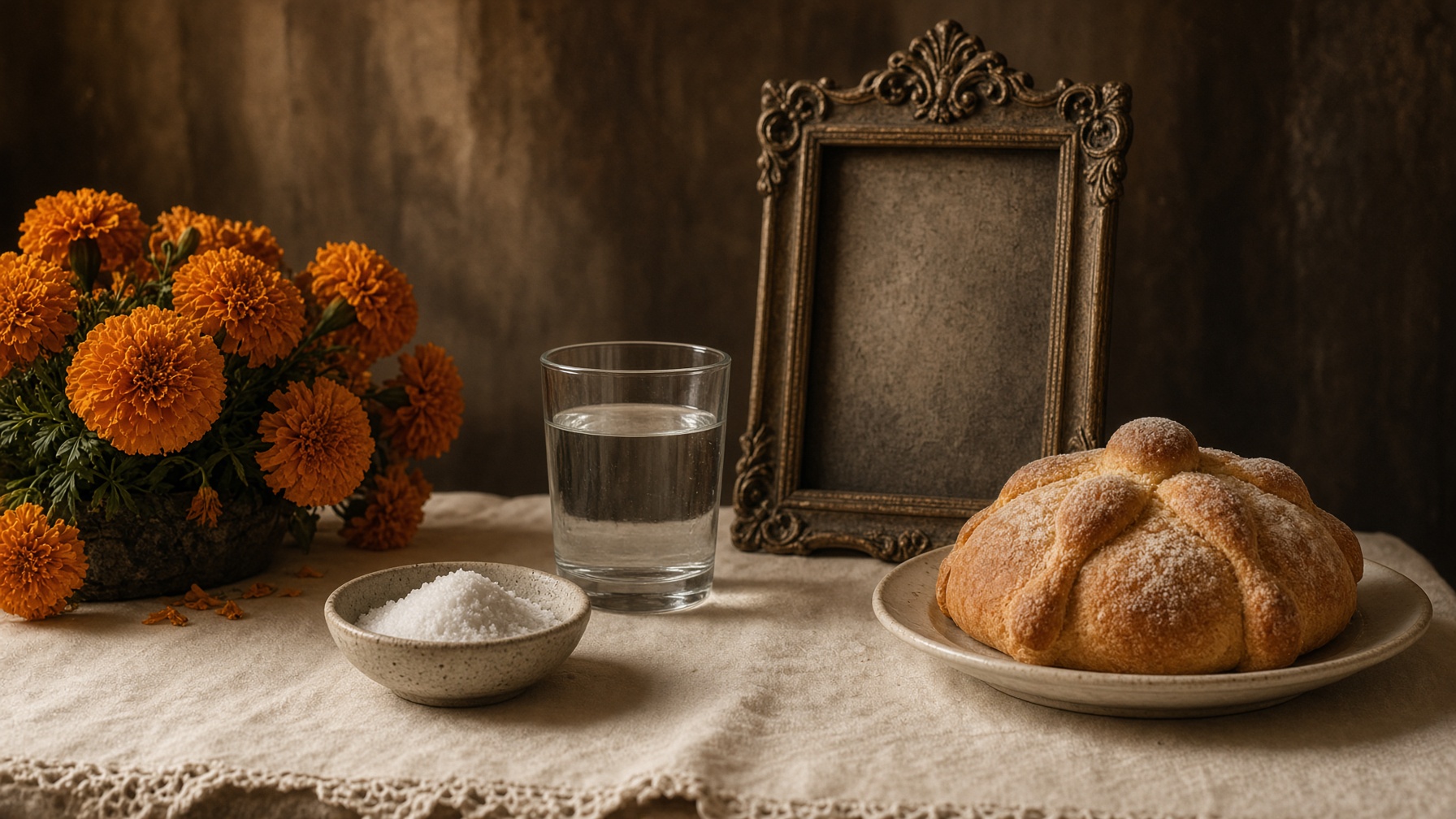
Ordinary Life
A Place Set for the Living Who Were
Marigold, water, salt, bread, a photograph. A night in Mexico when the dead are fed. Memory here is a table, not a test.
Mexico, in homes and cemeteries · 1–2 November, as practiced