
Portrait · Attention · 1942

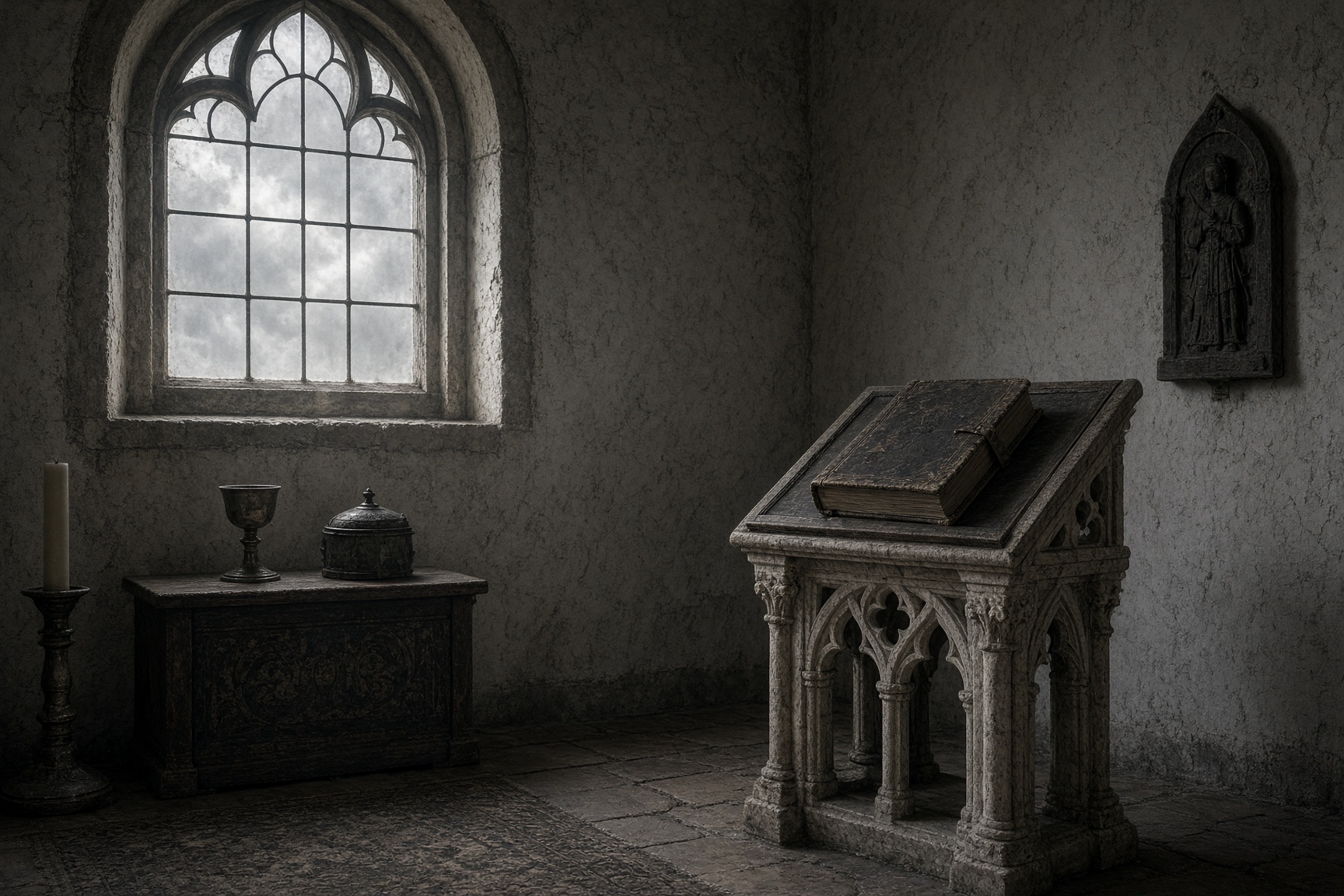
Plate · Generated interpretation
Waiting, Not Seeking
A woman in Marseille writes that schoolwork is training for prayer: attention is a waiting, not a clenched effort.
- Marseille
- Occupied France
- 43.30°N 5.37°E
The page is empty of God. What, if anything, are you already waiting for?
Listen · Eve
0:00 / —:—
Spring 1942, Marseille. Simone Weil, about to leave France, writes the essay later printed as “Reflections on the Right Use of School Studies with a View to the Love of God,” collected in Attente de Dieu (1950), English Waiting for God. Attention, she says, is not a straining of the muscles. It is emptying thought so that the object, or God, may enter.
Waiting for God. Trans. Emma Craufurd. The school-studies essay treats geometry as a school for waiting. “Attention is the rarest and purest form of generosity” is often quoted; the essay’s own work is waiting, not the slogan.
She is not describing mindfulness as a wellness product. She is writing as a Christian Platonist in wartime, to a Dominican, about prayer. To translate her attendre into a productivity tip is a later theft.
James’s stream is a psychology of what arrives. Weil’s attention is an ethics of making room. They share a word in English and not a project.
Whether waiting is a method, a grace, or a refusal of will is not settled by the essay.
Distant echoes

Echo
Gilded Age America · Cambridge, Massachusetts
The stream
James watches what comes. Weil waits for what she will not seize.
Echo
Fourteenth-century England · The Midlands, on the page
A cloud of unknowing
Another English Christian grammar of emptying. Not the same century, not the same God-talk.
One question remains
Attention · What enters awareness?
If attention is a waiting, what, if anything, is the waiter once the waiting has begun?