
Science · Mind & body · 1930s–1958
A Map Drawn on a Waking Man
In Montreal an awake patient names what a current in the cortex is doing to a hand, a sound, a memory.
- Montreal Neurological Institute
- Mid-twentieth-century neurosurgery
- 45.51°N 73.58°W
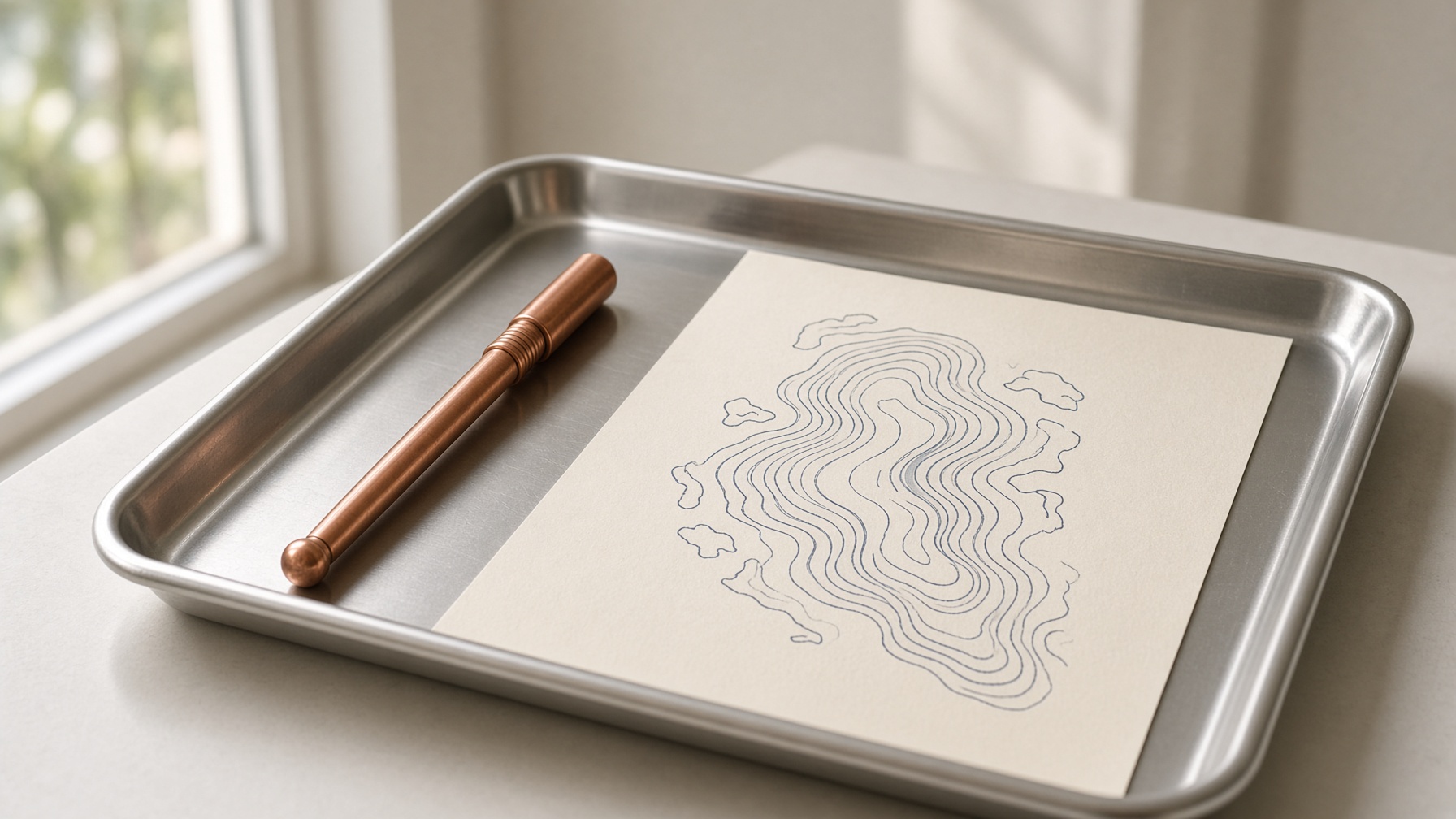
Plate · Generated interpretation
A map of a body that is not this body. Where do you place the one who would say that is my hand?
Listen · Eve
0:00 / —:—
Wilder Penfield, at the Montreal Neurological Institute, stimulates the exposed cortex of patients under local anesthesia while they speak. The motor and sensory homunculus is a drawing of those reports. The Excitable Cortex in Conscious Man (1958) gathers the Sherrington Lectures.
Penfield and Rasmussen, The Cerebral Cortex of Man (1950); Penfield, The Excitable Cortex in Conscious Man (Liverpool, 1958). The patient remains a speaker. The map is a clinic, not a photograph of a soul.
A current in tissue yields a reported hand, a smell, a fragment of a song. That is evidence of localization for those effects. It is not a proof that the person is the tissue, or that the person is elsewhere. Penfield himself kept a dualist sympathy. The house need not follow him there.
The method needs a witness who can say “that is mine.” The map is made of speech as much as of electricity.
What the stimulation produces, and who owns the report, are not one fact.
Distant echoes
Echo
Late twentieth century · California laboratories
Two minds, one cut
Another surgery, another report. Split-brain and cortical maps are not one lesson.
One question remains
Mind & body · How does experience live in matter?
If a waking voice is required to make the map, is the person in the cortex, in the speaking, or in the agreement between them?