
Science · Self · 1960s–1970s
Two Reports, One Skull
A cut intended to stop seizures reveals that a person can contain more than one witness.
- California laboratories
- Late twentieth century
- 34.14°N 118.13°W
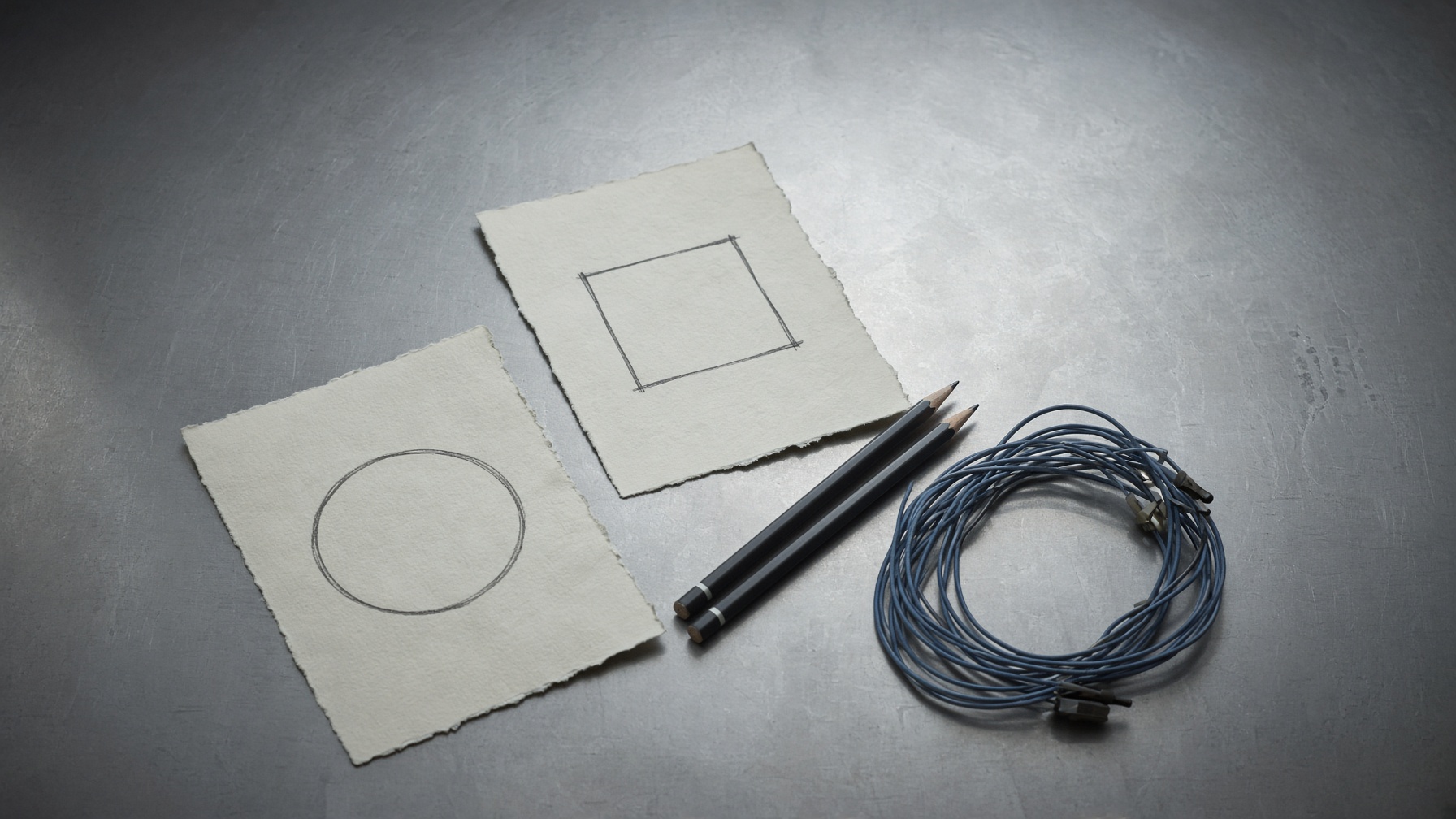
Plate · Generated interpretation
One plate, two sides. Which side do you assign the seeing to?
Listen · Eve
0:00 / —:—
A person sits at a table. A screen flashes a picture to the left of a fixation point, too briefly for the eyes to move. The picture, processed by the right hemisphere, cannot be named: speech lives mostly on the left. The left hand, under right-hemisphere control, can point to a matching object. Asked why the hand pointed, the speaking self confabulates a reason that sounds whole. The room hears one person. The apparatus has just interviewed two.
The modern split-brain studies follow commissurotomy for epilepsy, pioneered as a research field by Roger Sperry and Michael Gazzaniga, with patients including the famous W.J. and later cases. The work won Sperry a Nobel Prize in 1981 (shared). The findings have been refined, debated, and sometimes overstated in popular retellings.
What the experiments show, at minimum, is that the usual unity of report can come apart with the corpus callosum. One hemisphere may know what the other cannot say. The speaking side will often invent a story that preserves the feeling of being one agent. Unity, in these rooms, looks like an achievement (a narrative the brain tells itself) rather than a metaphysical given.
Controlled lateralized presentation, dual responding (speech versus left-hand pointing), and the pattern of transfer failures after callosotomy are the evidential core. Interpretation begins when we say “two persons,” “one person with two streams,” or “the self is a story.” Those are not forced by the data.
Gazzaniga came to speak of a left-hemisphere “interpreter.” Others have argued that ordinary people already contain multiple agencies, and that the clinic only makes the seams visible. The leap from split brain to a general metaphysics of self is a leap.
Why it matters
The story puts pressure on the feeling that consciousness is obviously single. It does not prove there is no self. It shows that the report “I saw it” can be incomplete even when sincere.
A word
commissure
From Latin commissura, a joining. The corpus callosum is a joining. The experiment is what happens when the join is gone.
Distant echoes

Counterpoint
Colonial South India · Madurai, then Arunachala
Who is asking?
Ramana’s inquiry assumes a single witness behind thoughts. Here the witness can bifurcate with a cut. The spiritual instruction and the clinic do not share a method. They share a subject-matter only at a distance.

Echo
Warring States China · The state of Song, traditionally
Zhuangzi’s two complete worlds
Two states, each with its own I, and a later narrator who wants them to be one life. The butterfly is not a hemisphere. The rhyme is in the belatedness of unity.

Another language
Postwar Britain · Manchester, on the page of Mind
The imitation game
Turing tests a machine by conversation. Split-brain work tests a person by which channel is allowed to answer. In both, language is the public face of mind, and a possible mask.
One question remains
Self · Who or what is having the experience?
If a sincere “I” can be a story one hemisphere tells, what is the status of the I that is reading this, and how would it know if it were the interpreter?