
Myth · Self · c. 4th century BCE
Once He Dreamed He Was a Butterfly
A sage wakes and cannot tell which side of the dream is home.
- The state of Song, traditionally
- Warring States China
- 34.27°N 115.65°E

Plate · Generated interpretation
Listen · Eve
0:00 / —:—
Last night Zhuang Zhou dreamed he was a butterfly, a butterfly flying about, happy with itself, doing as it pleased. He did not know he was Zhou. When he woke, there he was, solidly Zhou again. He did not know whether he was Zhou who had dreamed a butterfly, or a butterfly now dreaming he was Zhou. Between Zhou and the butterfly there must be a distinction. This is called the transformation of things.
The passage closes the second chapter of the Zhuangzi, the “Qiwu lun”: “Discussion on Making All Things Equal.” The Chinese is short. English thickenings are already interpretations. The last phrase, wù huà, “transformation of things,” is doing more work than a punchline.
The text does not solve the dream. It does not say that life is illusion, nor that the butterfly is the true self. It notices that the certainty of being Zhou arrives only after waking, and that the certainty of being a butterfly was, in the dream, equally complete. Distinction is real. So is the fact that distinction arrives late.
There must be a distinction. This is called the transformation of things.
Later Daoist and literary readers have made the butterfly a figure for freedom, for death, for the lightness of the sage. Those readings have a history. The passage itself is cooler: a problem of identity across states of mind, stated without panic.
Neuroscience will later speak of the brain’s confidence in whatever world it is currently generating, dream or wake. That is a different language, with different warrants. It rhymes; it does not translate.
A word
wù huà
物化, “transformation of things.” Not merely that Zhou changes into a butterfly, but that the categories themselves (person, insect, dreamer) are in motion.
Distant echoes
Counterpoint
contrasts with
Descartes at the stove
A seventeenth-century doubt uses the dream to reach a remainder that cannot be doubted. Zhuangzi does not reach for that remainder. The distinction is noted; the ground is not seized.
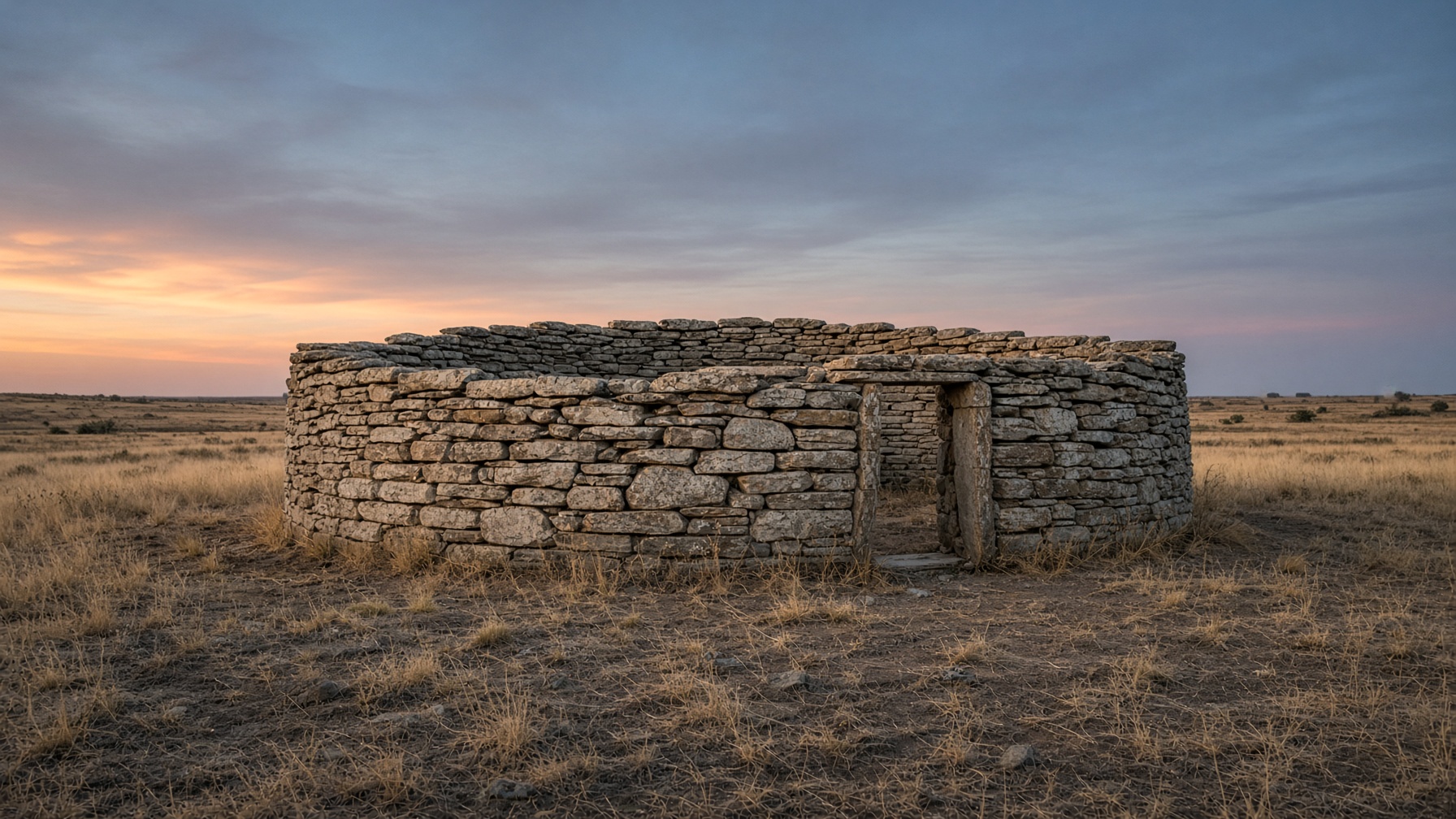
Echo
Twentieth-century literature · A temple the story will not locate
Borges, The Circular Ruins
A magician dreams a man into being, then learns he himself is dreamed. The horror is metaphysical. Zhuangzi’s tone is almost courteous.
Another language
offers another language
REM reports
Dream laboratories collect first-person reports after waking. The butterfly cannot file one. The method of the science is waking; the method of the story is to leave both states standing.
One question remains
Self · Who or what is having the experience?
When you remember a dream, who is doing the remembering: the one who flew, or the one who woke? Is there a third who claims both?