
Animal · Other minds · 1970
The Mark on the Glass
A creature touches a spot on its own body that it could only have seen in a mirror, and a debate about self begins.
- Laboratories, then field and farm
- Comparative psychology
- 42.65°N 73.75°W
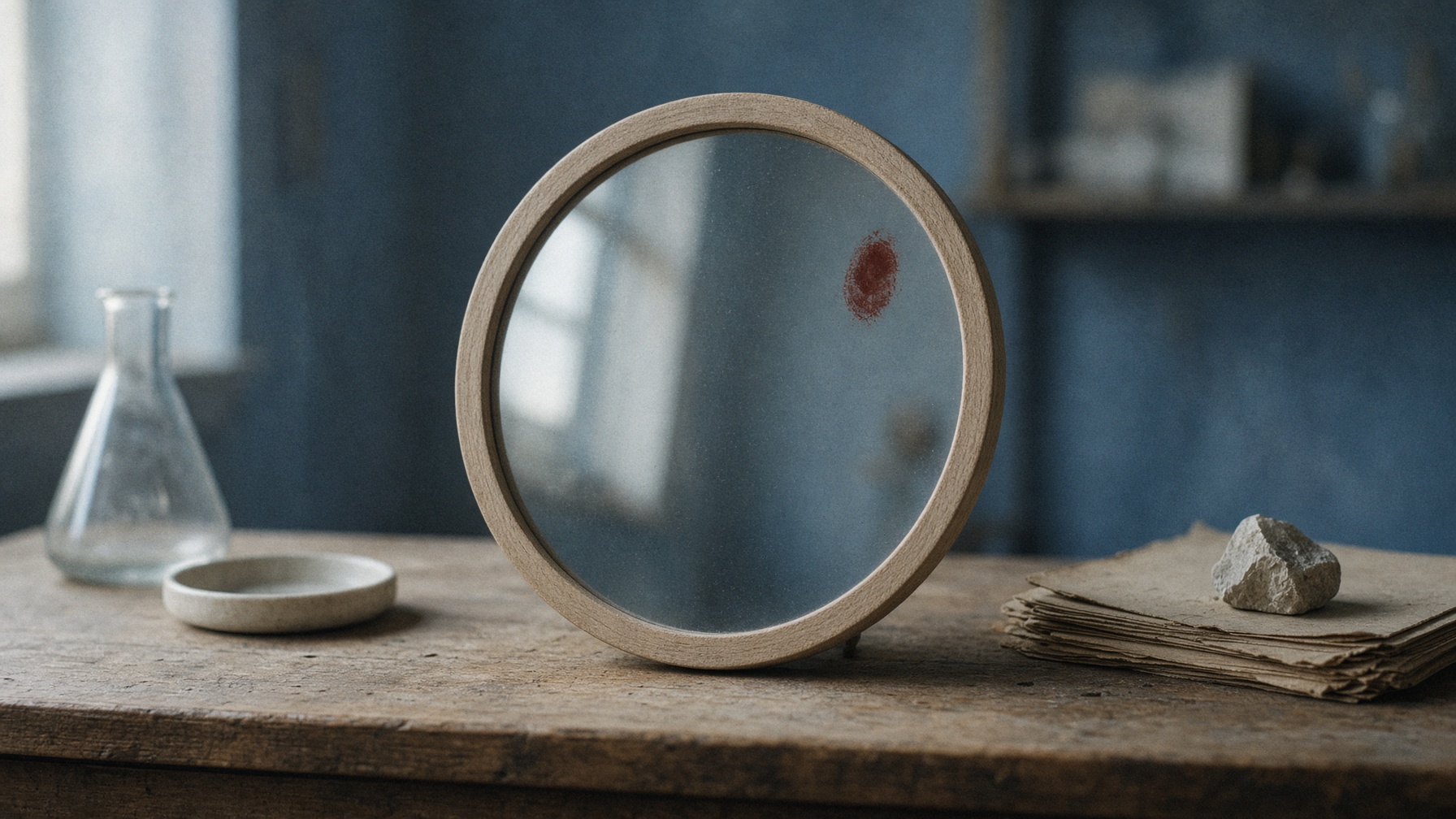
Plate · Generated interpretation
Find the mark before you find a face.
Listen · Eve
0:00 / —:—
Gordon Gallup Jr. anesthetizes a chimpanzee, paints an odorless mark on a brow ridge the animal cannot see directly, and waits for waking. When a mirror is offered, the chimpanzee investigates the mark on its own face. Some animals do this. Many do not. The ones that do have been taken, too quickly, as the animals that have a self.
The mark test (or MSR, mirror self-recognition) has been passed, under various protocols, by great apes, and claimed (with more controversy) for elephants, magpies, cleaner wrasse, and others. Failures include most monkeys, dogs, and many other species who may still have rich inner lives. A failed test is not a proof of vacancy.
The elegance of the test is also its trap. It asks for a very particular skill: mapping a reflected body onto one’s own, and caring enough about a mark to touch it. Animals that live by scent, or that treat a mirror as a rival, or that have no interest in spots, will fail for reasons that may have nothing to do with whether there is “something it is like” to be them.
Gallup himself took MSR as evidence of a self-concept. Critics argue it shows a body-concept, or a knack for mirrors, or an experimental artifact. The leap from “touches the mark” to “has an I” is an interpretive leap, and the house labels it as such.
What we know
The story is a caution about tests. We want a single gesture that will settle other minds. The mirror will not do that work. It remains, all the same, a striking fact that some nonhuman animals treat the glass as themselves.
What we cannot know
A protocol is not a soul. Failure to satisfy our test is not vacancy. The rest remains with the creature.
A word
recognize
From re- + cognoscere, to know again. The test asks whether the creature knows-again the body as its own. Knowing-with a mirror is a special case of knowing-with.
Distant echoes
Echo
Contemporary biology · Oceans, and a few laboratories
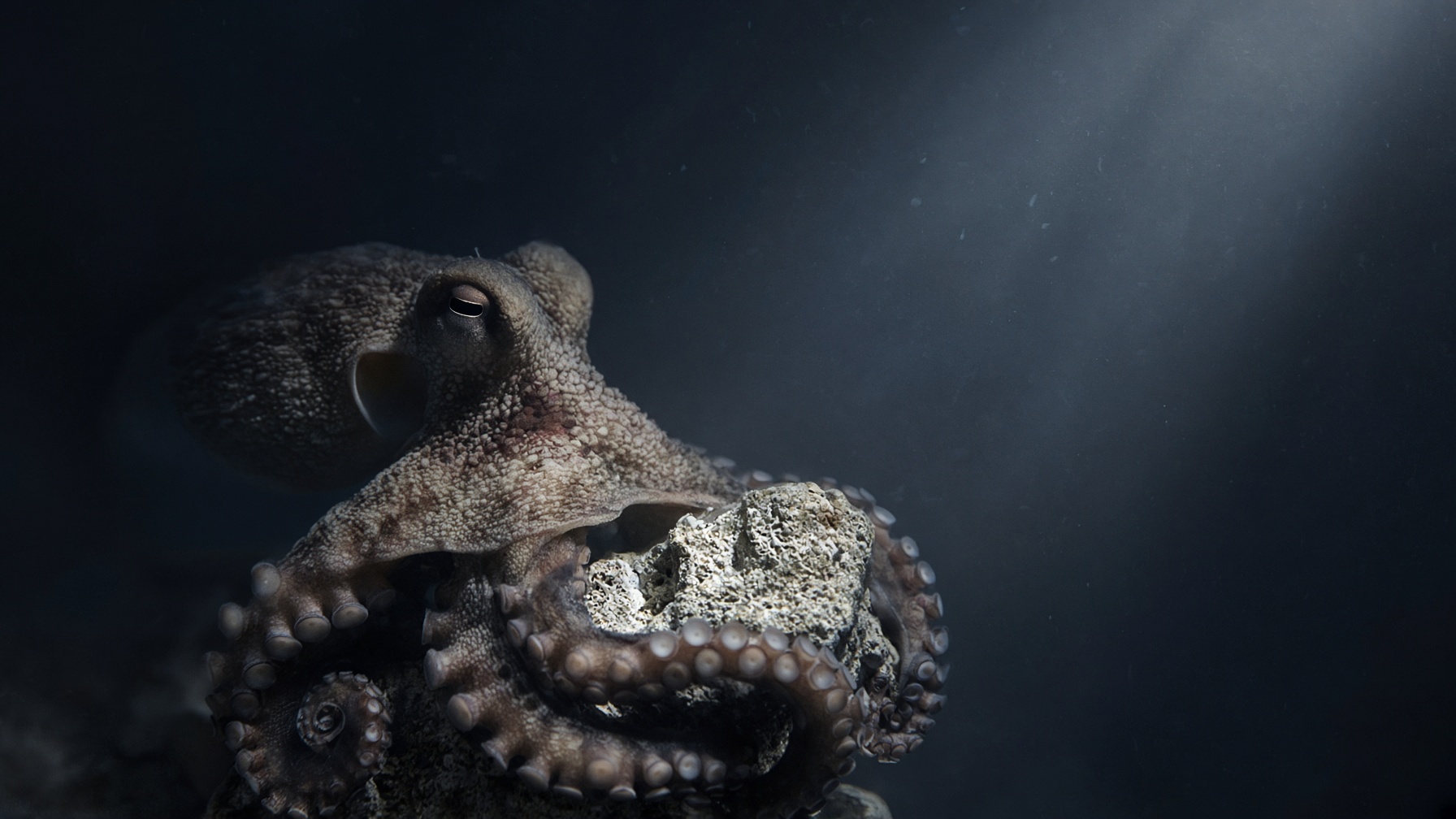
Eight arms, one mind?
An octopus fails typical mirror protocols and still presents a serious candidate for experience. Different bodies, different tests, same pressure on human exceptionalism.
Counterpoint
Late twentieth century · California laboratories
Two reports, one skull
If a human can contain two witnesses after a cut, a single mirror-touch is a thin criterion for “having a self.”

Another language
Colonial South India · Madurai, then Arunachala
Who is asking?
Ramana’s inquiry is a mirror without glass: turn toward the one who sees. The lab’s mirror is external. Both are devices for making the seer visible.
One question remains
Other minds · How do we know when another being is experiencing anything at all?
If a creature never touches the mark, what (if anything) have we learned about whether there is someone there?