
Place · Memory · 1–2 November, as practiced
A Place Set for the Living Who Were
Marigold, water, salt, bread, a photograph. A night in Mexico when the dead are fed. Memory here is a table, not a test.
- Mexico, in homes and cemeteries
- Mexican All Saints and All Souls, with older and newer strands
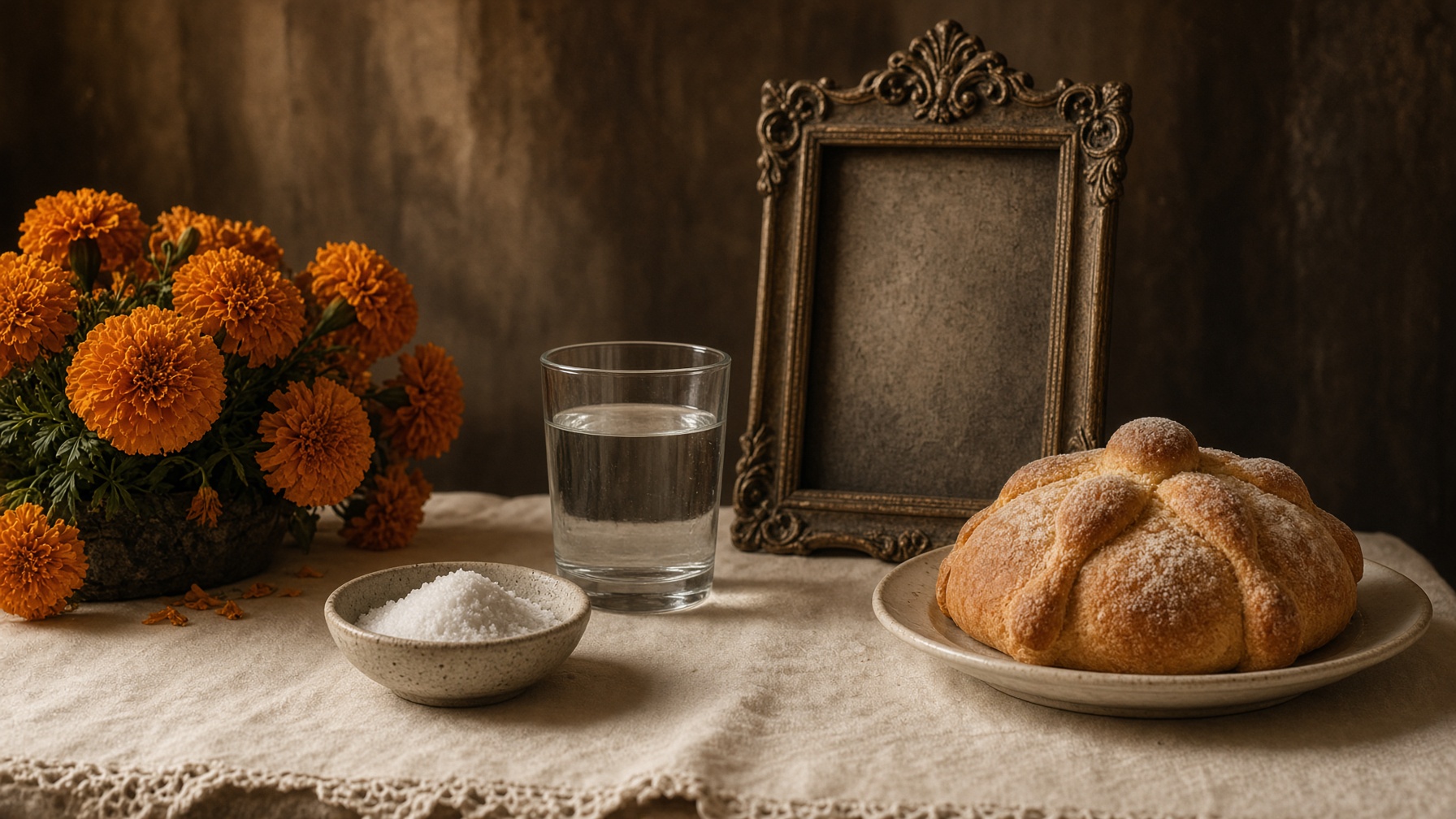
Plate · Generated interpretation
Bread, salt, a photograph. Who is the meal for if no one eats?
Listen · Eve
0:00 / —:—
Día de Muertos. Catholic All Saints and All Souls, Mexica and other Mesoamerican practices of the dead, and twentieth-century national shaping (including later UNESCO listing, 2008) are not one ancient rite. An ofrenda is a home’s argument: the dead still have a place, and a hunger. Octavio Paz’s El laberinto de la soledad (1950) is interpretation, not the altar.
Paz, The Labyrinth of Solitude (1950), as a literary essay. For practice, Claudio Lomnitz, Death and the Idea of Mexico (Zone, 2005), and community description, not a single pin. Do not cite a tourist page as ethnography.
Augustine’s memory is an interior palace. A Mexican ofrenda is an exterior table. Both refuse to treat the dead as only gone. They are not one theology of soul. Halloween, in English, is a different night. They are not one festival.
To say “the Mexicans laugh at death” is Paz’s cadence and a risk of type. An ofrenda is often quiet, specific, and for a name.
If a place is set, and no one living eats that plate, who, if anyone, is the meal with?
Distant echoes
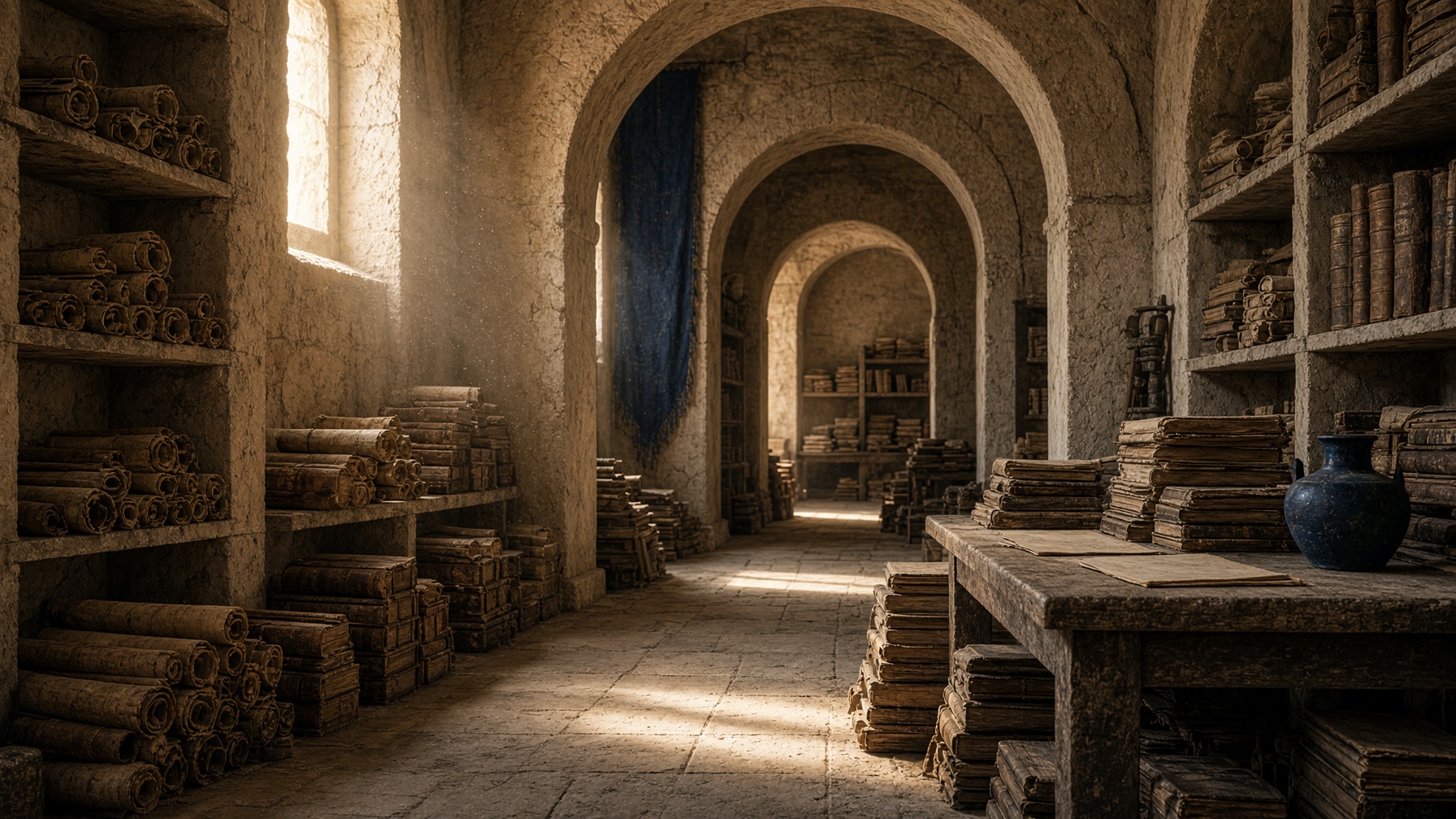
Echo
Late antiquity · Hippo Regius
The palace
Augustine searches an inner store. An ofrenda builds an outer one. Both are technologies of remaining.
One question remains
Memory · What remains, and what is reconstructed?
If remembrance can be eaten, or at least served, what kind of knowing is a hunger that outlasts a body?