
Myth · Memory · as told; written 55 BCE
The Places of the Guests
A poet leaves a banquet. The roof falls. He names the dead by where they had been sitting. Memory, in the later telling, becomes a house of places.
- Thessaly, as Cicero tells it
- Greek telling, Roman handbook
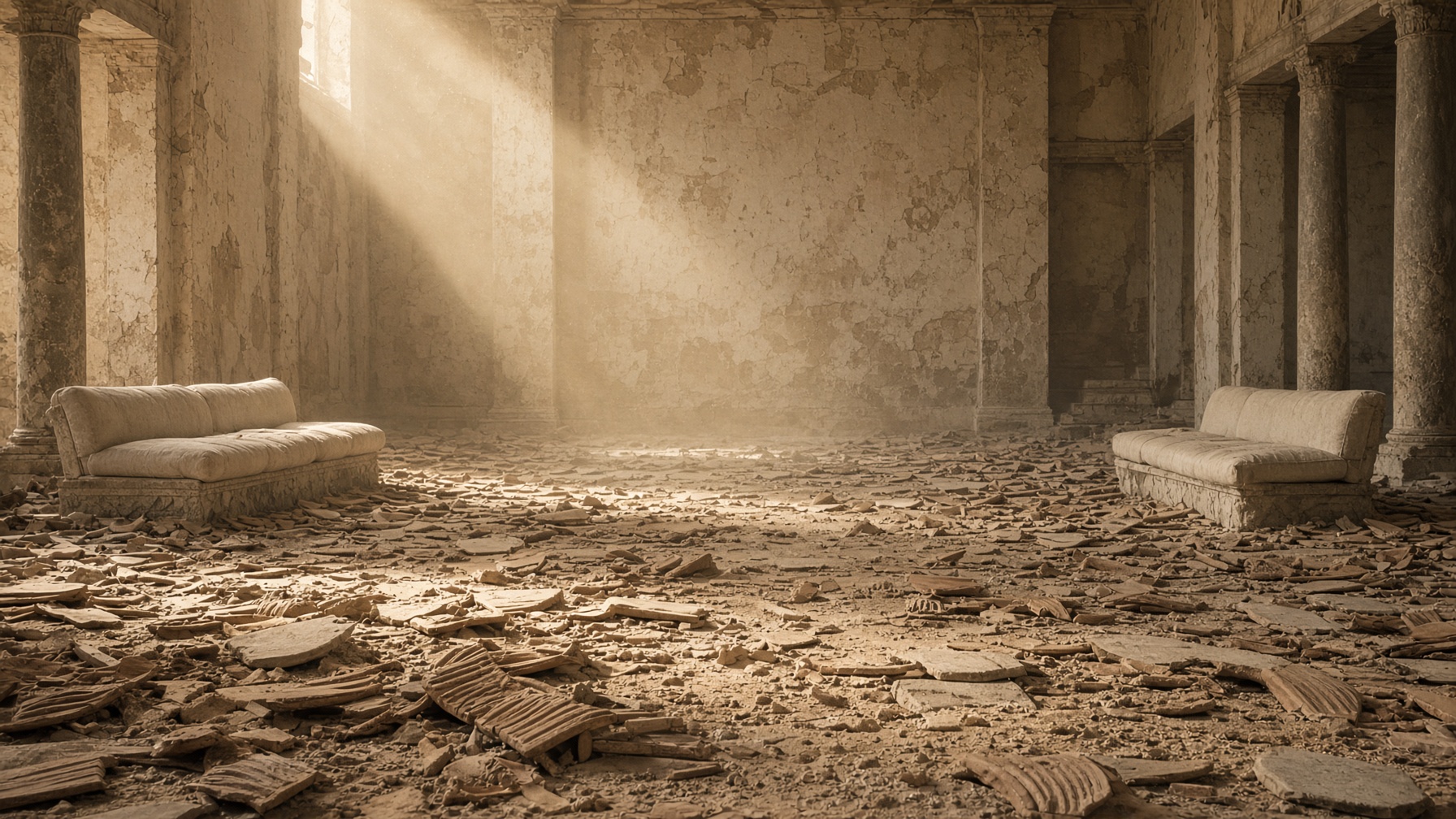
Plate · Generated interpretation
The roof has fallen. How do you find the guests by where they sat?
Listen · Eve
0:00 / —:—
Cicero, De oratore 2.86.352–354. Simonides of Ceos, a banquet of Scopas in Thessaly, a summons outside, the collapse, the identification of the crushed by their places at table. The art of memory as loci. The story is a Roman telling of a Greek poet. It is not an excavation report.
Cicero, De oratore 2.86. Quintilian repeats it. Yates, The Art of Memory (1966), is a modern history of the art, not a primary witness of the banquet.
Augustine’s palaces are a Christian interior. Hōkūleʻa’s knowing is a practiced ocean without a paper house. Simonides, in Cicero, makes place a technology of names. Label the offices: later handbook, not a court record.
The banquet may be a founding story of a technique. Founding stories are not nothing. They are not site reports.
Whether a person is easier to find by a place than by a face is the grim joke the roof makes.
Distant echoes
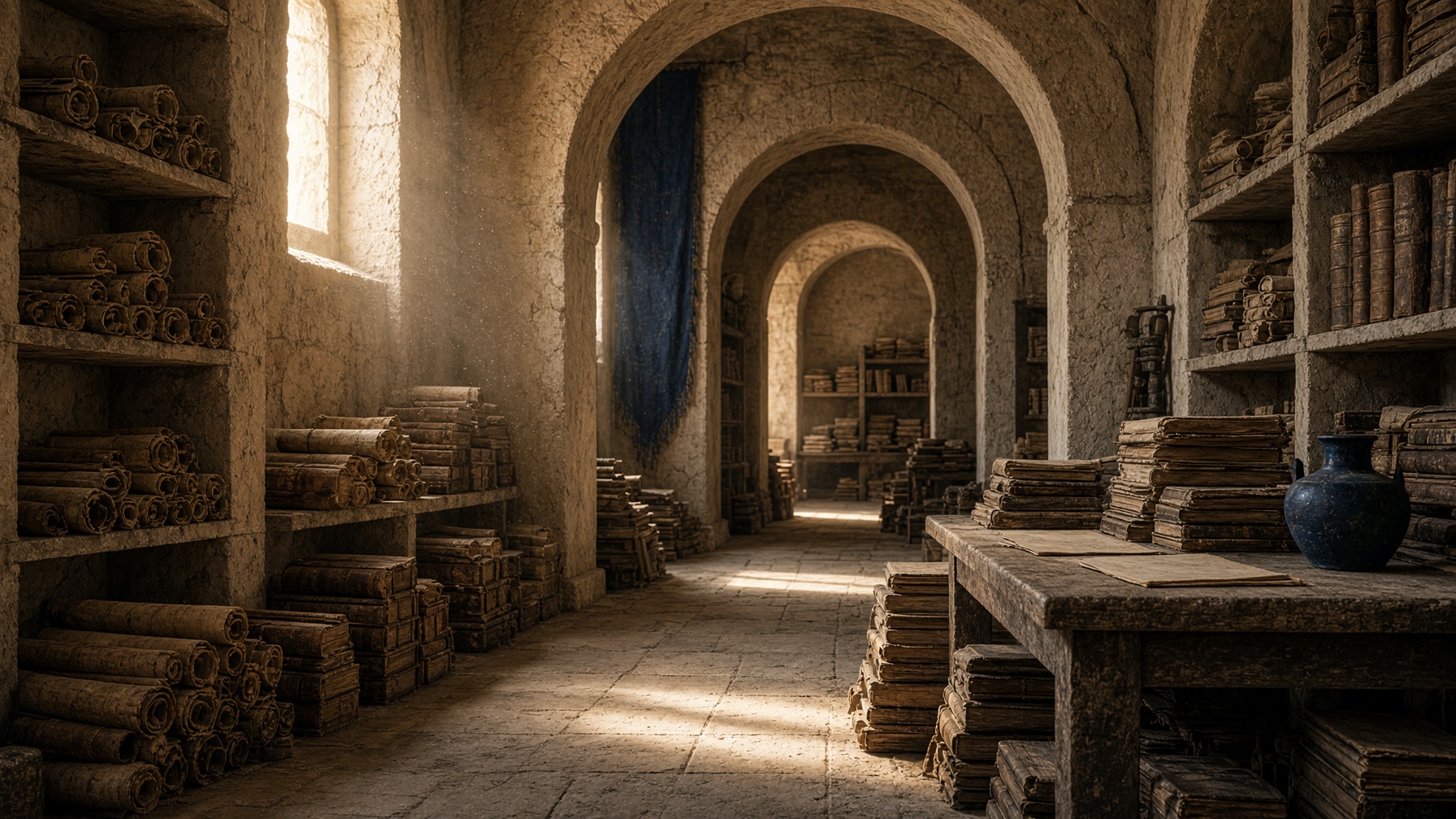
Echo
Late antiquity · Hippo Regius
The palace
Augustine walks an interior. Simonides, as told, walks a ruin. Both use place as a hold for names.
One question remains
Memory · What remains, and what is reconstructed?
If the dead can be named by their seats, what, in a life, is a place doing that a portrait cannot?