
Portrait · Memory · c. 397–400
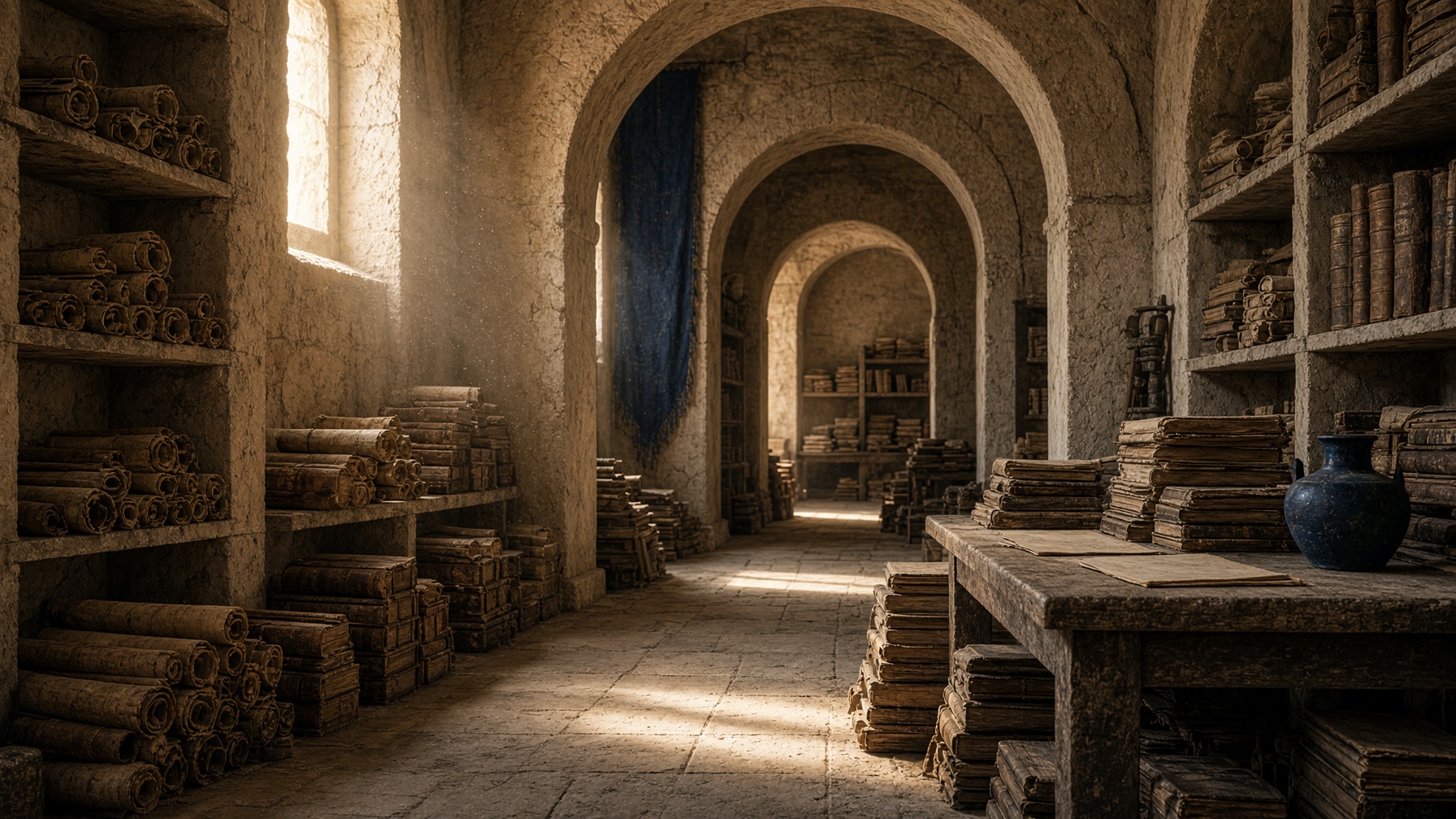
Plate · Generated interpretation
The Palaces of Memory
A bishop walks the inner rooms of his own mind and cannot find their floor.
- Hippo Regius
- Late antiquity
- 36.90°N 7.76°E
Try to remember a room you cannot see from here.
Listen · Eve
0:00 / —:—
In Book X of the Confessions, Augustine turns from the story of his life to the problem of how a life can be told at all. He enters memory. Fields and vast palaces, he says, where treasures of countless images are stored. He finds there the arts, the skills, the feelings, even the forgotten as forgotten. He can summon Carthage without being in Carthage. He cannot, he says, go beyond memory without ceasing to find himself.
The text is Confessions 10, written in Latin by Augustine of Hippo after his conversion and elevation. It is prayer, philosophy, and self-examination at once. The famous discussion of time follows in Book XI: what is time, if the past is not and the future is not, and the present has no duration?
Memory, for Augustine, is not a drawer. It is the place in which the self is scattered and gathered. He is astonished that he can remember forgetting. He is more astonished that God is to be sought in this interior, and is not any of the images found there. Consciousness, if we use our word, would be this capacity to traverse an inner world that is larger than the person who walks it.
Great is the power of memory, a fearful thing, my God, a deep and boundless manifoldness; and this thing is the mind, and this am I myself.
Later psychology will take memory as a function, then as systems (episodic, semantic, working). Augustine’s wonder is that the function is a place, and that the place is the person. The spatial metaphor is doing theological work: an inner cathedral in which God may be sought and not contained.
A word
memoria
Latin memoria: memory, remembrance, the faculty and the contents. In Augustine it swells toward what later writers will call the unconscious, not Freud’s, but a region that holds more than attention can survey.
Distant echoes
Counterpoint
complicates
The man who lost names
Oliver Sacks’s patients, and the older neurology of amnesia, show palaces with walls missing. The metaphor of rooms meets a clinic in which rooms can be gone while a person, in some sense, remains.
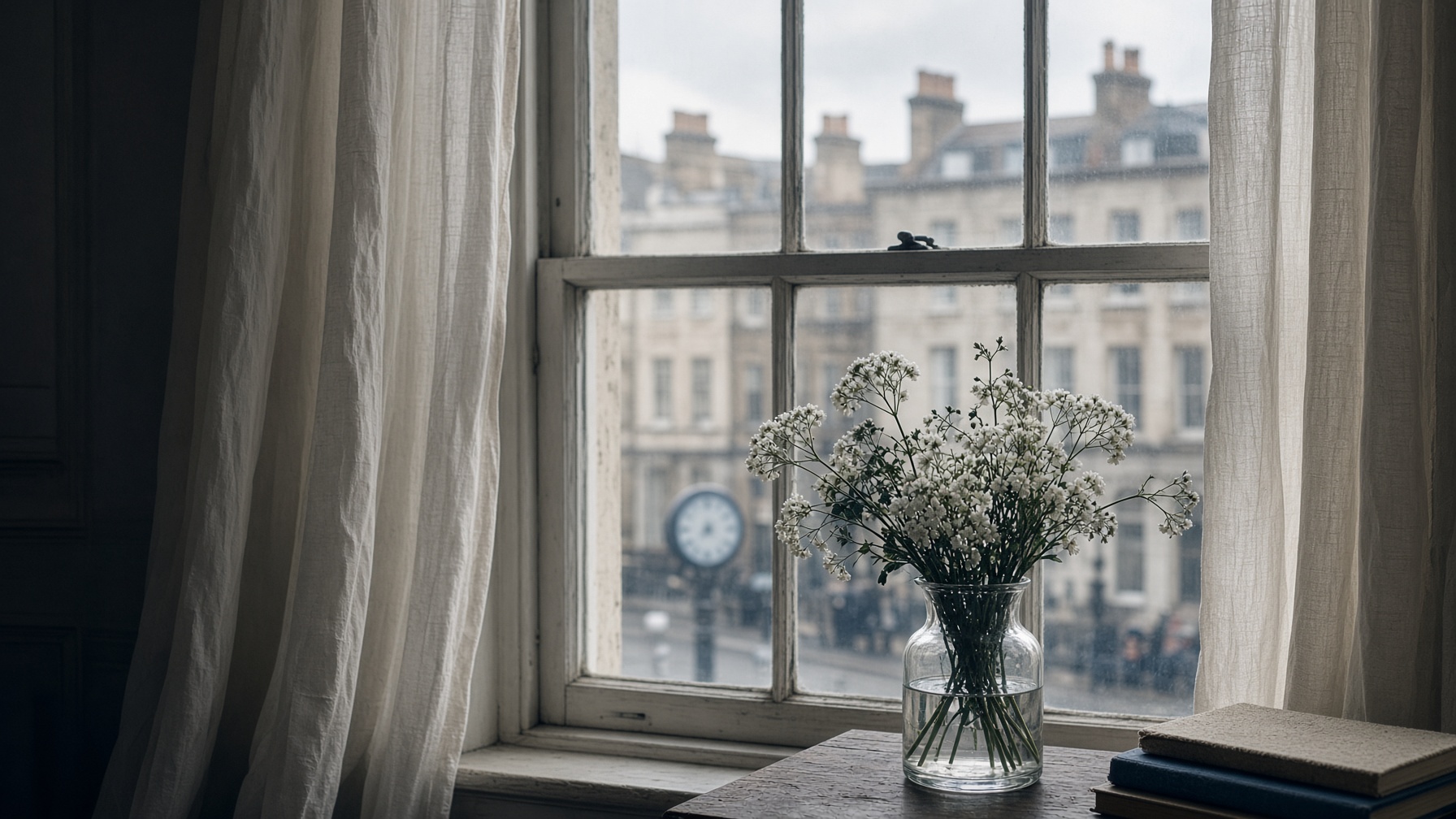
Echo
Interwar London · Westminster
Woolf’s day
Clarissa Dalloway’s consciousness is also a palace of the passing minute. Augustine prays; Woolf narrates. Both refuse to treat the inner as a smaller copy of the street.
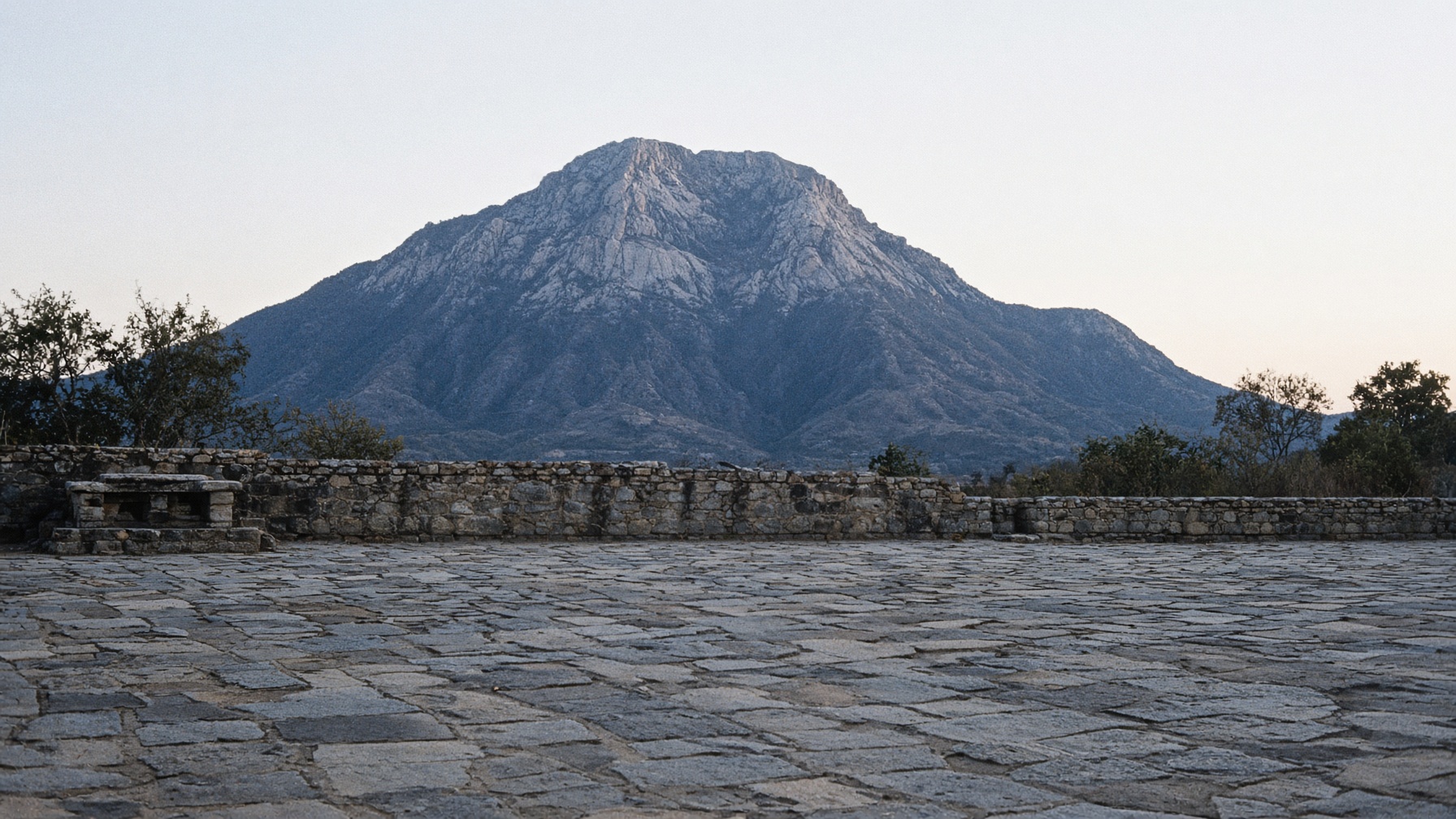
Another language
Colonial South India · Madurai, then Arunachala
Who is asking?
Ramana would say: do not furnish the rooms; find the one who enters. Augustine furnishes them as he searches. Two uses of inwardness.
One question remains
Memory · What remains, and what is reconstructed?
If you are your memory, who are you in the moment the memory is searched? And who remains if the palaces fall?