
Portrait · Self · 1925
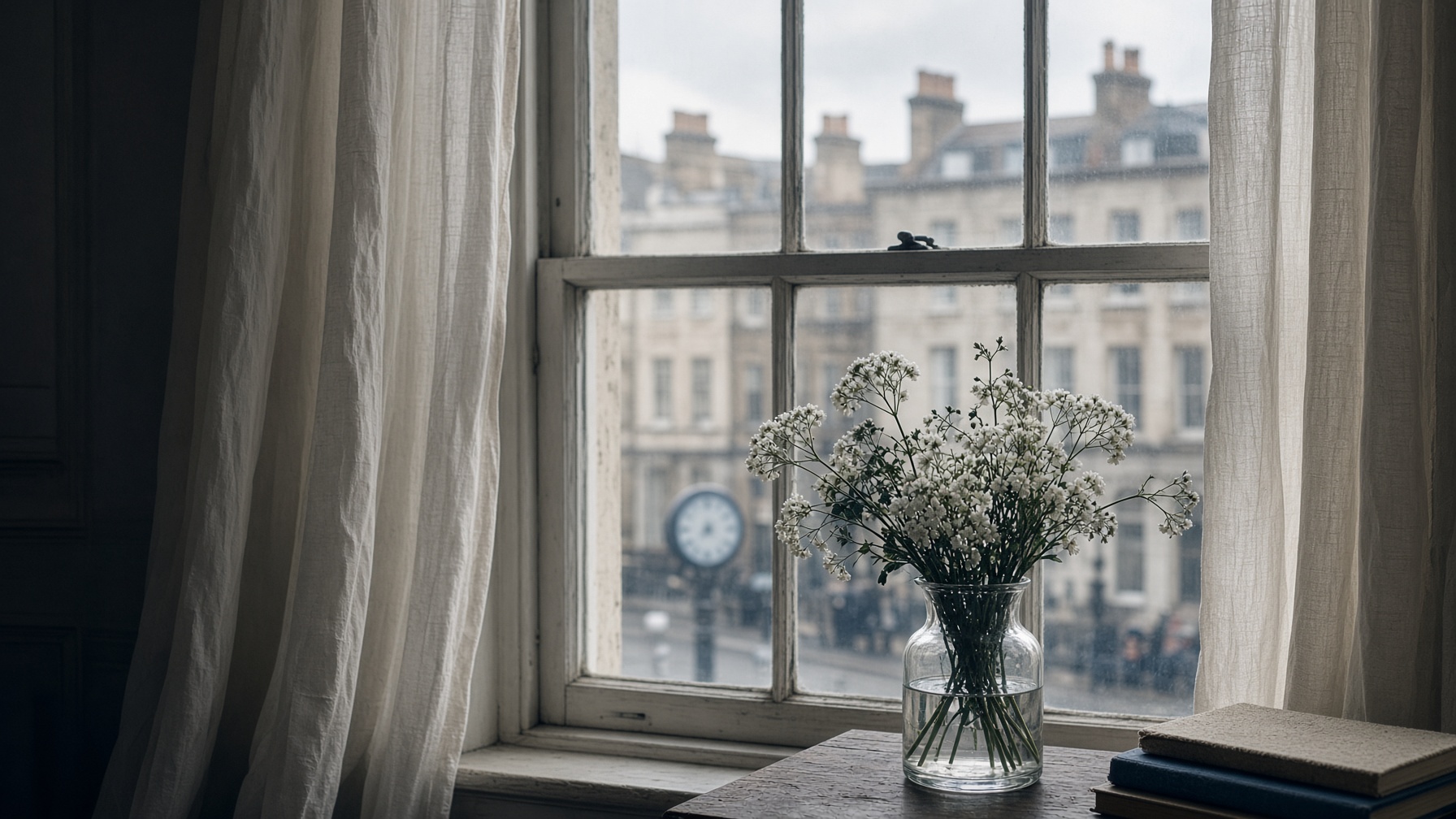
Plate · Generated interpretation
The Hours, Uncut
A woman buys flowers, and a novel tries to hold an entire consciousness without summarizing it.
- Westminster
- Interwar London
- 51.52°N 0.12°W
Notice the glass before you look through it.
Listen · Eve
0:00 / —:—
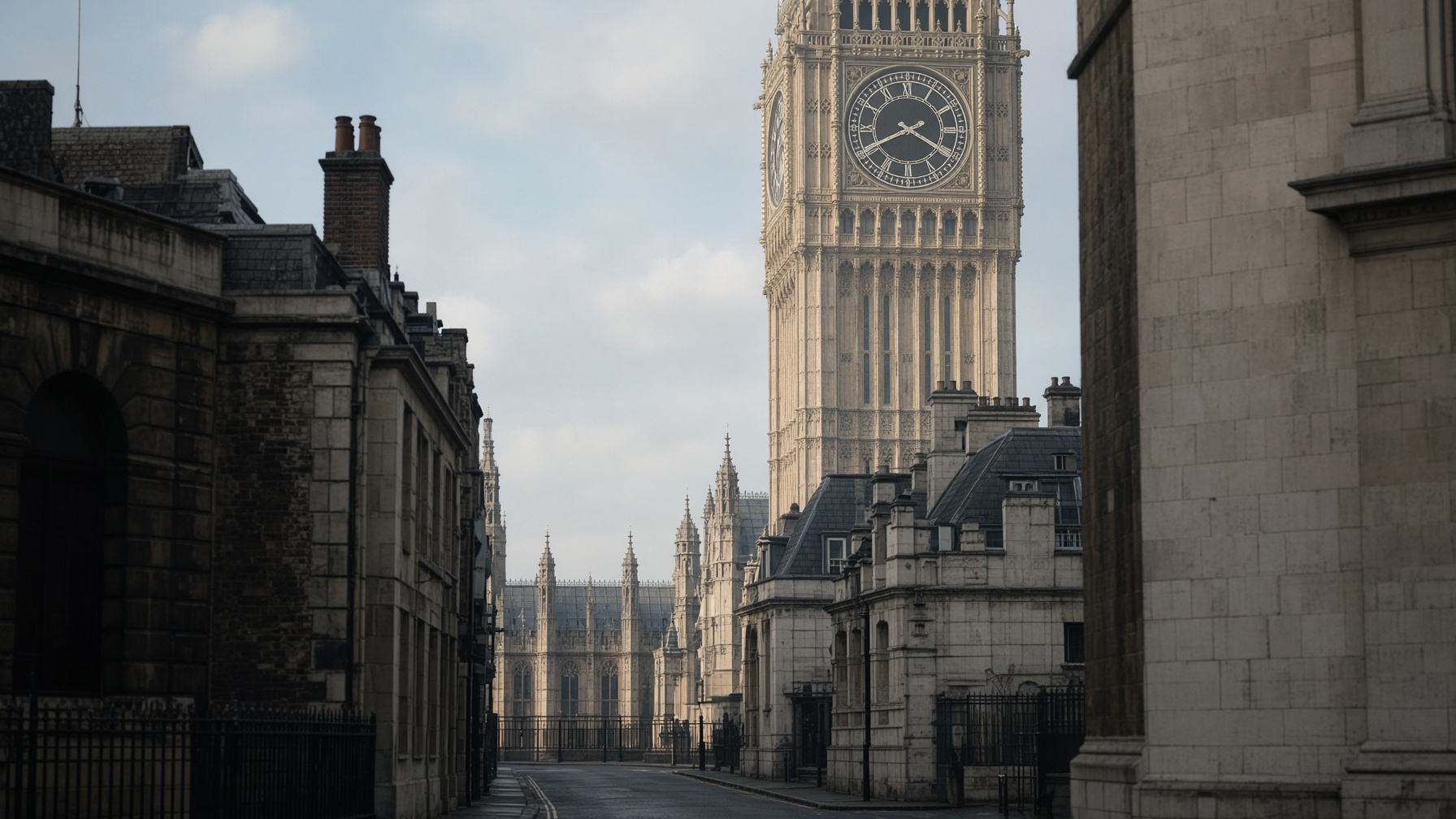
Mrs. Dalloway said she would buy the flowers herself. It is a June morning in Westminster, 1923. Big Ben is about to cut the hour. Clarissa Dalloway steps into London for the party she will give that evening. The book that follows, Virginia Woolf’s Mrs Dalloway (Hogarth Press, 14 May 1925), does not summarize her day. It inhabits it.
Woolf’s working title was The Hours. The finished novel still runs on them. Public time strikes. Private time does not obey, and yet it hears. “Out it boomed. First a warning, musical; then the hour, irrevocable.” The clocks are not scenery. They are the city’s way of insisting that a day has a shape, while memory keeps opening rooms that the clock cannot close: Bourton, a kiss from Sally Seton, Peter Walsh come back from India, a daughter who will not be her.
Across the same city, without meeting her, Septimus Warren Smith is also walking. He is a veteran of the war that ended five years earlier and has not ended in him. He has a wife, Lucrezia, who is trying to hold him in the day. He has doctors, Holmes and Bradshaw, who want proportion. He sees Evans, who is dead. To call him only the shell-shocked man is to use the period’s medical shorthand as if it were a person. The novel gives him a history, a marriage, and a death. He will leave the day by a window before Clarissa’s party is over.
They do not need to meet for their lives to be placed in relation. The city carries both. An aeroplane writes an advertisement in the sky; strangers look up together. A motor car backfires. Sound is public. What it becomes inside each hearer is not. Woolf is not claiming that we can occupy another mind. She is writing as if the attempt were the only honest form.
Mrs Dalloway, 1925. The opening sentence is Woolf’s. Septimus’s suicide, the party, Lady Bradshaw’s news, and Clarissa’s withdrawal to the little room are in the book. “She felt somehow very like him” is Clarissa’s thought after the death has entered the party, not a thesis the house adds.
Why this form? In “Modern Fiction,” first as “Modern Novels” in the Times Literary Supplement (10 April 1919), then collected in The Common Reader (1925), Woolf argues against the kind of novel that treats life as a row of lamps set out in order. She is rejecting a convention, not writing a laboratory paper.
Examine for a moment an ordinary mind on an ordinary day.
The mind, she says, receives a myriad impressions, trivial, fantastic, evanescent, or engraved with the sharpness of steel. Life is not a series of gig lamps symmetrically arranged. Life is a luminous halo, a semi-transparent envelope surrounding us from the beginning of consciousness to the end. That is her critical voice. Mrs Dalloway is what she made when the argument had to become hours, streets, flowers, and a death that arrives without the man.
Later criticism calls this stream of consciousness. The phrase is William James’s, from The Principles of Psychology (1890), for the moving character of thought. May Sinclair applied it to fiction, of Dorothy Richardson, in 1918. Woolf does not write “I have applied James.” The genealogy is real. The recipe is not. What the novel does, on the page, is move from mind to mind without a chapter break in the soul of the city: free indirect discourse, memory arriving without knock, a public sound becoming two private weathers. Name the technique after you have felt the turn.
The book is art, not evidence. It is evidence of what a trained attention believed inner life required of form. To treat it as a theory of mind is to miss that it is a made thing, with politics (the war, medicine, marriage, empire at the edge of a Westminster day) in its weather. To treat it as only style is to miss that it is one of the most serious attempts in English to be faithful to experience without a pulpit.
The party is not a decoration. Clarissa gathers people because gathering is how her world holds. Death enters anyway, as news. She goes upstairs. She looks at the old woman in the house opposite. She will come back down. The ordinary social ritual and the fact of a stranger’s death occupy the same evening. That occupancy is why the book belongs here.
The novel knows other minds in a way no census, clinic, or clock can. Whether that knowing is knowledge, or only the most serious form of pretending, is the question it leaves in the room.
A word
ordinary
From Latin ordinarius, according to order. Woolf’s wager: the ordered day is where the unordered mind actually lives.
Distant echoes
Echo
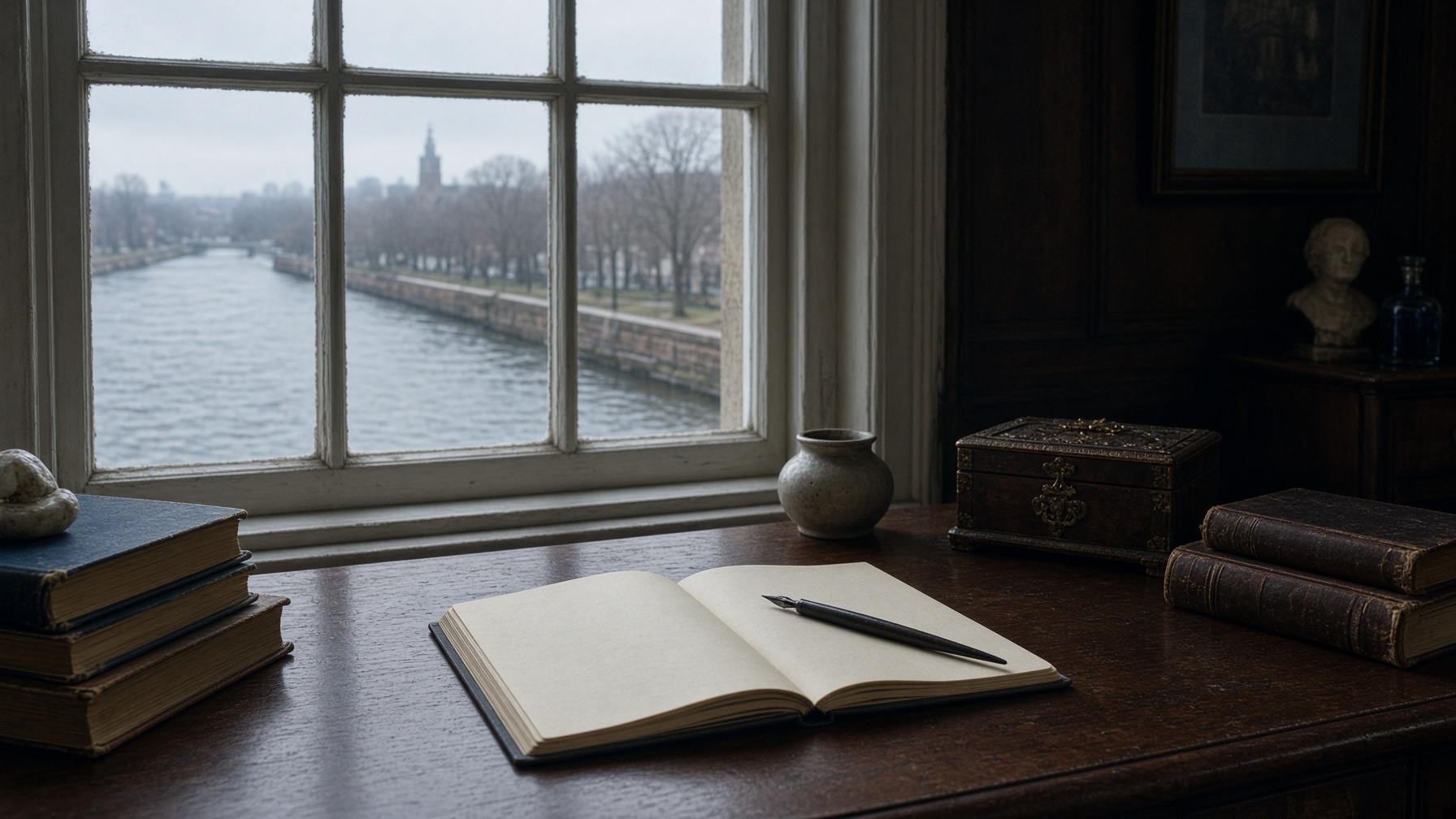
Gilded Age America · Cambridge, Massachusetts
The stream of thought
James named the stream; Woolf had to invent a sentence that could survive it. Description becoming form.
Echo
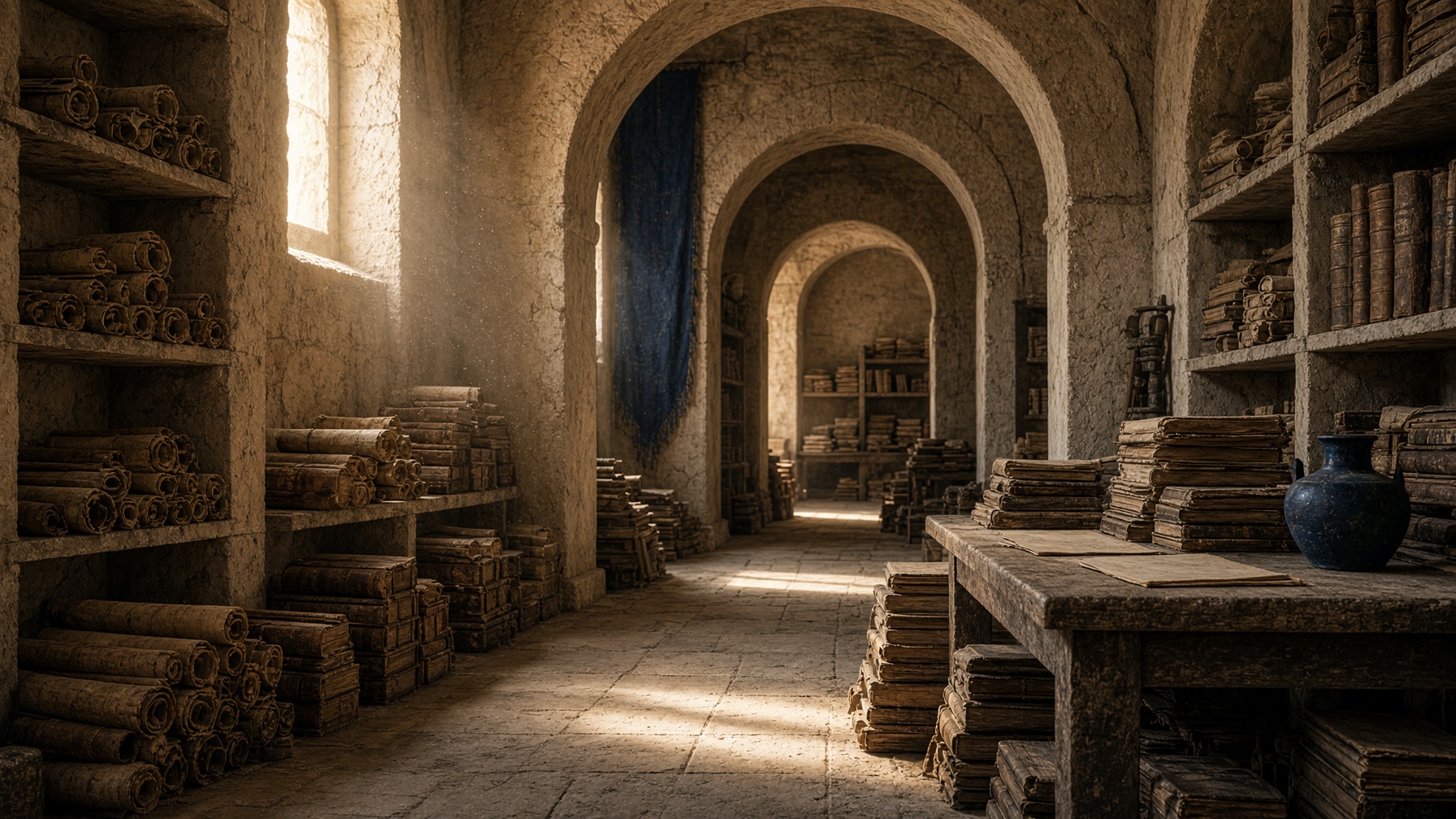
Late antiquity · Hippo Regius
The palaces of memory
Clarissa’s morning is a palace that opens onto a city. Augustine’s palace opens onto God. Both find that the inner is larger than the hour.

Counterpoint
Modern medicine · Operating theaters everywhere
When the lights go out
Anesthesia is a hole in the hours. Woolf’s art is a refusal to let hours be holes. Different fidelities to time.
One question remains
Self · Who or what is having the experience?
Can another mind be known in the way a novel knows, and if not, what is it we are doing when we read as if it could?