
What is a self?
A pronoun that became a problem. Stories of unity, split, inquiry, and the creature at the glass.
Sacred Traditions
A sixteen-year-old lies down as if dead, and a question becomes a life.
Who Is Asking?
Madurai, then Arunachala · 1896
Science
Two Reports, One Skull
A cut intended to stop seizures reveals that a person can contain more than one witness.
California laboratories · 1960s–1970s
Animals
The Mark on the Glass
A creature touches a spot on its own body that it could only have seen in a mirror, and a debate about self begins.
Laboratories, then field and farm · 1970
Ancient World
A sage wakes and cannot tell which side of the dream is home.
Once He Dreamed He Was a Butterfly
The state of Song, traditionally · c. 4th century BCE

Art & Literature
The Hours, Uncut
A woman buys flowers, and a novel tries to hold an entire consciousness without summarizing it.
Westminster · 1925

Philosophy
The Stream of Thought
A psychologist refuses to cut the mind into pieces that would make a textbook tidy, and names the flow instead.
Cambridge, Massachusetts · 1890
Art & Literature
A magician dreams a man with such care that the dreamed one can stand, and then learns the cost of that care.
The Circular Ruins
A temple the story will not locate · 1940
Philosophy
Beside the Stove
A man sits through a winter of doubt, and finds a remainder he cannot unsay: that thinking is going on.
A stove-heated room in Germany, later on the page from the Netherlands · 1619 / 1641
Philosophy
The Floating Man
A physician-philosopher asks you to imagine a person created at once in mid-air, with no senses, and still knowing that they are.
On the page, from Bukhara to Hamadan to Isfahan · c. 1027
Sacred Traditions
A thirteenth-century Soto Zen teacher says that mountains walk, and that to know this is not a metaphor you can keep at arm’s length.
Mountains Walking
Eihei-ji, Echizen · 1240
Philosophy
What English Calls Mind
A Ghanaian philosopher refuses to let a European noun assemble an Akan person.
Legon, and on the page · 1980s–1990s
Science
Before the Mark Is a Face
Eighty-eight children are placed before a mirror. Recognition, if that is the word, arrives late, and not as a theory of self.
Infant observation, reported from the University of North Carolina, 1972 · 1972
Art & Literature
In Lisbon a poet writes under names that have biographies, styles, and disagreements. The page is crowded, and the civil name is only one of them.
A Firm of Selves
Lisbon · 1914–1935
Philosophy
Empty of Own-Being
A verse treatise refuses to let things, including the mind that knows them, stand on their own. The refusal is an argument, not a mood.
South India, on the page of the *Mūlamadhyamakakārikā* · c. 2nd–3rd century CE
Philosophy
The Two-in-One
A political thinker, late, describes thinking as a conversation the mind holds with itself. Solitude, she says, is populated.
New York · 1973–1978
Sacred Traditions
A verse contest in a monastery: one poem wipes a mirror. Another says there was never a mirror. The second is the one the tradition keeps.
No Mirror, No Dust
Huangmei, then Shaozhou, on the page of the Platform Sūtra · c. 7th–8th century, as later told
Art & Literature
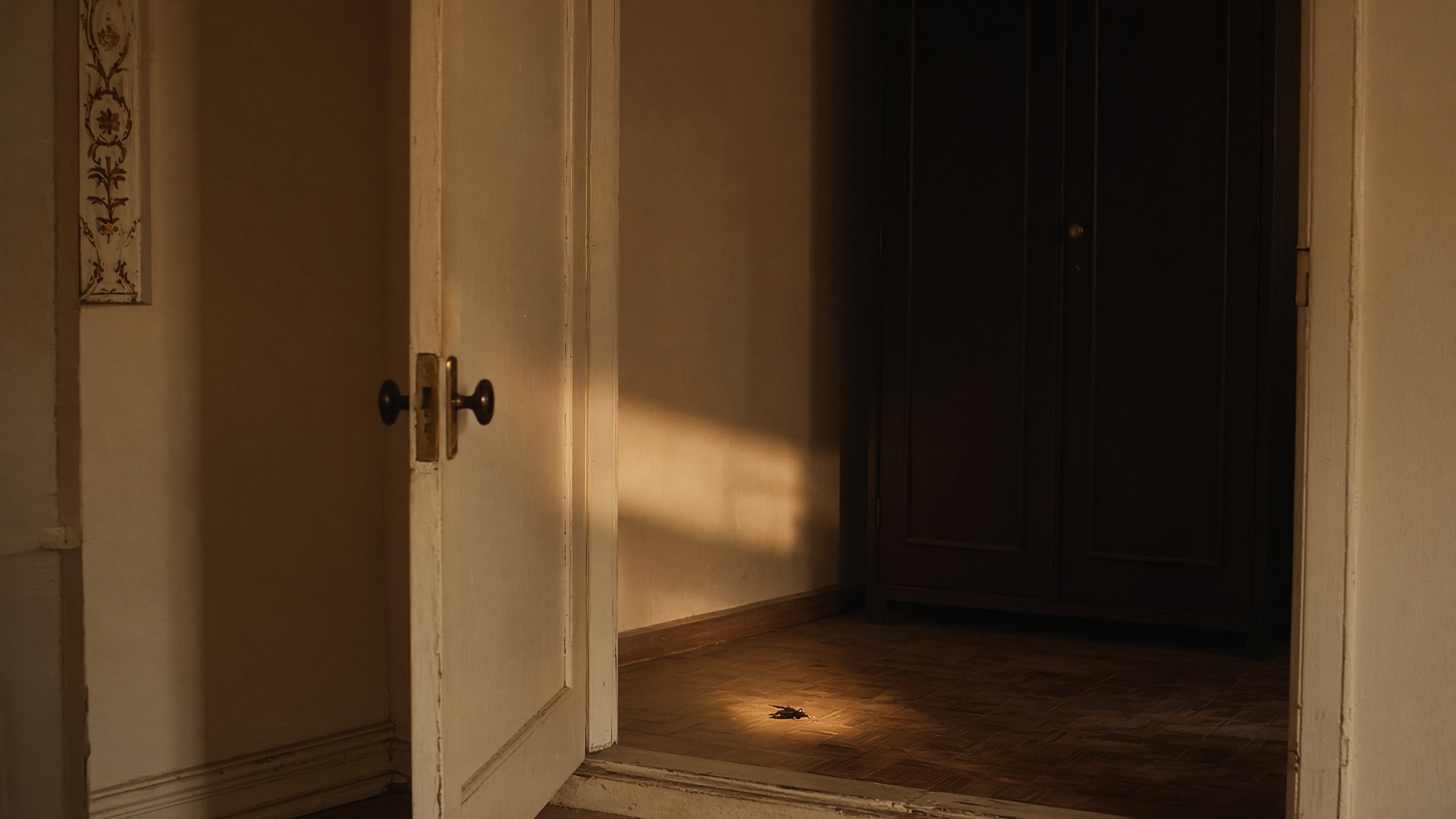
The Room and the Other Life
A woman in Rio enters a maid’s room, kills a cockroach, and does not come out the same. The book is a sitting with what will not stay human.
Rio de Janeiro, on the page of *A Paixão Segundo G.H.* · 1964
Philosophy
A Person Through Persons
A Nguni proverb says a person is a person through other persons. Twentieth-century writers make a philosophy of it. The proverb is older than the seminars.
Southern Africa, on the tongue and then on the page · proverb; 1990s writing