
Science · Self · c. 1027
The Floating Man
A physician-philosopher asks you to imagine a person created at once in mid-air, with no senses, and still knowing that they are.
- On the page, from Bukhara to Hamadan to Isfahan
- Islamic Golden Age
- 34.80°N 48.52°E
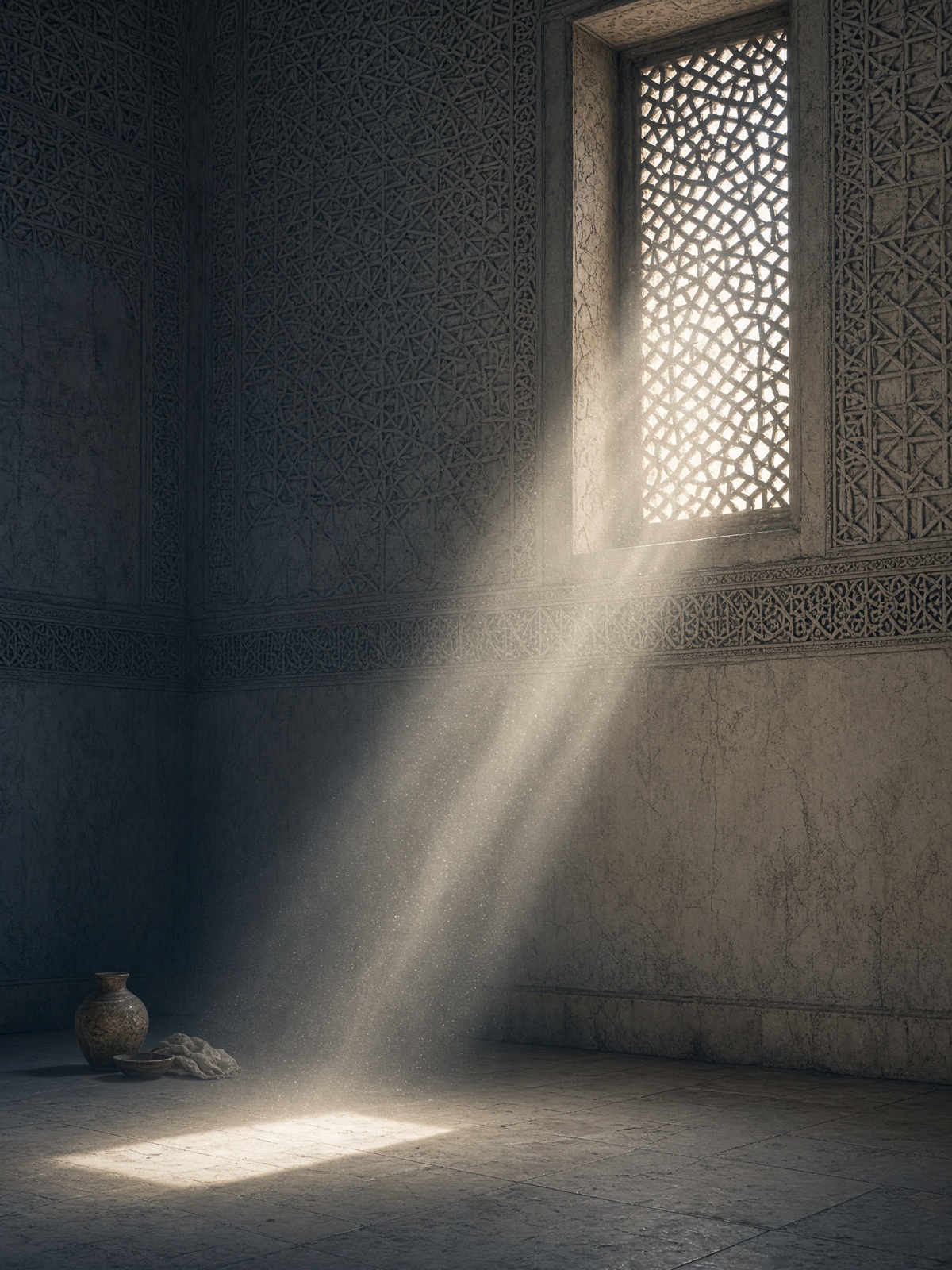
Plate · Generated interpretation
If nothing were touching you, what would still be yours to notice?
Listen · Eve
0:00 / —:—
Ibn Sīnā (Avicenna), in the Psychology of the Shifāʾ, asks the reader to imagine a human created fully formed, in mid-air or void, limbs outstretched so they do not touch, sight darkened, no sound, no memory of a body. Would this person affirm their own existence? He thinks yes. The affirmation would not be of arms or a face. It would be of a self that is not identical with the unfelt body.
Kitāb al-Shifāʾ, Kitāb al-Nafs (The Book of Healing, On the Soul), early eleventh century. A thought experiment inside a medical-philosophical psychology, not a mystic’s vision. The later Latin West will read Avicenna; the later house of Descartes will rhyme without citing this room as parent.
The point, in Ibn Sīnā’s argument, is not that bodies are unreal. He is a physician. The point is that self-awareness (shuʿūr bi-al-dhāt) need not wait on the senses. The soul can be alert to itself even when the world’s reports are cut. Later readers have used the floating man as a proto-cogito, as a dualist wedge, as a phenomenology of mineness. Each use is an interpretation. The original is an argument about what the soul is, in a tradition that already has names (nafs, rūḥ) that English collapses.
He would not doubt his own existence, though he would doubt the existence of his body.
Anesthesia, in another century, will sometimes produce the inverse: a body remaining, a morning missing. The floating man is a thought. The mask is a practice. They are not the same hole.
To call this “the Islamic Descartes” is a flattening. The experiment lives in a different cosmology, with a different soul, and a different God. What they share is a pressure: that awareness of being might not be a sense among senses.
A word
nafs
Arabic نفس: self, soul, breath, person. Not a synonym of Latin mens. Ibn Sīnā’s psychology maps faculties; the floating man is a cut in that map, meant to show a self that is not a limb.
Distant echoes

Echo
Early modern Europe · A stove-heated room in Germany, later on the page from the Netherlands
Beside the stove
Descartes also subtracts the world to find a remainder. The remainder’s name and the God that guarantees it are not the same.
Counterpoint
Contemporary biology · Oceans, and a few laboratories
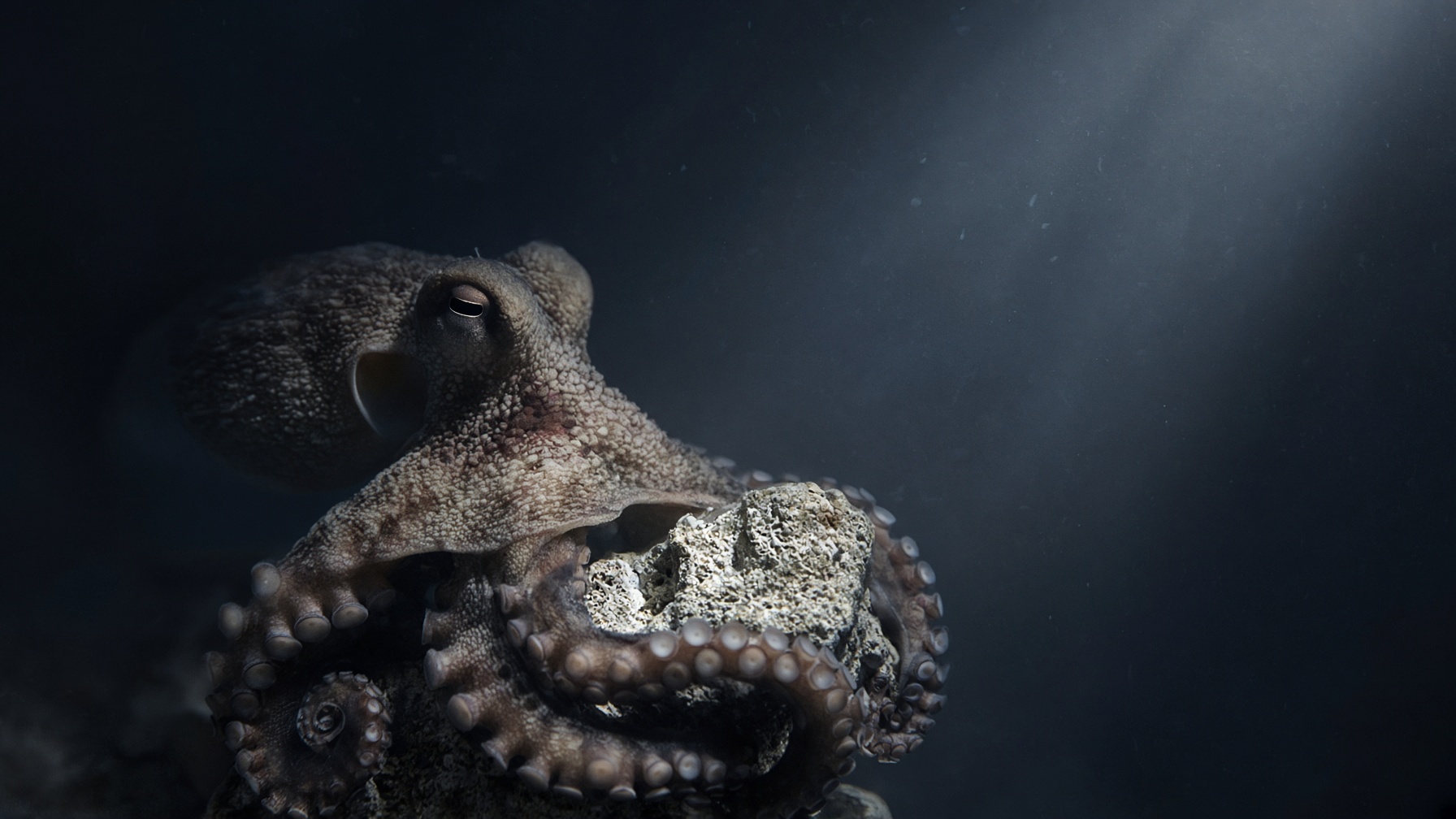
The octopus
A nervous system in the arms, no floating isolation. If mind is also distributed, the mid-air man is a local sample, not a universal.
Another language
Abbasid / Seljuk world · Baghdad, then Damascus and Tus
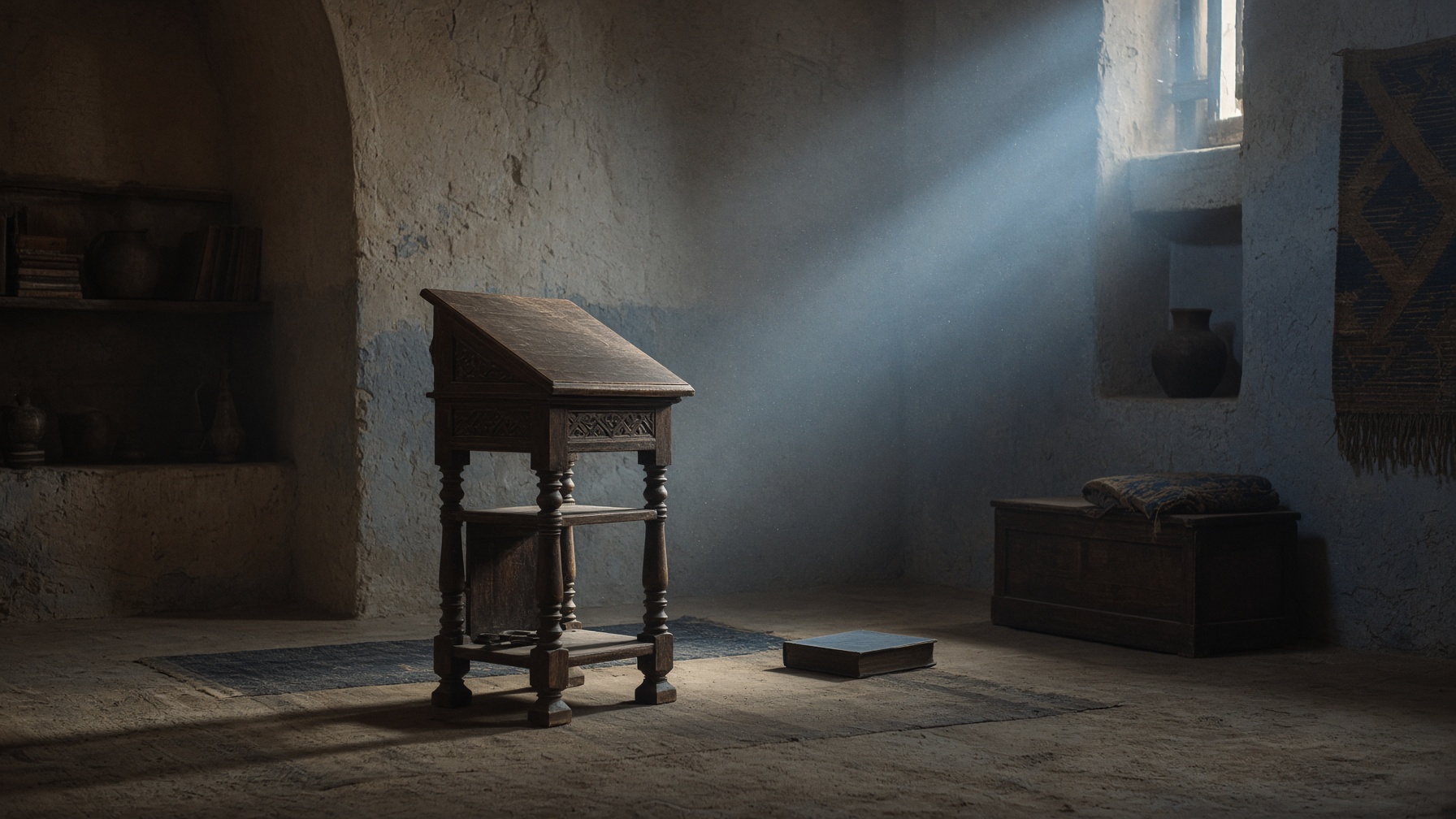
Al-Ghazālī leaves the lectern
A later crisis of knowledge, in the same language-world, will not be solved by a thought experiment. It will be walked.
One question remains
Self · Who or what is having the experience?
If you could be created without a world, and still know that you are, what, exactly, would you know that you are?