
Animal · Other minds · 1990s–2000s
The Thief Who Remembers Being a Thief
A bird hides food, watches who is watching, and later recaches, as if it knows what another mind might do.
- Western oak woodlands, and Cambridge aviaries
- Contemporary ethology
- 36.60°N 121.90°W
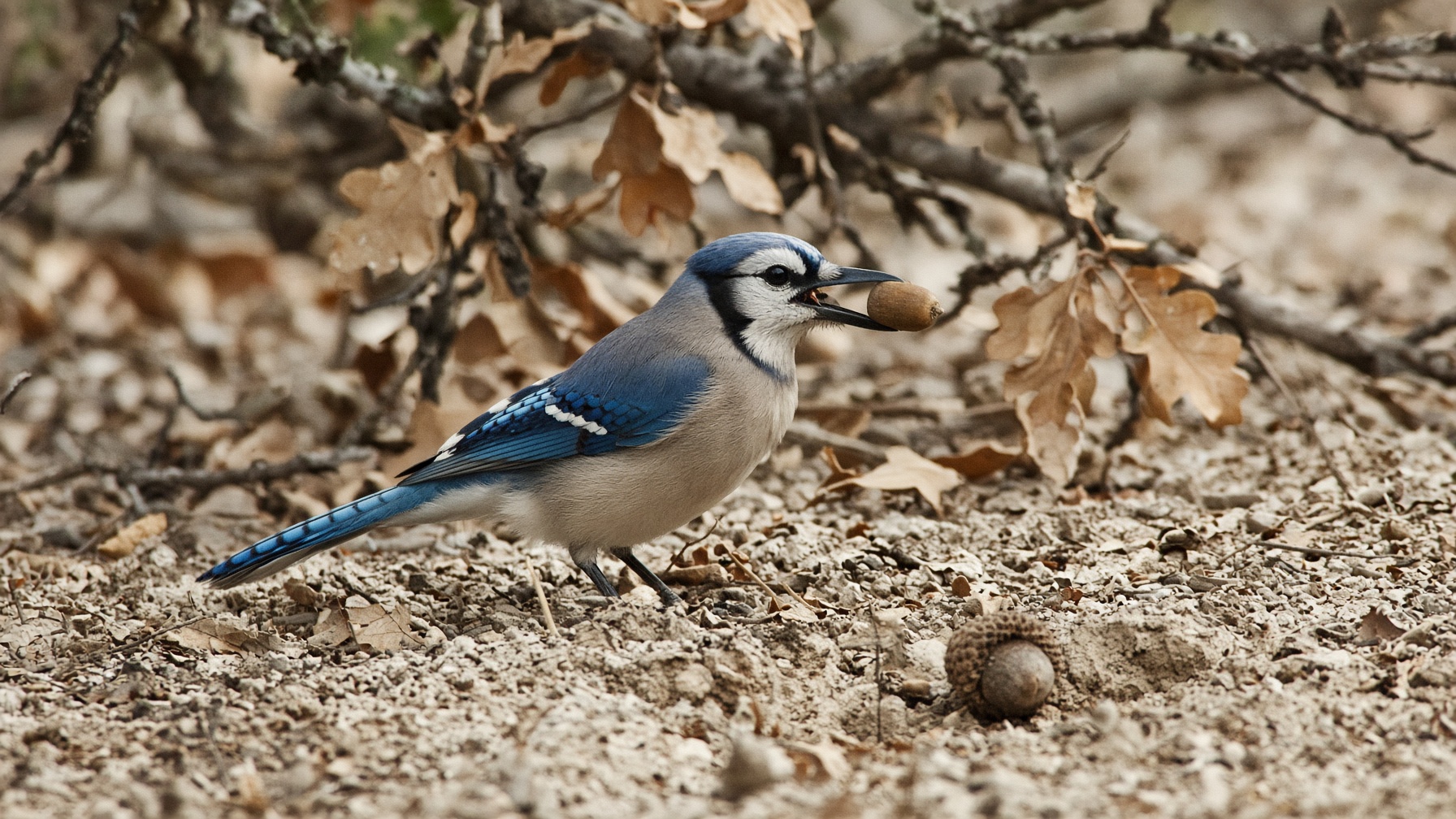
Plate · Generated interpretation
Where would you hide what you mean to find later?
Listen · Eve
0:00 / —:—
A western scrub-jay buries a worm, or an acorn, in a tray of sand. Another jay is visible behind bars. Later, alone, the first bird moves the cache. Birds who cached in private do not show the same urgency. Nicky Clayton and Anthony Dickinson, and colleagues, built experiments in which jays also appear to remember what they hid, where, and when (worms rot; peanuts wait) a memory that in humans we call episodic.
The caching and recaching results, and the what-where-when memory experiments, are published, replicated in related designs, and debated in their interpretation. The “theory of mind” reading (that the jay attributes a pilfering intention to the observer) is one reading. Simpler explanations (stress, generalized caution) are offered and tested.
What is hard to dismiss is the conjunction: memory for a particular past, sensitivity to being observed, and a change of future behavior. Something in the bird is keeping a social score. Whether that something is “consciousness” depends on how much one demands of the word. The bird does not care about the word.
Human embarrassment, guilty recaching of a secret, the sense of an audience: these are easy stories to project. They may be the right stories. Projection is not method. The experiments are method. The gap between them is where the question lives.
What we know
The story binds memory, time, and the gaze of another into a nonhuman life. Consciousness, if it is here, is not a pearl in a skull. It is a way of being in a world of thieves and winter.
What we cannot know
A protocol is not a soul. Failure to satisfy our test is not vacancy. The rest remains with the creature.
A word
episodic
From Greek epeisodion, an addition, an incident. In psychology, memory for an incident as having happened to someone, at a time. Whether jays have the someone is the open part.
Distant echoes
Echo
rhymes with
What changes when we are watched
The jay recaches. Humans perform, freeze, moralize, create. The gaze is a technology of mind long before CCTV.

Echo
Late antiquity · Hippo Regius
Augustine’s palaces
A bird’s what-where-when is not a palace of images. It is still a past that can be used. Memory as a power, not a place.
Another language
Contemporary biology · Oceans, and a few laboratories
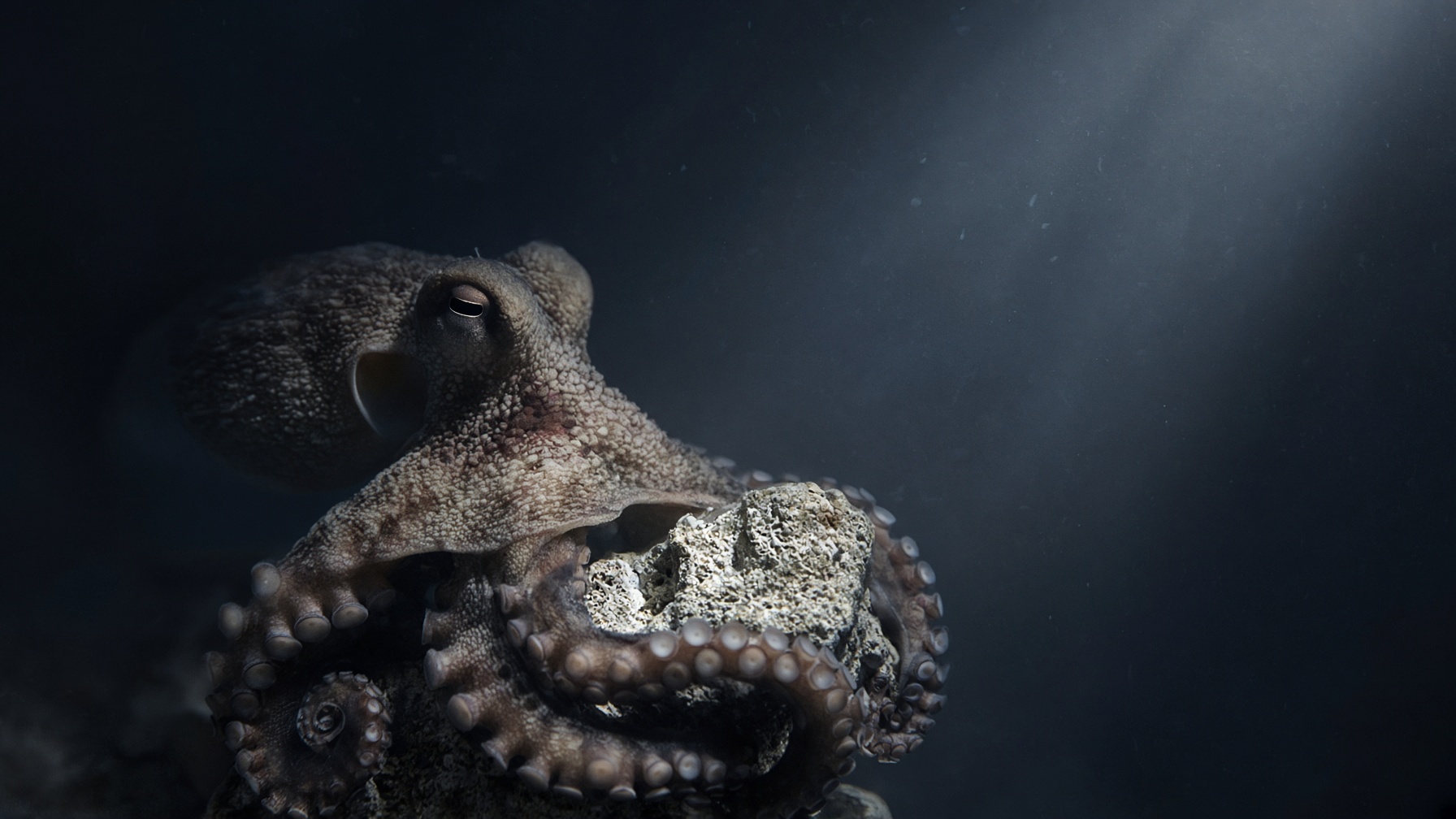
A mind with eight arms
Corvid and cephalopod: two distant experiments in being a clever animal. Neither is a failed human.
One question remains
Other minds · How do we know when another being is experiencing anything at all?
Does the bird who recaches know that it is known, or only that a certain shape of world is dangerous?