
Portrait · Knowledge · May 1373
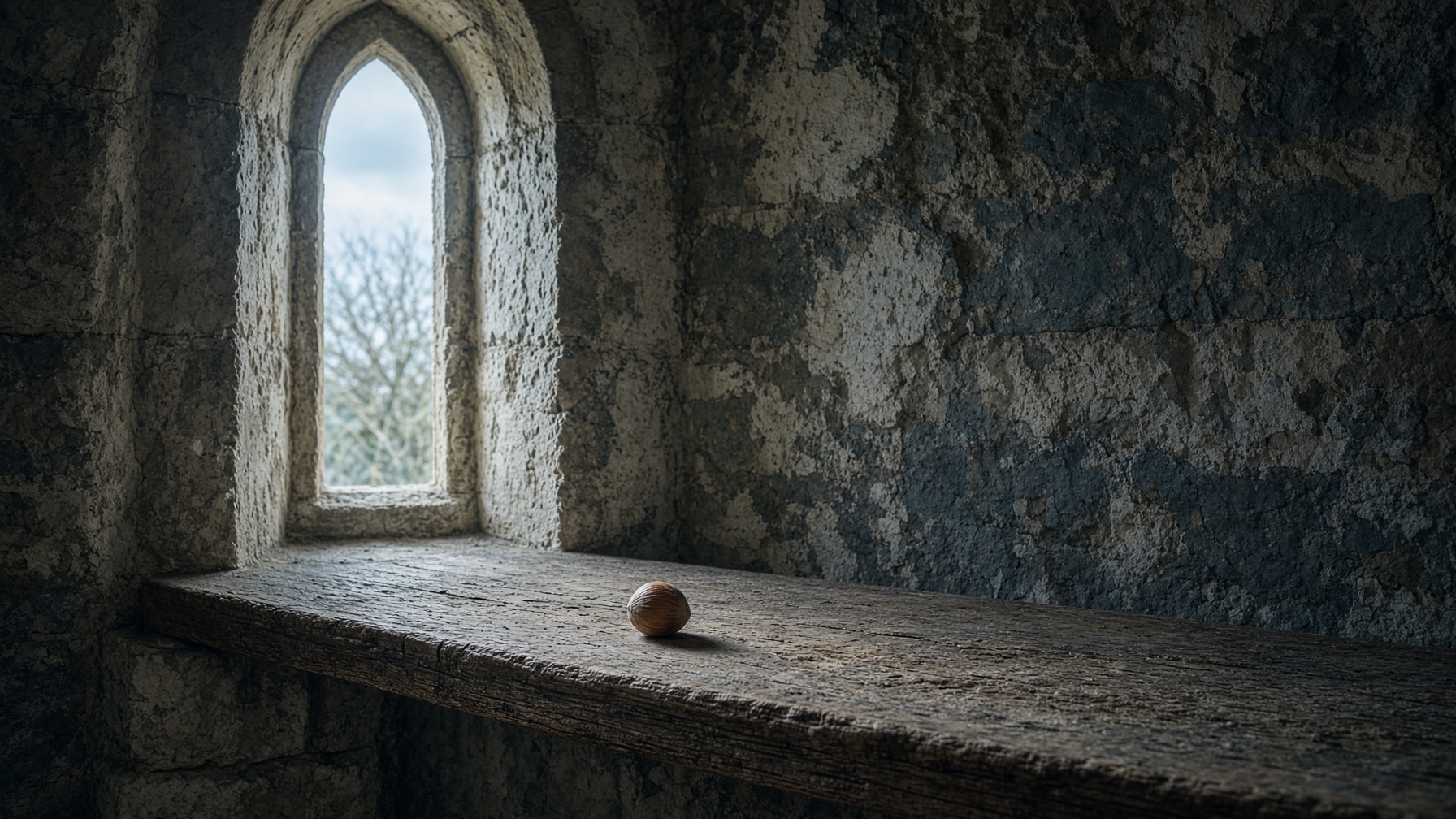
Plate · Generated interpretation
A Little Thing, the Size of a Hazelnut
A woman in a sickbed is shown the world in her palm, and it does not fall.
- Norwich
- Late medieval England
- 52.63°N 1.30°E
How much of a world can sit in a palm?
Listen · Eve
0:00 / —:—
In the eighth of her shewings, as she later wrote them, Julian of Norwich is shown a little thing, the size of a hazelnut, in the palm of her hand. It seems so small it might have fallen into nothing. She asks what it is. She is told: it is all that is made. She wonders how it could last. She is told: it lasts, and always will, because God loves it.
The account is hers, in Revelations of Divine Love, surviving in a short text and a long text. She writes as an anchoress looking back on a sequence of showings received in illness in 1373. We have her words. We do not have independent witnesses to the visions.
Julian does not treat the hazelnut as a puzzle in cosmology. She treats it as a lesson in holding. The world is small enough to be lost, and is not lost. The ground of its lasting is named as love, not as a feeling she has, but as the reason things continue. Later she will write the line for which she is popularly remembered: all shall be well, and all shall be well, and all manner of thing shall be well. In the long text that sentence is hard-won, set against sin, grief, and the refusal to look away.
It lasteth, and ever shall, for God loveth it.
A modern reader may hear ecology, or the overview of Earth as a fragile disc. Julian would not have those frames. She has a theology of making and keeping. The hazelnut is an image given to a particular woman in a particular bed. To universalize it is already to interpret.
Why it matters
The story places consciousness not as a private spotlight but as a capacity to receive: to be shown, to ask, to hold a world that is both tiny and not abandoned. Whether one shares her theology or not, the structure of the showing remains: attention, question, a reason the thing does not fall.
A word
shewing
Middle English for a revealing, a making-visible. Julian’s word is closer to being shown than to inventing. The grammar is receptive.
Distant echoes
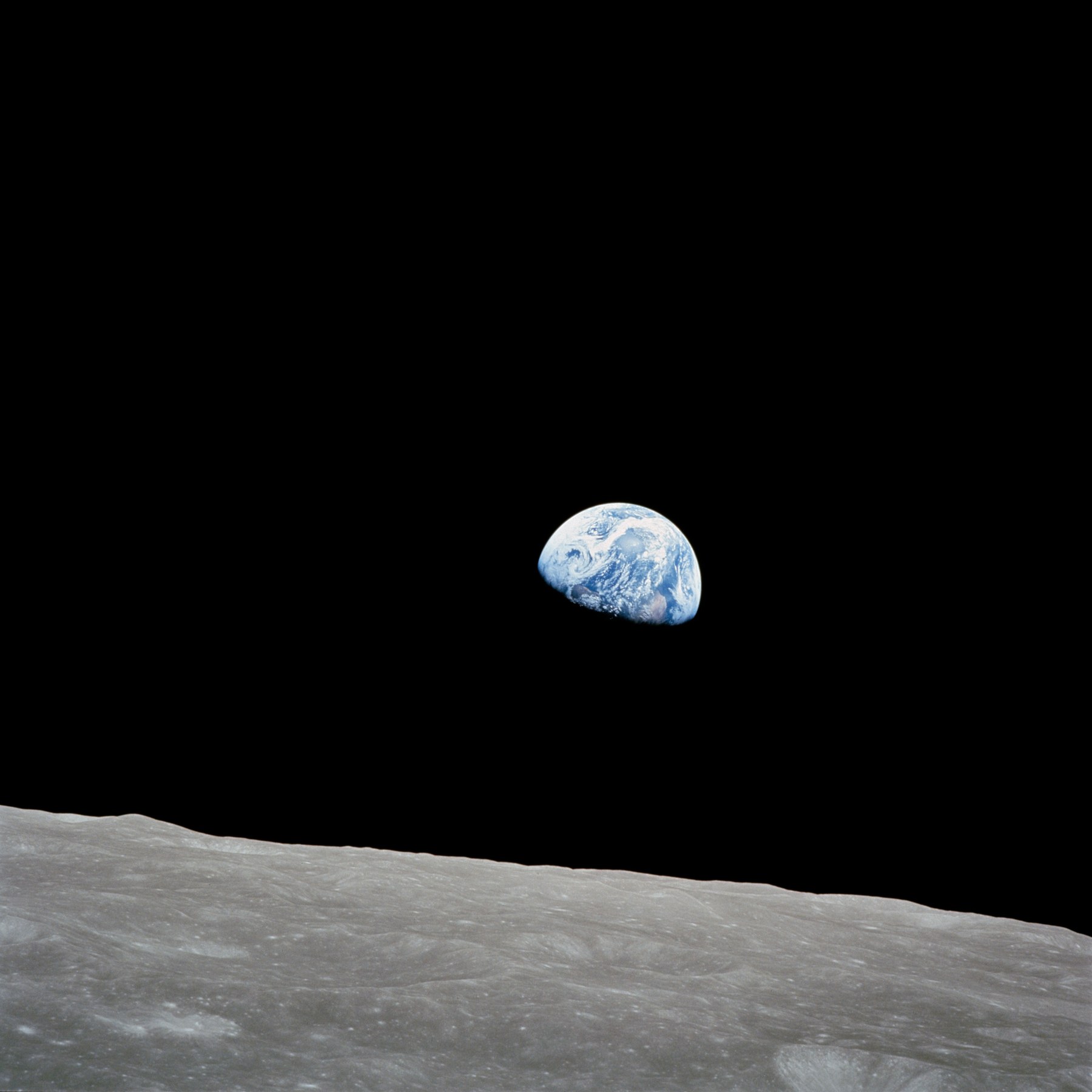
Echo
The space age · Cislunar space, and later low Earth orbit
The pale blue disc
Astronauts, centuries later, describe Earth as small enough to cover with a thumb. Julian’s hazelnut is not a photograph. Both scenes make size into a spiritual fact.

Another language
Counter-Reformation Spain · Ávila / Toledo
Teresa’s inner castle
Another woman, another century, another architecture of prayer. Teresa builds rooms. Julian is shown a nut. The gender of the mystics is not incidental to how the house remembers them.

Counterpoint
Abbasid / Seljuk world · Baghdad, then Damascus and Tus
al-Ghazali’s crisis
A different sickness of certainty: not vision overflowing, but knowledge collapsing. Both recover a ground. The grounds are not the same.
One question remains
Knowledge · What counts as knowing?
If love is what keeps the small thing from falling, is that a claim about the world, or about the kind of attention that can bear the world?