
Portrait · Self · c. 1258–1273
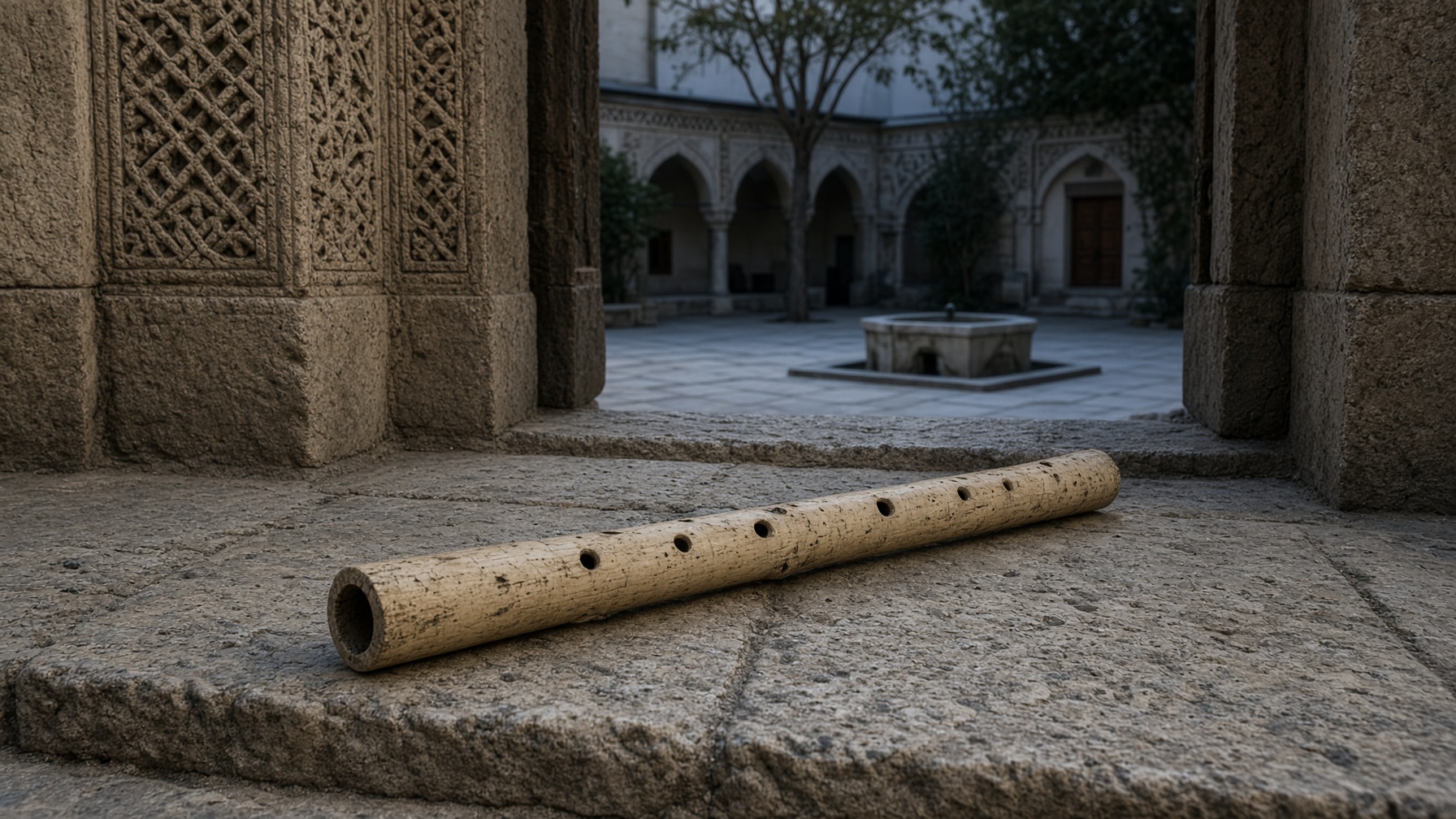
Plate · Generated interpretation
The Reed’s Complaint
A flute begins a long poem by remembering the reed-bed it was cut from.
- Konya
- Seljuk Anatolia
- 37.87°N 32.48°E
Listen for what changes when the reed is separated from the reed-bed.
Listen · Eve
0:00 / —:—
Listen to the reed-flute, how it tells a tale, complaining of separations. The opening of Rumi’s Masnavi is not a theory. It is a sound: a cut reed, become an instrument, remembering the bed it came from. Whoever has been pulled from a source understands the reed’s language. The cry is the knowledge.
Jalāl al-Dīn Rūmī composed the Masnavi-ye-Maʿnavi in Persian in Konya in the later thirteenth century, after the death of Shams of Tabriz. The reed prologue is among the most quoted passages in world literature. English versions vary widely in fidelity; Coleman Barks’s popular renderings are adaptations, not scholarly translations. The house notes the difference.
In Sufi reading, the reed is the human soul, cut from the divine reed-bed, making music because it is empty and because it hurts. Consciousness here is not a problem of neurons. It is a problem of origin: a being that knows itself as separated and sings because of that knowledge. The singing is already a kind of return.
Every one who has remained far from his source wishes back the time when he was united with it.
To take the reed as a metaphor for “consciousness itself” is a modern move. Rumi’s terms are love, separation, the Friend, the secret. They belong to a path. They are not a neutral psychology.
Why it matters
The story suggests that awareness of self is already awareness of a missing source: that to be a knower is to be a cry. Whether that is metaphysics or a phenomenology of longing is left open. The poem does not wait for the decision.
A word
nay
The reed flute of Persian and Ottoman music. Hollowed, fingered, breath becoming pitch. The instrument is the teaching.
Distant echoes
Echo
Classical Greece · Athens
The fire and the wall
Plato’s prisoner is pulled toward a source of light. Rumi’s reed remembers a source of life. One is sight; one is sound. Both are stories of a distance that educates.
Another language
Abbasid / Seljuk world · Baghdad, then Damascus and Tus
al-Ghazali’s deliverance
A jurist’s crisis and a poet’s flute. Same wide house of Islam, different rooms: argument restored, and song that does not argue.

Counterpoint
Postwar Britain · Manchester, on the page of Mind
The imitation game
Turing asks whether a machine can converse as if it had an interior. The reed’s claim is that interiority is a wound. A convincing song is not yet a cut.
One question remains
Self · Who or what is having the experience?
If the cry is the knowledge, can there be a consciousness that does not miss anything? Would we want one?