
Myth · Awakening · c. 375 BCE
The Fire and the Wall
Men chained in a cave take shadows for the world.
- Athens
- Classical Greece
- 37.98°N 23.73°E
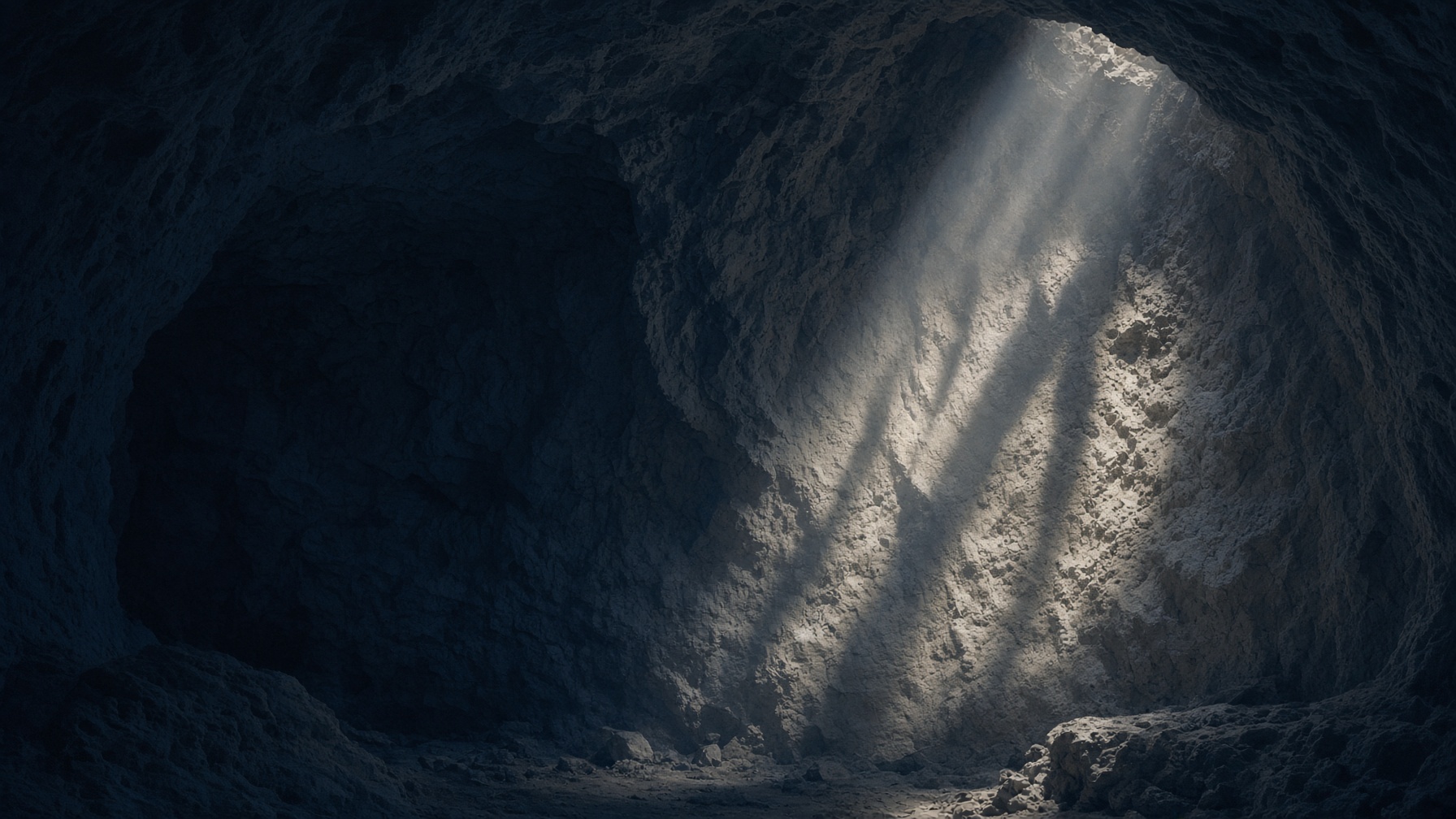
Plate · Generated interpretation
What does the plate let you see, and what does it withhold, before any fire is named?
Listen · Eve
0:00 / —:—
Imagine, Socrates says, an underground chamber. Prisoners have been there since childhood, legs and necks fixed so they can look only at the wall in front of them. Behind them a fire burns. Between fire and prisoners, people carry objects along a low wall, as puppeteers do. The prisoners name the shadows. For them, the shadows are the things.
The scene is Plato’s, in Republic VII (514a–520a): an allegory told inside a dialogue, not a laboratory report and not a creed. Socrates offers it as an image of education (paideia) and of the soul’s turning from becoming toward what is.
One prisoner is freed. The light hurts. He is told that the puppets are more real than the shadows; he does not believe it. Dragged toward the fire, then toward the mouth of the cave, he is blinded again, this time by the sun. Only slowly can he look at reflections, then at objects, then at the night sky, and last at the sun itself. If he returns to tell the others, they laugh. If he tries to unchain them, they would kill him.
Education is not putting sight into blind eyes. It is turning the whole soul around.
The allegory has been read as metaphysics, as politics, as a theory of media, as a parable of waking. Plato does not, in this passage, use a word that maps cleanly onto the modern English consciousness. What he stages is a change in what appears, and in who is in a position to say what appears.
Later centuries have heard the cave in movie theaters, in feeds, in the skull’s own dark. Those rhymes are ours, not his. They are useful only if they stay analogies.
A word
paideia
Greek παιδεία: education, culture, the rearing of a person. In Plato it is not information added to a mind. It is a turning of the soul (periagōgē) toward a different light.
Distant echoes
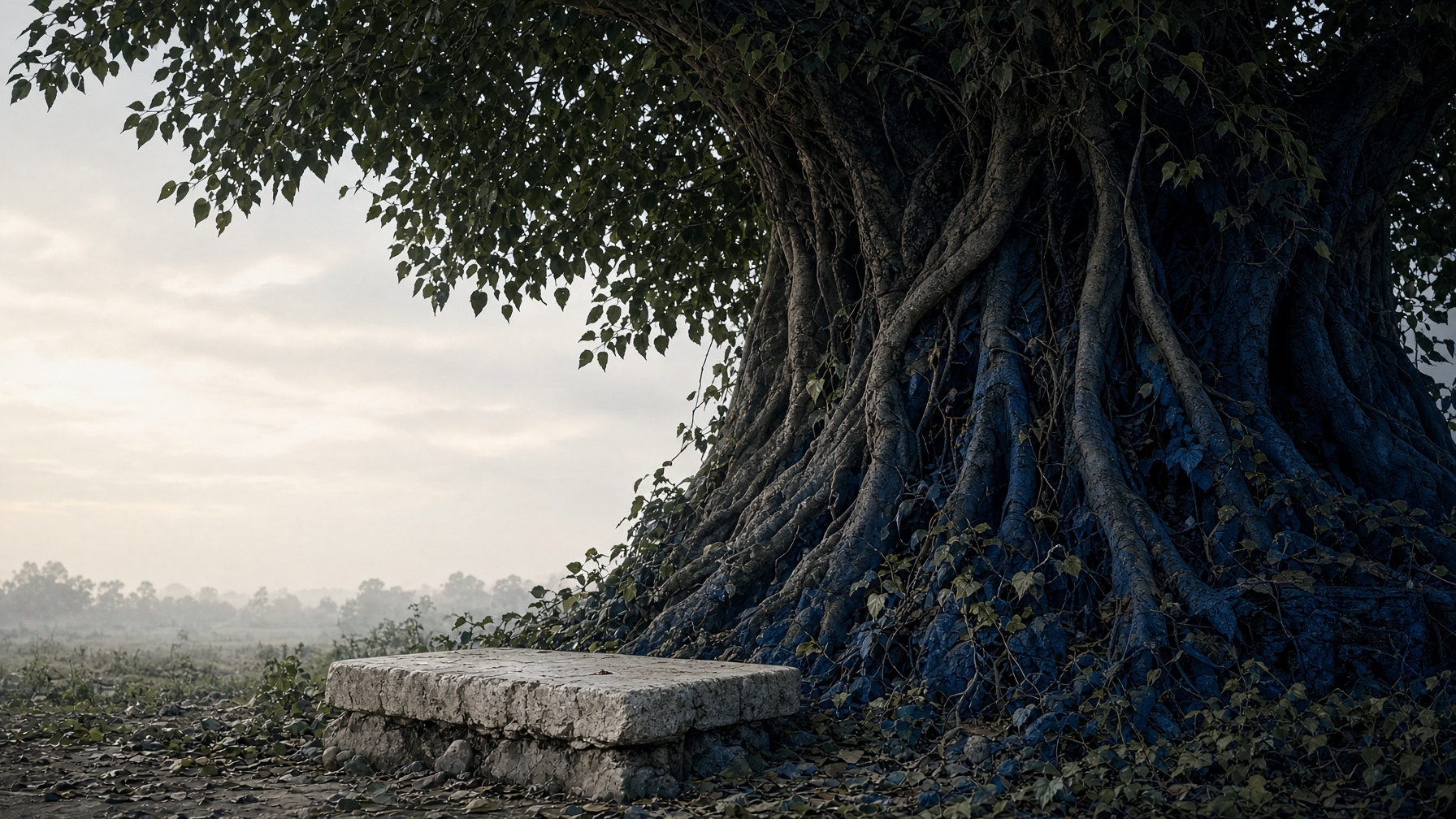
Echo
Second urbanization of the Ganges plain · Uruvelā, later Bodh Gayā
The Buddha beneath the fig
Another story of a turning, but the turning is not from shadow to sun-form. It is from craving to a seeing that does not cling. The methods do not agree. The fact of a turning is shared.
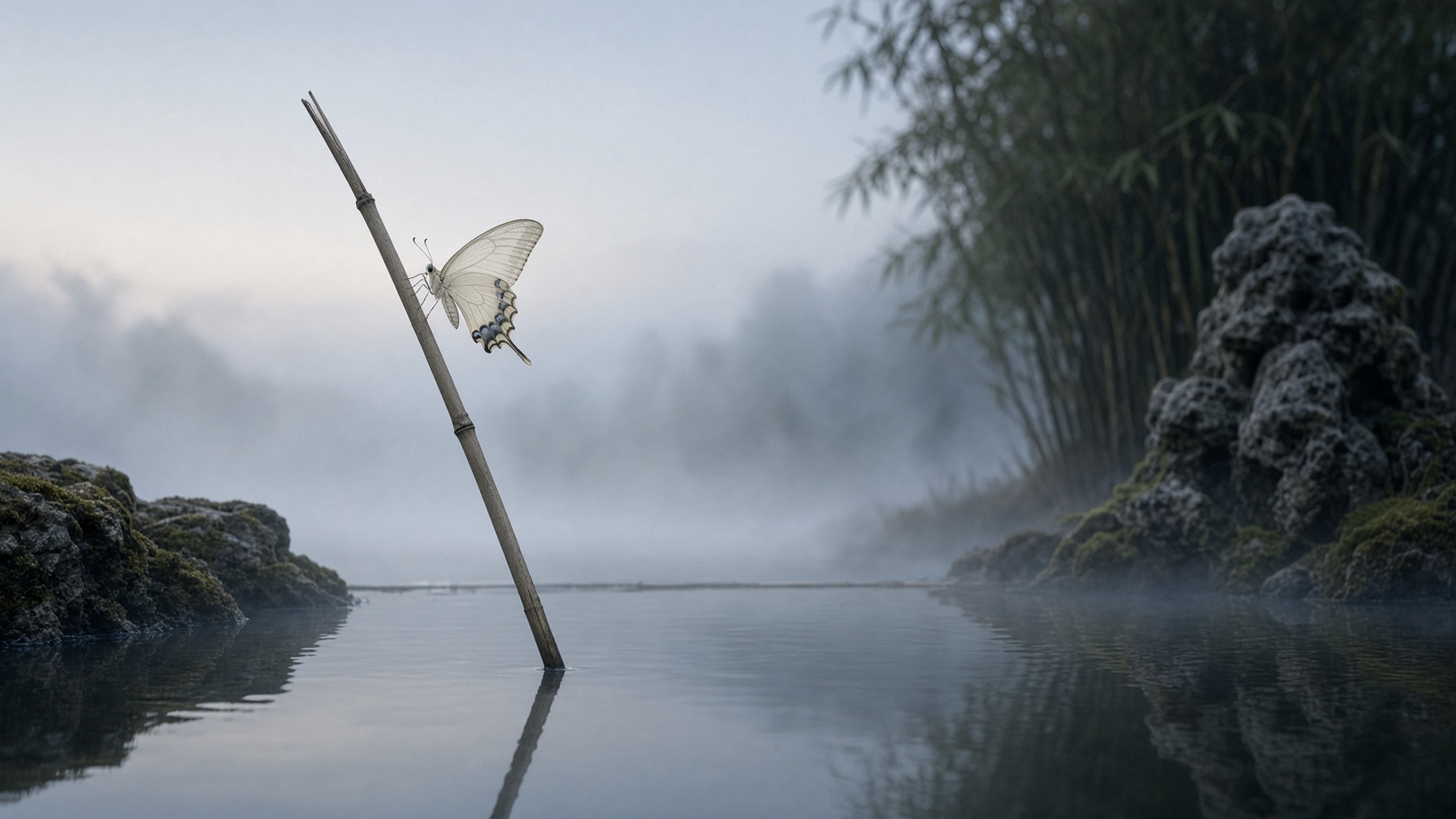
Counterpoint
Warring States China · The state of Song, traditionally
Zhuangzi’s butterfly
Plato climbs toward a more real. Zhuangzi declines to decide which dreamer is the authentic one. One cave; one doubt that there is an outside.
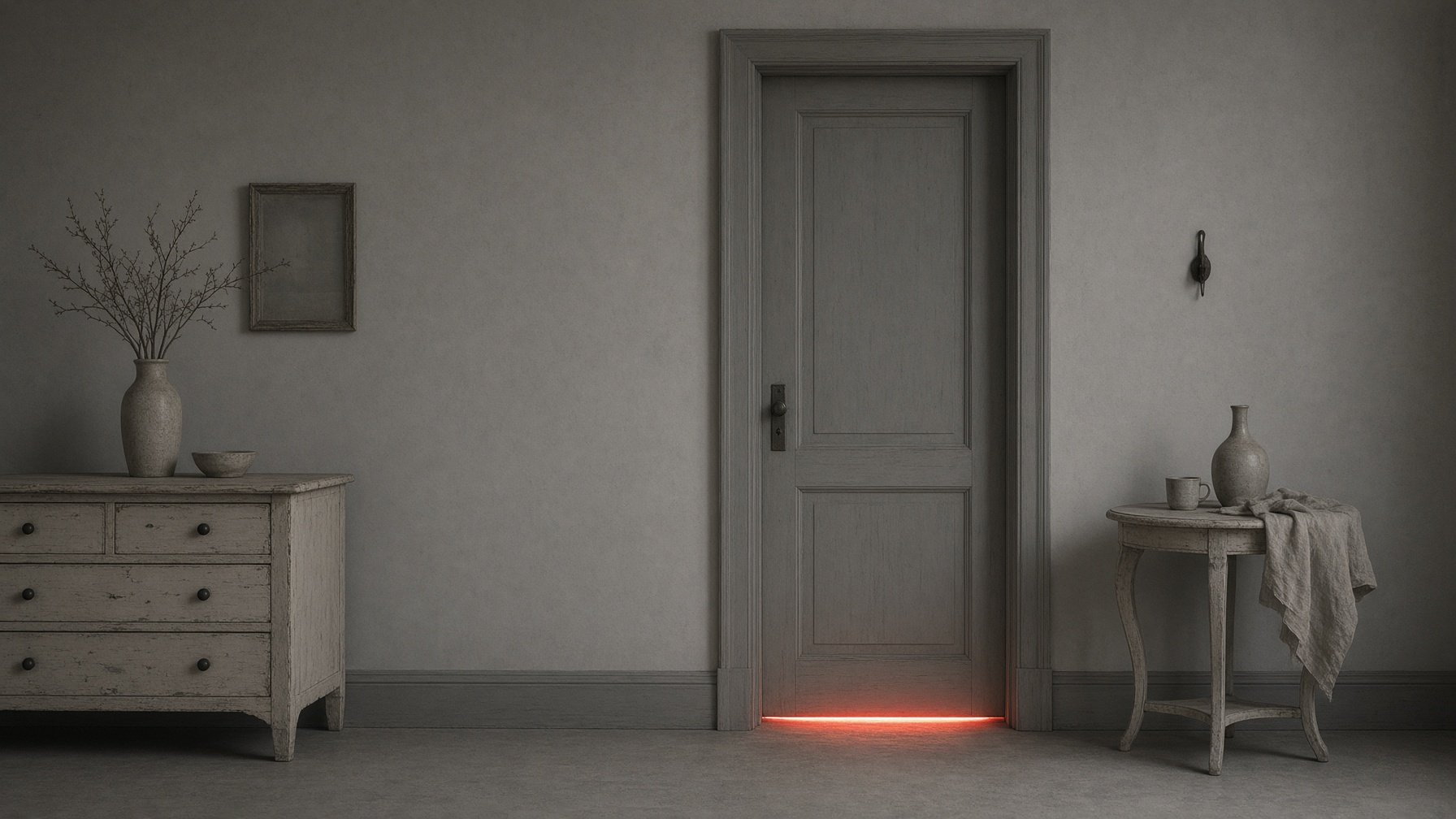
Another language
Analytic philosophy · A gray room that does not exist
Mary’s closed door
A thought experiment in which all the information about color is already in the gray room. Knowing the physics of light is not the same as the first seeing of red. Plato’s prisoner lacks a world. Mary may lack only a quality of experience. The difference matters.
One question remains
Awakening · What changes when consciousness recognizes something differently?
If the prisoners named the shadows together, did they share a world, or only a habit? What would count as evidence that we have left the cave?