
Place · Awakening · c. 5th century BCE
Beneath the Fig
A man sits down and vows not to rise until he has seen through the trouble of existing.
- Uruvelā, later Bodh Gayā
- Second urbanization of the Ganges plain
- 24.70°N 84.99°E
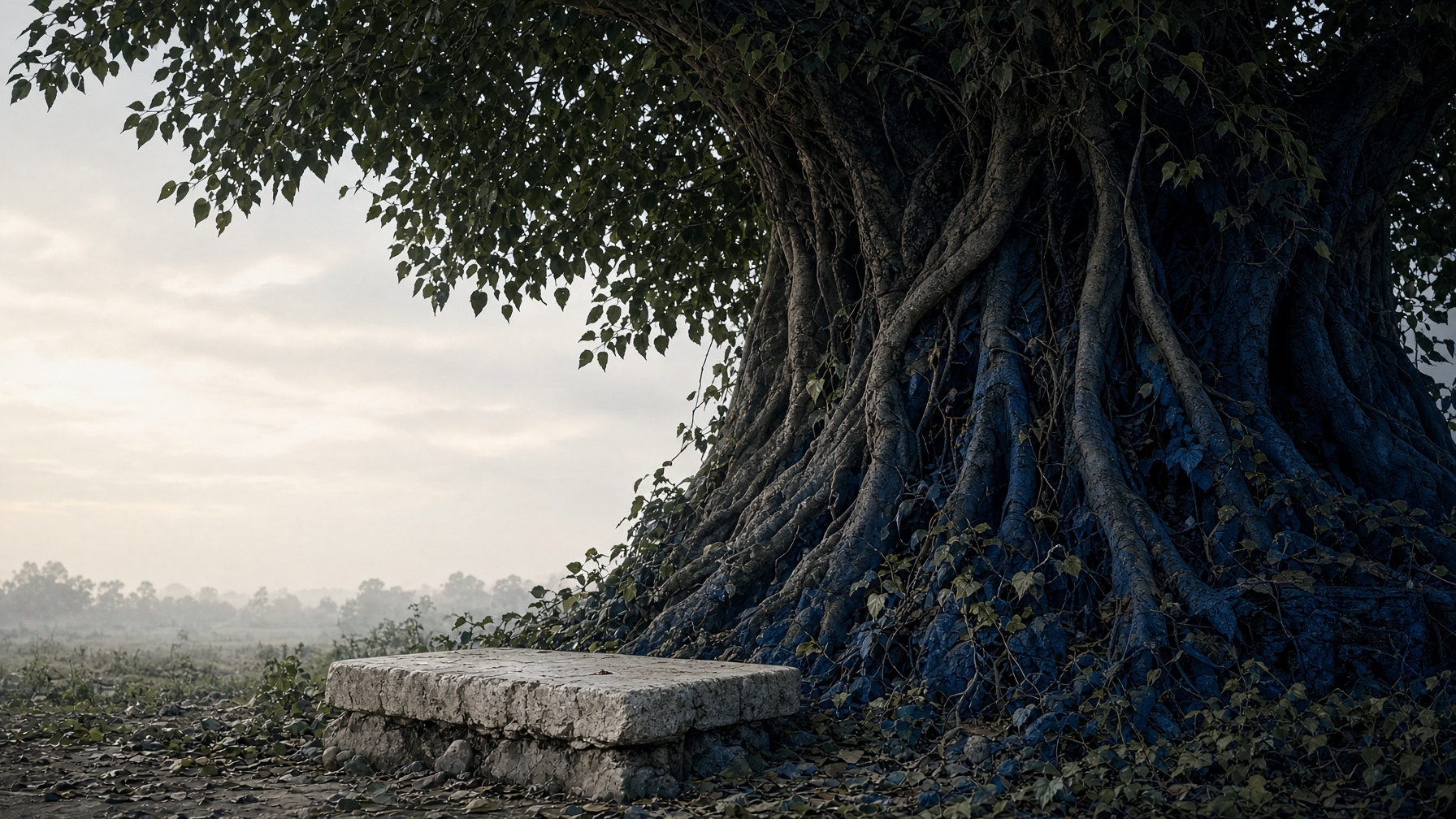
Plate · Generated interpretation
Let the tree be a tree before it becomes a site.
Listen · Eve
0:00 / —:—
After years of luxury and then of extreme austerity, a wanderer named Siddhattha sits at the foot of a pipal tree. He has taken food again. He faces east. The later tellings say he vows: skin, sinew, and bone may dry, but he will not rise until he has found what he came for. Night passes in stages the tradition names as watches. Dawn arrives with a seeing that the texts call bodhi: waking, unfolding, knowing.
The earliest Buddhist texts do not give a modern biography. They give formula, verse, and later the Nidānakathā and Buddhacarita, which fill in scene and miracle. What can be held as tradition: a historical teacher, a night of sitting, a claim that what was found could be shown to others as a path, not a private vision.
What he is said to have seen is not a new object in the world. It is the structure of dissatisfaction (dukkha), its arising, its ceasing, and a way. Consciousness, in the analysis that follows, is not a soul-substance. It is one of the aggregates: viññāṇa, a knowing that depends on contact between sense and world, arising and ceasing moment by moment.
The seeing was not an addition to the man. It was the end of a certain way of being the man.
To call this “enlightenment” in English already imports light-metaphors Plato would recognize. The Pali bodhi is closer to awakening from sleep. Whether the event was sudden or the ripening of a long discipline is itself a later argument among schools.
Māra’s armies, the earth-touching gesture, the seven weeks after: these belong to the narrative art of a religion remembering its origin. They are not therefore empty. They are not therefore evidence in the scientific sense. The house keeps the registers apart.
A word
bodhi
From the Sanskrit/Pali root budh, to wake, to understand. Buddha is the one who has woken. The tree is named for the event, not the other way around.
Distant echoes
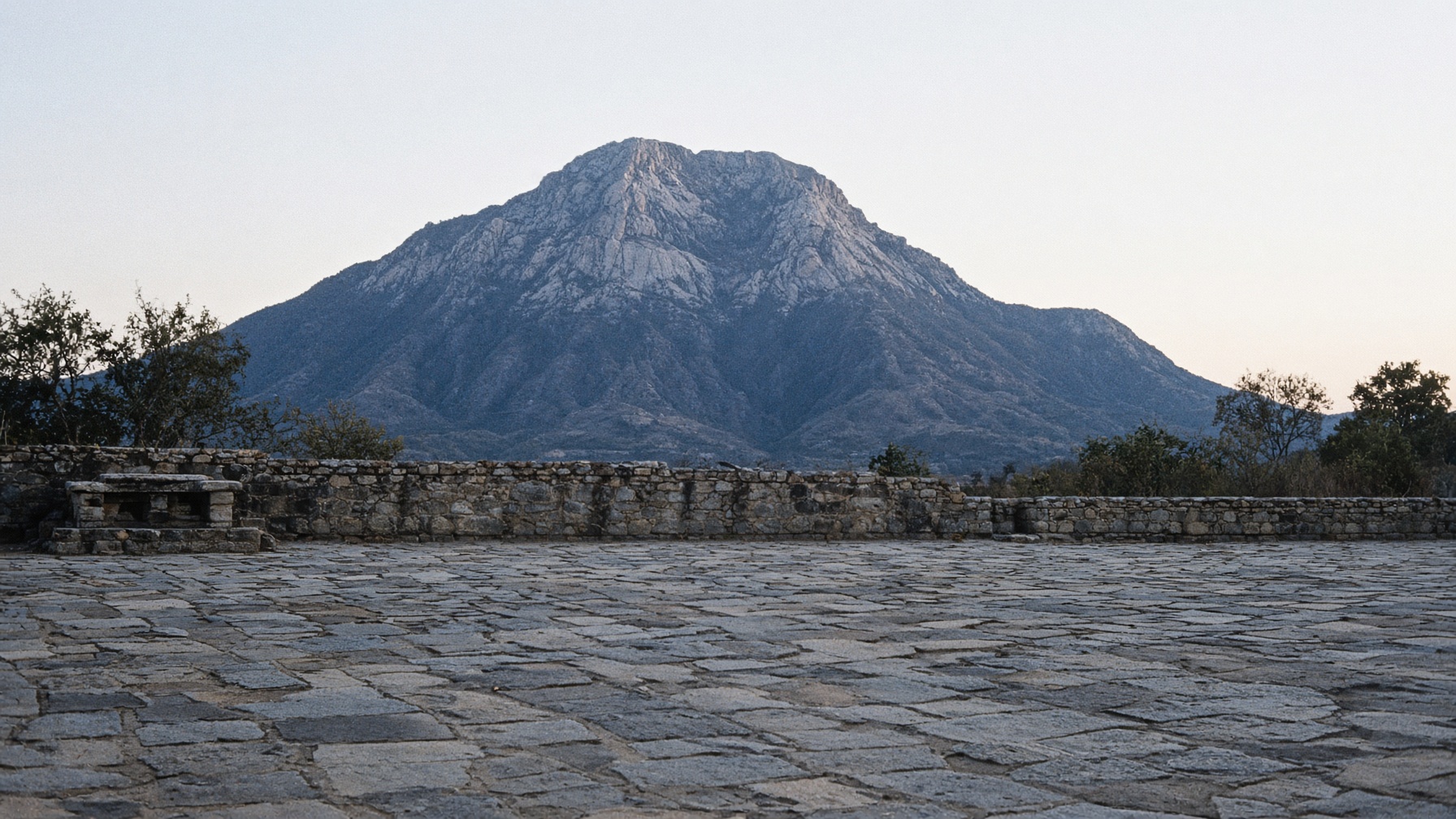
Echo
Colonial South India · Madurai, then Arunachala
Ramana’s question
A different India, a different century: not the four truths but a single inquiry: who is aware? Both treat the ordinary sense of “I” as something that can be examined rather than assumed.

Counterpoint
Gilded Age America · Cambridge, Massachusetts
James’s stream
William James wants to describe the flow of thought as it is lived. The Buddhist analysis wants to see the flow as conditioned and therefore not a self. Description and release are not the same aim.
Another language
offers another language
Default-mode quiet
Some contemporary papers report changes in self-referential brain networks in long-term meditators. That is evidence about brains. It is not the same as the claim of bodhi. It may rhyme. It may distract.
One question remains
Awakening · What changes when consciousness recognizes something differently?
Is awakening a kind of knowledge, a change of being, a way of seeing, or a surrender of the one who wanted it? Can those be told apart from the inside?