
Atlas · Words as instruments
Language / Etymology
How the names we give to mind, soul, and witness shape what we are able to notice.

Ancient World
The Fire and the Wall
Men chained in a cave take shadows for the world.
Athens · c. 375 BCE
Sacred Traditions
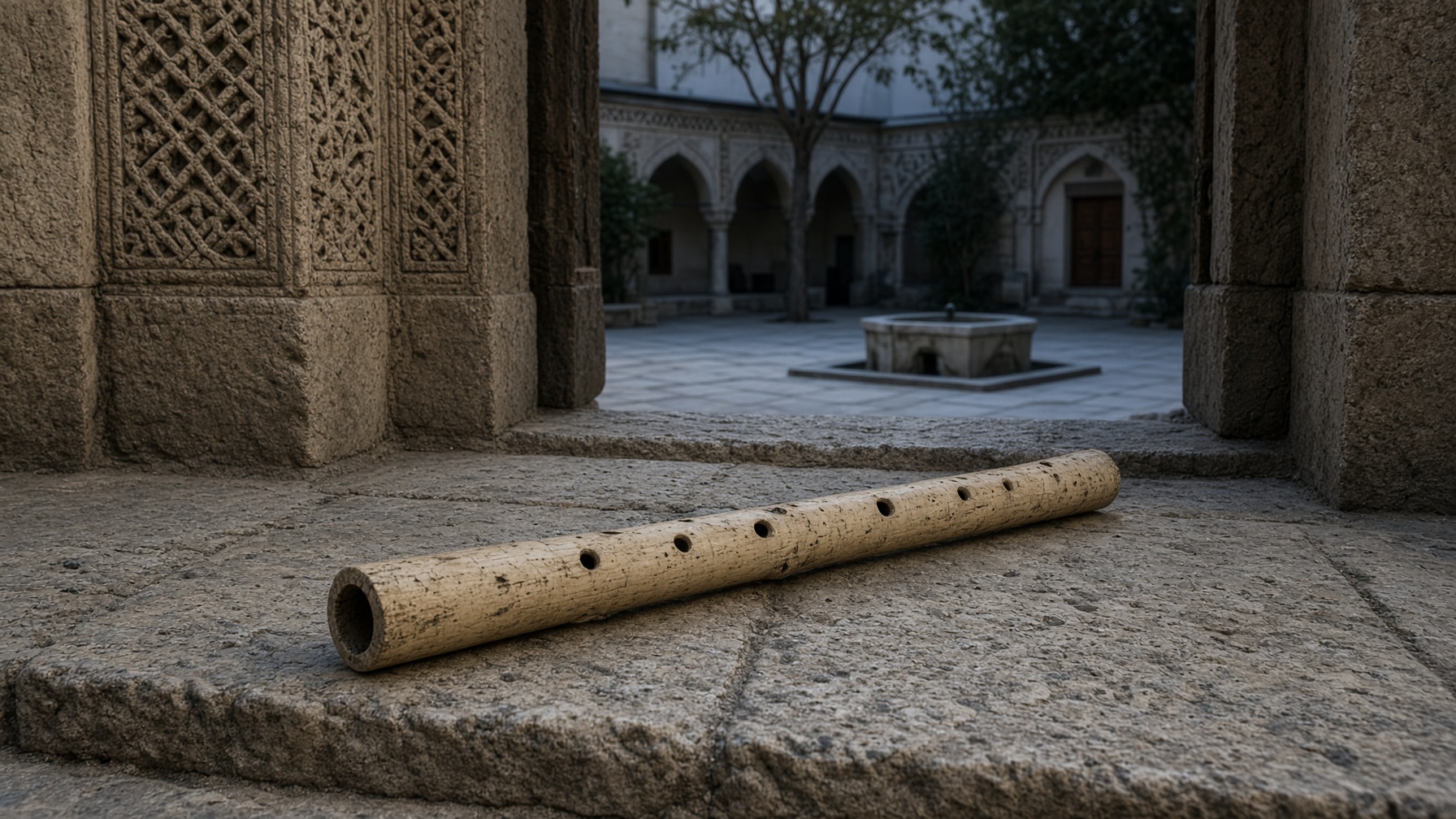
The Reed’s Complaint
A flute begins a long poem by remembering the reed-bed it was cut from.
Konya · c. 1258–1273
Sacred Traditions
The most celebrated teacher in Baghdad can no longer trust that he knows, and walks away from the lectern.
When Knowledge Would Not Sit Still
Baghdad, then Damascus and Tus · 1095

Philosophy
The Stream of Thought
A psychologist refuses to cut the mind into pieces that would make a textbook tidy, and names the flow instead.
Cambridge, Massachusetts · 1890

Philosophy
Beside the Stove
A man sits through a winter of doubt, and finds a remainder he cannot unsay: that thinking is going on.
A stove-heated room in Germany, later on the page from the Netherlands · 1619 / 1641

Sacred Traditions
Mountains Walking
A thirteenth-century Soto Zen teacher says that mountains walk, and that to know this is not a metaphor you can keep at arm’s length.
Eihei-ji, Echizen · 1240
Science
A listener is asked to repeat one voice while another voice speaks into the other ear. Most of the ignored speech is lost. A name sometimes is not.
Two Ears, One Name
Imperial College, London · 1953

Philosophy
What English Calls Mind
A Ghanaian philosopher refuses to let a European noun assemble an Akan person.
Legon, and on the page · 1980s–1990s
Philosophy
Smoke, Fire, and the Unseen Mind
A school of Indian logic treats other minds the way it treats fire on a hill: not by looking inside, but by inferring from a sign.
North India, on the page of the sūtras and their commentaries · c. 2nd–5th century CE
Philosophy
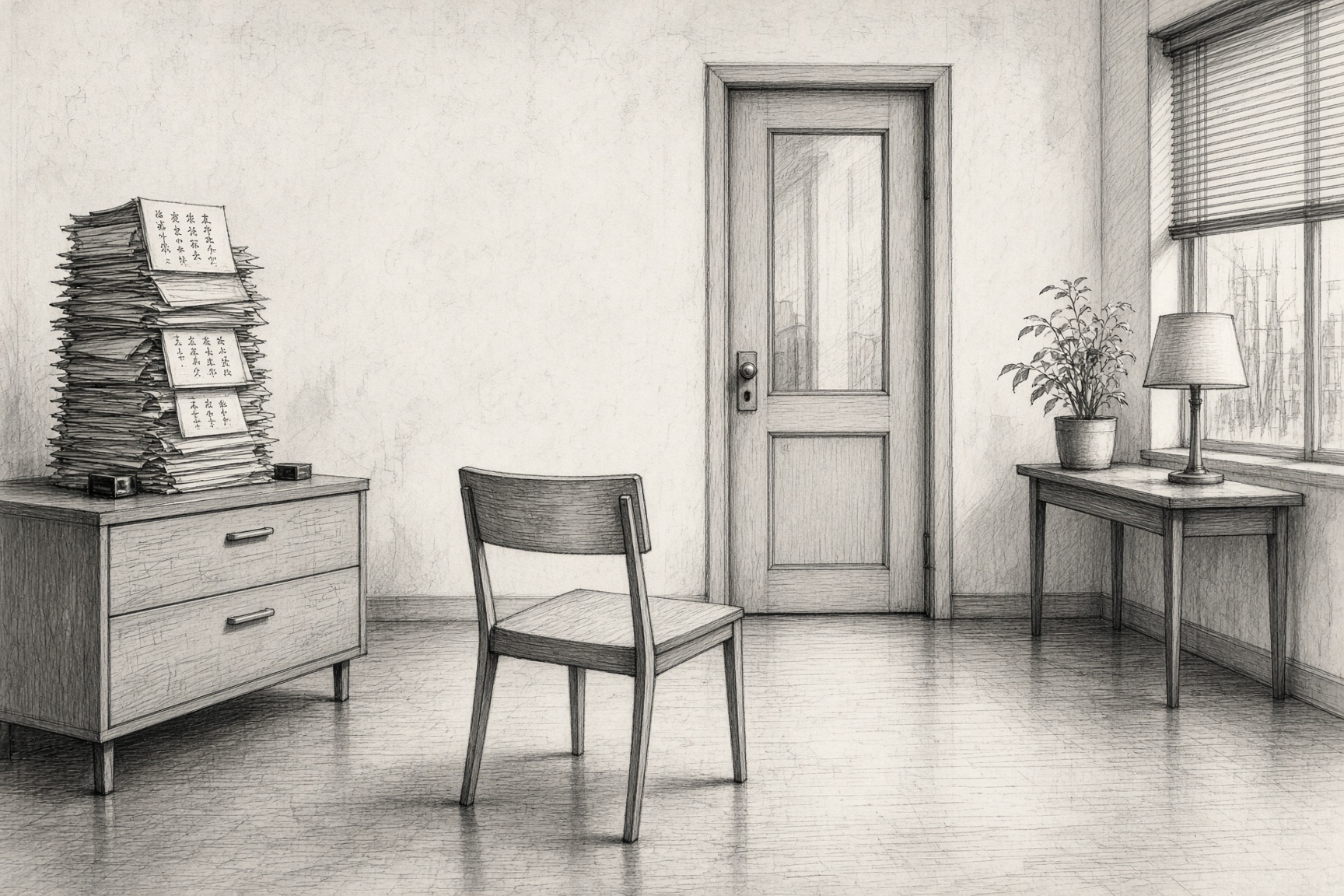
The Room That Follows Rules
A man in a locked room passes slips of Chinese by a rulebook. From outside, it looks like understanding. From inside, he says, it is not.
Berkeley, on the page · 1980
Animals
An African grey parrot, in a long experiment, uses English words for color, number, and the category of a match. The words are data. They are not a confession.
Same and Different
Chicago, then Purdue, Northwestern, Arizona, MIT, Brandeis, Harvard · 1977–2007

AI & Machines
The Secretary and the Script
A program at MIT reflects a user’s words back in the manner of a Rogerian therapist. People lean in. Its maker is appalled.
MIT, Project MAC · 1966
Philosophy
A Box, a Beetle
A philosopher asks us to imagine that everyone has a box with something in it called a beetle. No one can look in anyone else’s box.
Cambridge, on the page · 1953

Ordinary Life
The Grammar of Animacy
A botanist and enrolled member of the Citizen Potawatomi Nation writes that some languages already know how to say a living world. Attention, here, is a practice of address.
Great Lakes, on the page · 2013
Ordinary Life
A child who cannot hear or see has water run over one hand while letters are spelled into the other. Something that was wet becomes a name.
The Word at the Pump
Ivy Green, Tuscumbia · 1887

Animals
A Map Danced on Wax
A bee, back from a dish of sugar, turns a figure on the comb. Distance and direction, Karl von Frisch claims, are in the dance.
Brünn, then Munich · 1920s–1946
Sacred Traditions
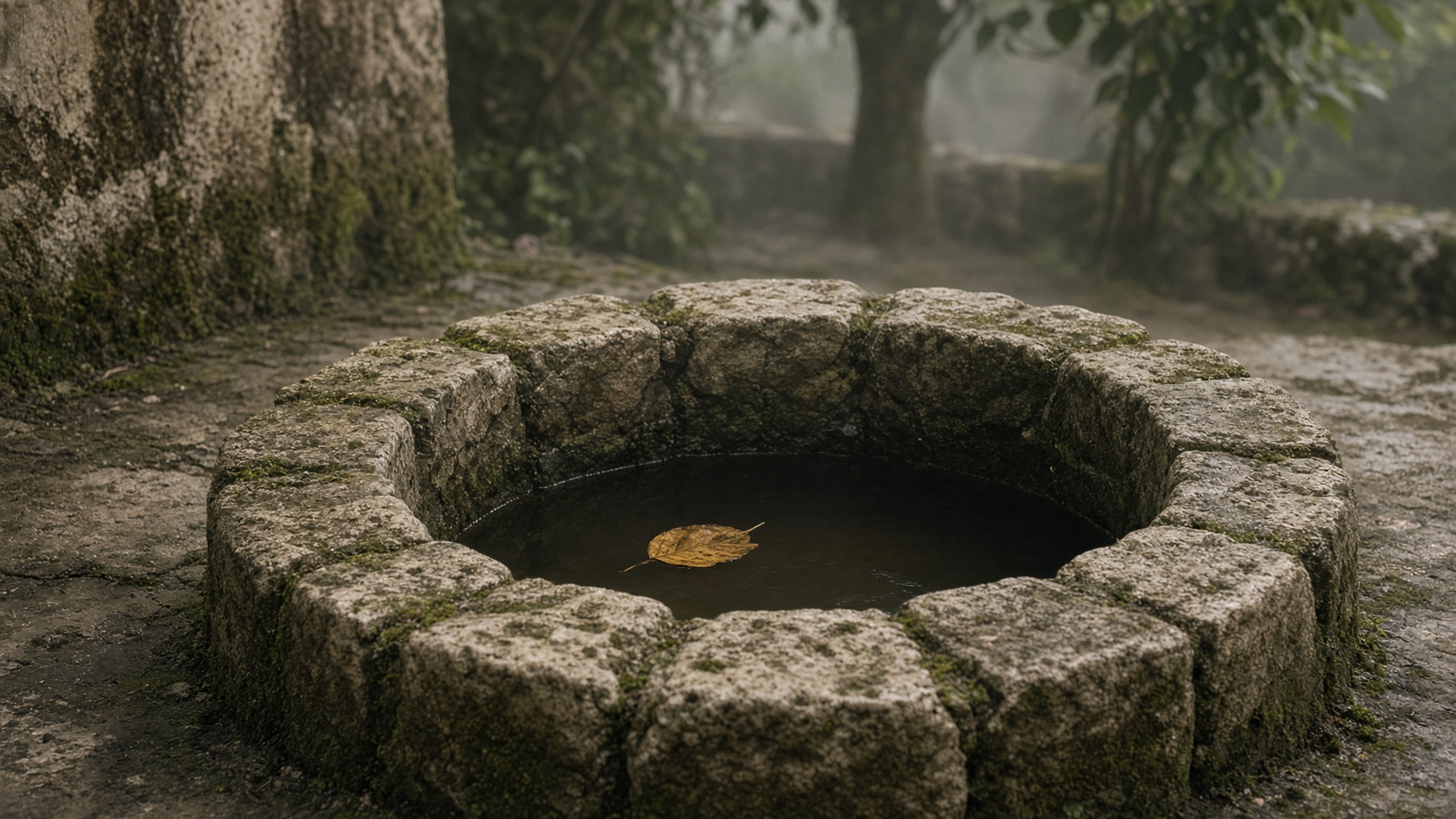
No Mirror, No Dust
A verse contest in a monastery: one poem wipes a mirror. Another says there was never a mirror. The second is the one the tradition keeps.
Huangmei, then Shaozhou, on the page of the Platform Sūtra · c. 7th–8th century, as later told

Language / Etymology
A Language with No Parents
Deaf children in Managua, brought together in new schools, make a language that none of their teachers signed. Grammar appears in a generation.
Managua · 1977–1986
Ordinary Life
A Sámi wolf-hunter dictates, to a Danish artist, the first book a Sámi writes about Sámi life. The weather in it is not a capital’s weather.
A Book in the Snow
Guovdageaidnu / Kautokeino, and the pages written in a turf hut · 1910

Science
A Memory That Would Not Thin
In Moscow a psychologist follows a man who cannot forget a list. The gift is also a clogging. Ordinary forgetting, it turns out, is a kind of mercy.
Moscow · 1920s–1968
Philosophy
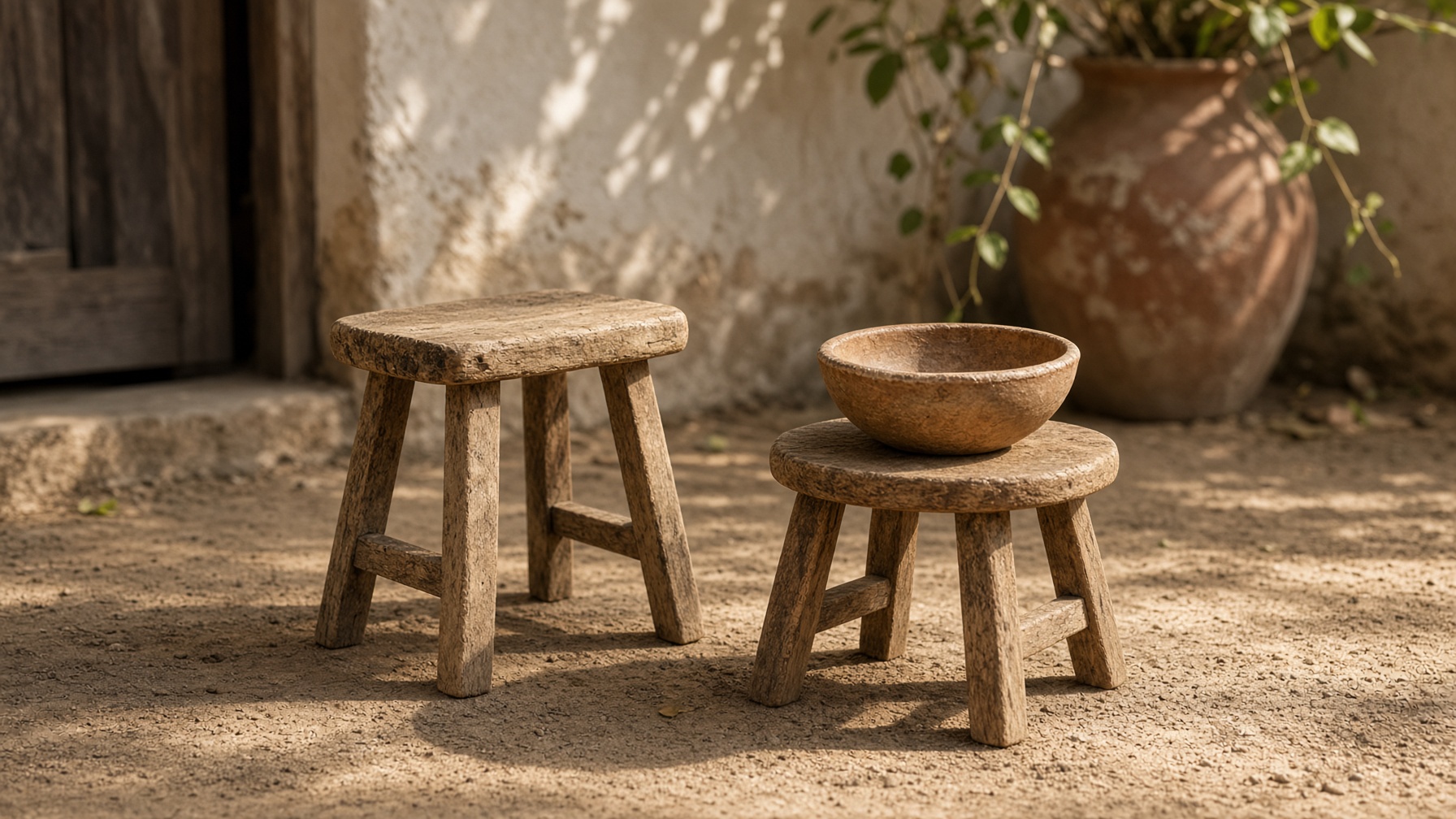
A Person Through Persons
A Nguni proverb says a person is a person through other persons. Twentieth-century writers make a philosophy of it. The proverb is older than the seminars.
Southern Africa, on the tongue and then on the page · proverb; 1990s writing
Ancient World
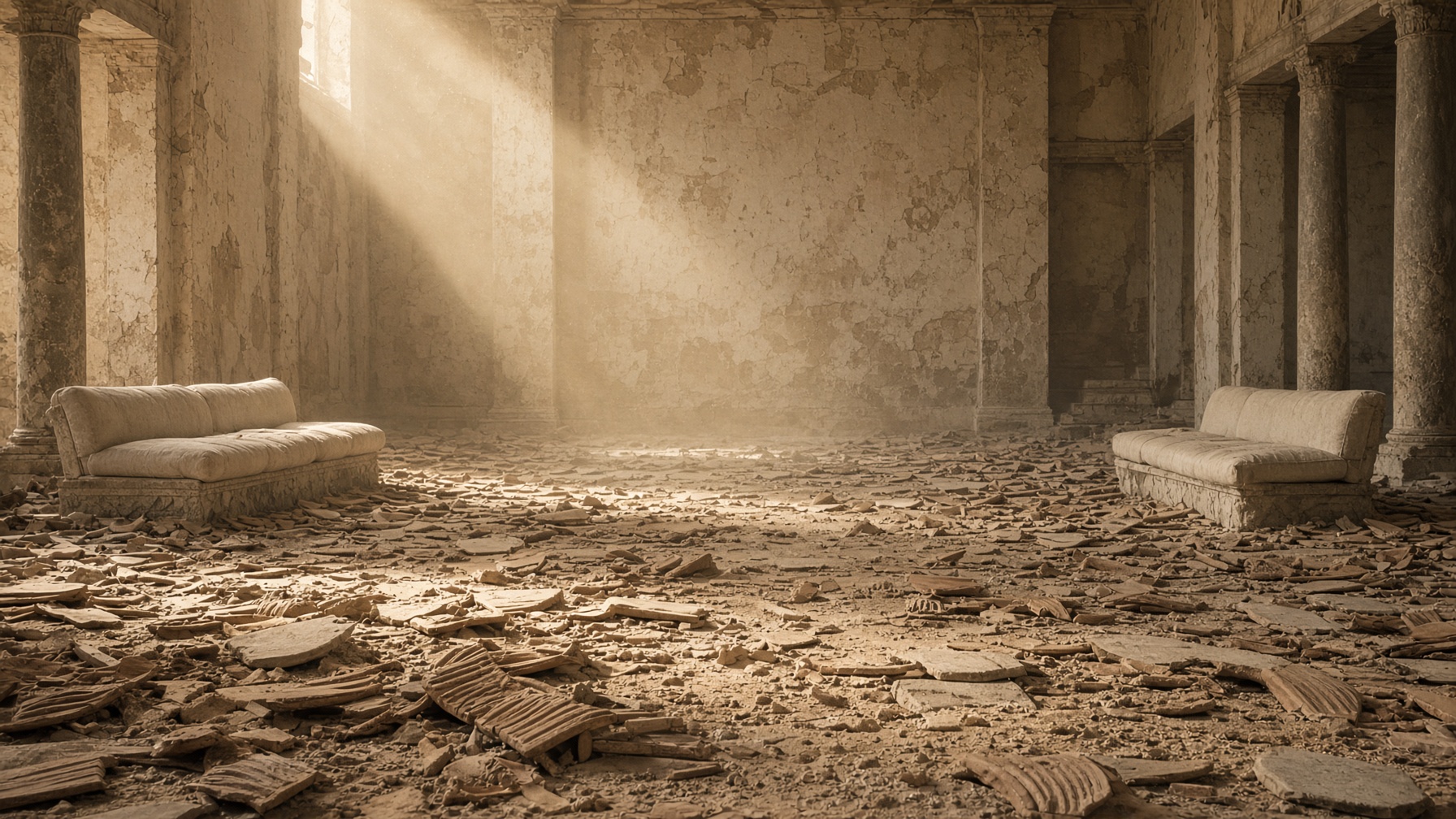
The Places of the Guests
A poet leaves a banquet. The roof falls. He names the dead by where they had been sitting. Memory, in the later telling, becomes a house of places.
Thessaly, as Cicero tells it · as told; written 55 BCE