
Portrait · Knowledge · 1910
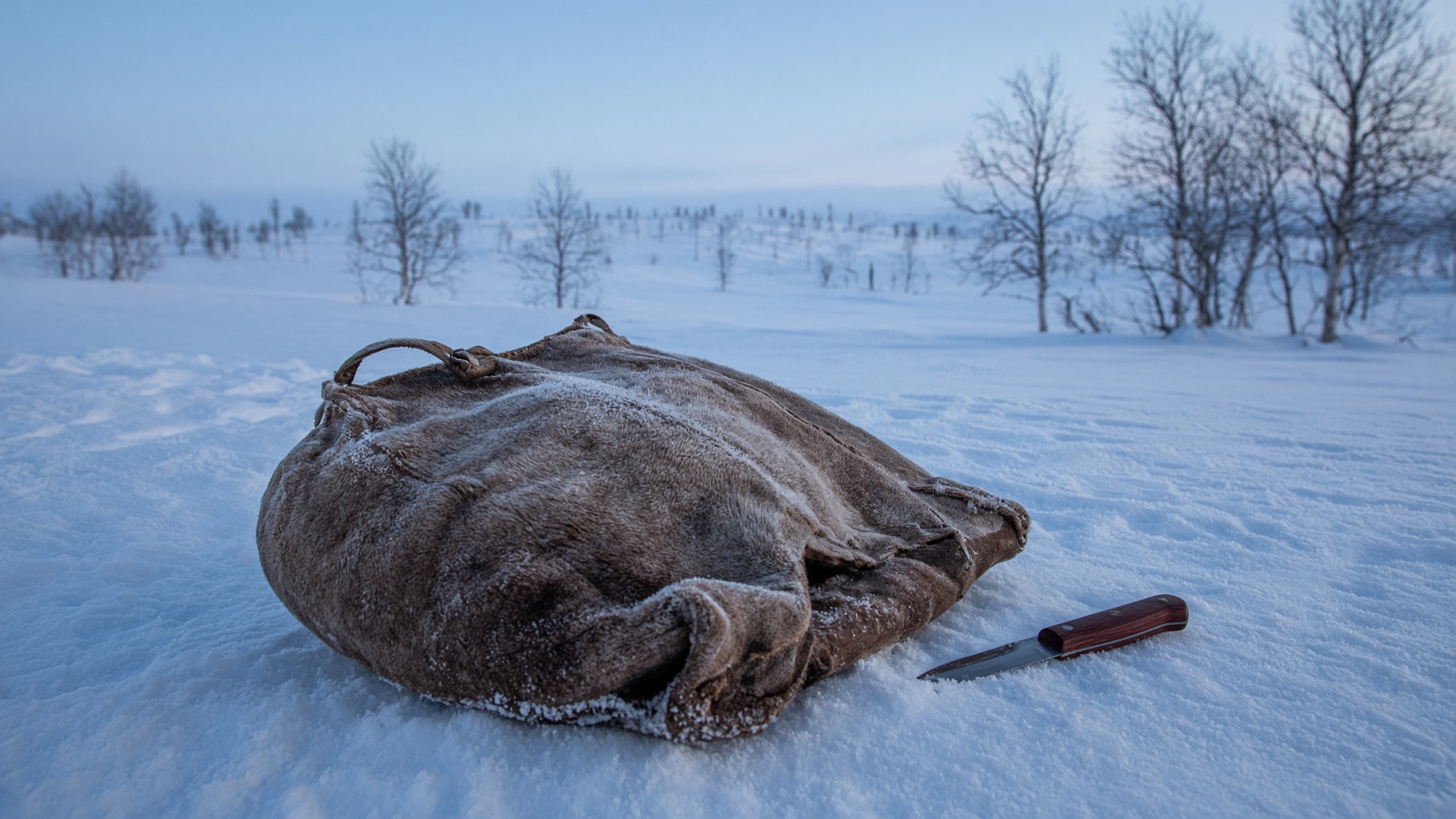
Plate · Generated interpretation
A Book in the Snow
A Sámi wolf-hunter dictates, to a Danish artist, the first book a Sámi writes about Sámi life. The weather in it is not a capital’s weather.
- Guovdageaidnu / Kautokeino, and the pages written in a turf hut
- Early twentieth-century Sápmi
- 69.01°N 23.04°E
Snow, a track. Whose weather is this, before a capital writes it?
Listen · Eve
0:00 / —:—
Johan Turi, Muitalus sámiid birra (1910), with Emilie Demant Hatt, who took the dictation and translated into Danish. English: An Account of the Sámi. Turi writes hunting, herding, healing, and noaidi practices as a man inside them, not as an ethnographer’s object. The collaboration is real and must be named.
Turi, An Account of the Sámi. Trans. Thomas A. DuBois (Nordic Studies Press, 2011) is a scholarly English door. The 1910 Copenhagen edition was Danish and Sámi. Authorship is Turi’s; the path to print is shared.
Noaidi is not a generic shaman, and Turi is not a mascot of indigeneity. He is a particular writer of a particular land. Hokuleʻa is another practiced knowing of a world without a paper chart. Not one “indigenous mind.”
A book can be a way a people become legible to a state. It can also be a way a hunter keeps a world from being only the state’s weather. Both can be true.
What kind of knowing is a life that does not first pass through a desk is the trouble a first book both solves and creates.
Distant echoes
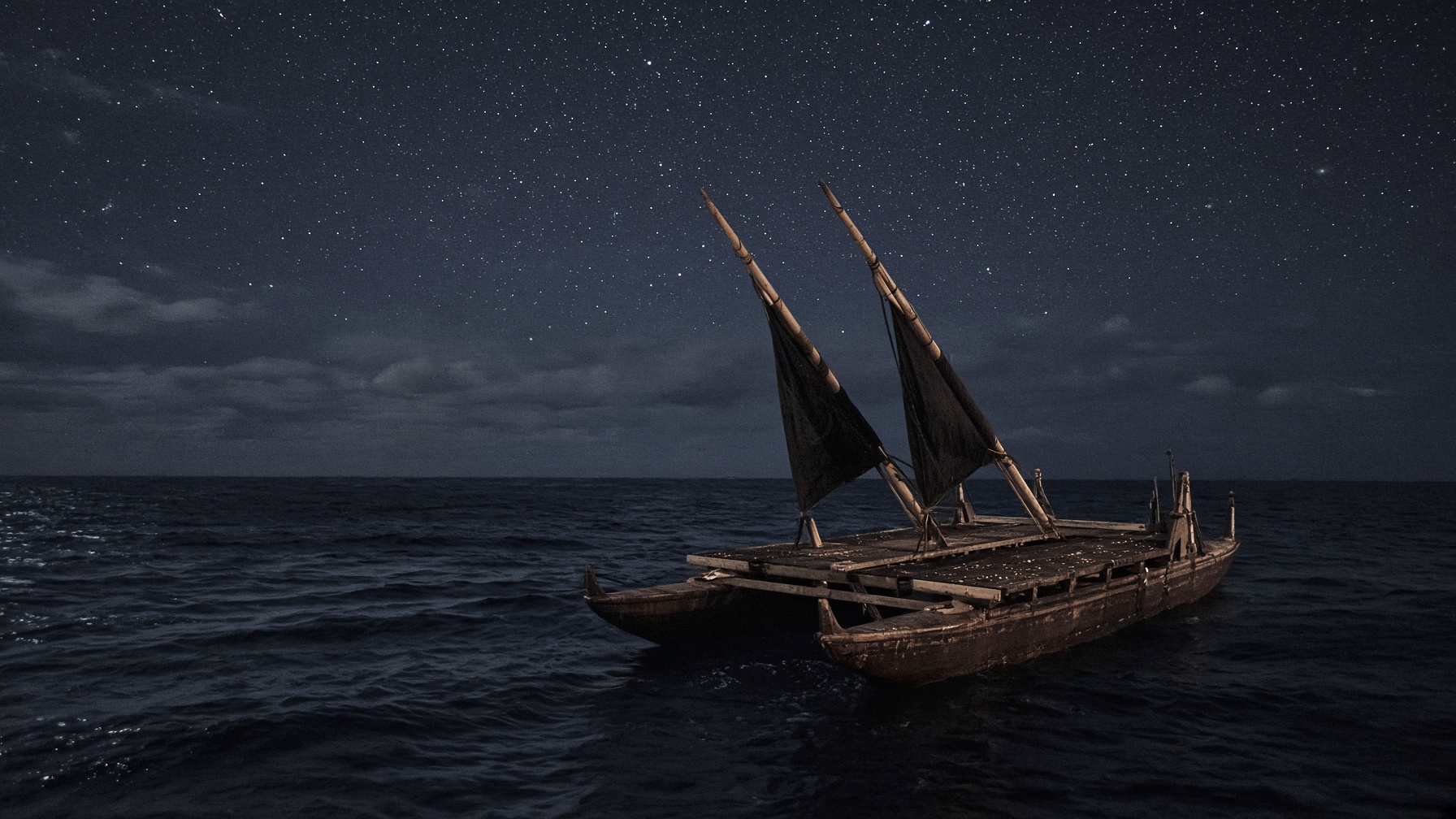
Echo
Late twentieth-century Hawaiʻi · Honolua Bay, Maui, then the ocean toward Tahiti
Star of Gladness
Another practiced knowing of a world that paper does not hold first. Different ocean, different grammar.
One question remains
Knowledge · What counts as knowing?
If a life is written down to be believed, what, in the writing, is saved, and what can no longer roam?