
Myth · Awakening · c. 1177
Thirty Birds
A Persian poem sends the birds across seven valleys to find their king. The king they find is the thirty who arrived: sī murgh, Simurgh.
- Nishapur, on the page of *Manṭiq al-ṭayr*
- Twelfth-century Nishapur
- 36.21°N 58.80°E

Plate · Generated interpretation
Thirty birds, one name. Which did you think was the destination?
Listen · Eve
0:00 / —:—
Farīd al-Dīn ʿAṭṭār, Manṭiq al-ṭayr (The Conference of the Birds). The hoopoe leads. Most birds refuse or fall. Thirty arrive. In Persian, sī murgh: thirty birds. Simurgh: the king. The pun is the teaching. This is allegory, not ornithology.
ʿAṭṭār, The Conference of the Birds. Trans. Dick Davis and Afkham Darbandi (Penguin, 1984). The valleys (including fanā, annihilation) are Sufi stations in verse, not a map of a psyche in English.
Rumi’s reed is another Persian grammar of longing. Plotinus’s One is another metaphysics of return. The Simurgh is a pun that makes the seekers the sought. Label it myth and poem.
A modern reader may hear “we were the answer all along.” That is a flattening of fanā. Arrival here costs the birds their separate names.
Whether the thirty are one, or the one is only a way of counting thirty, is the pun’s leftover.
Distant echoes
Echo
Seljuk Anatolia · Konya
The reed’s complaint
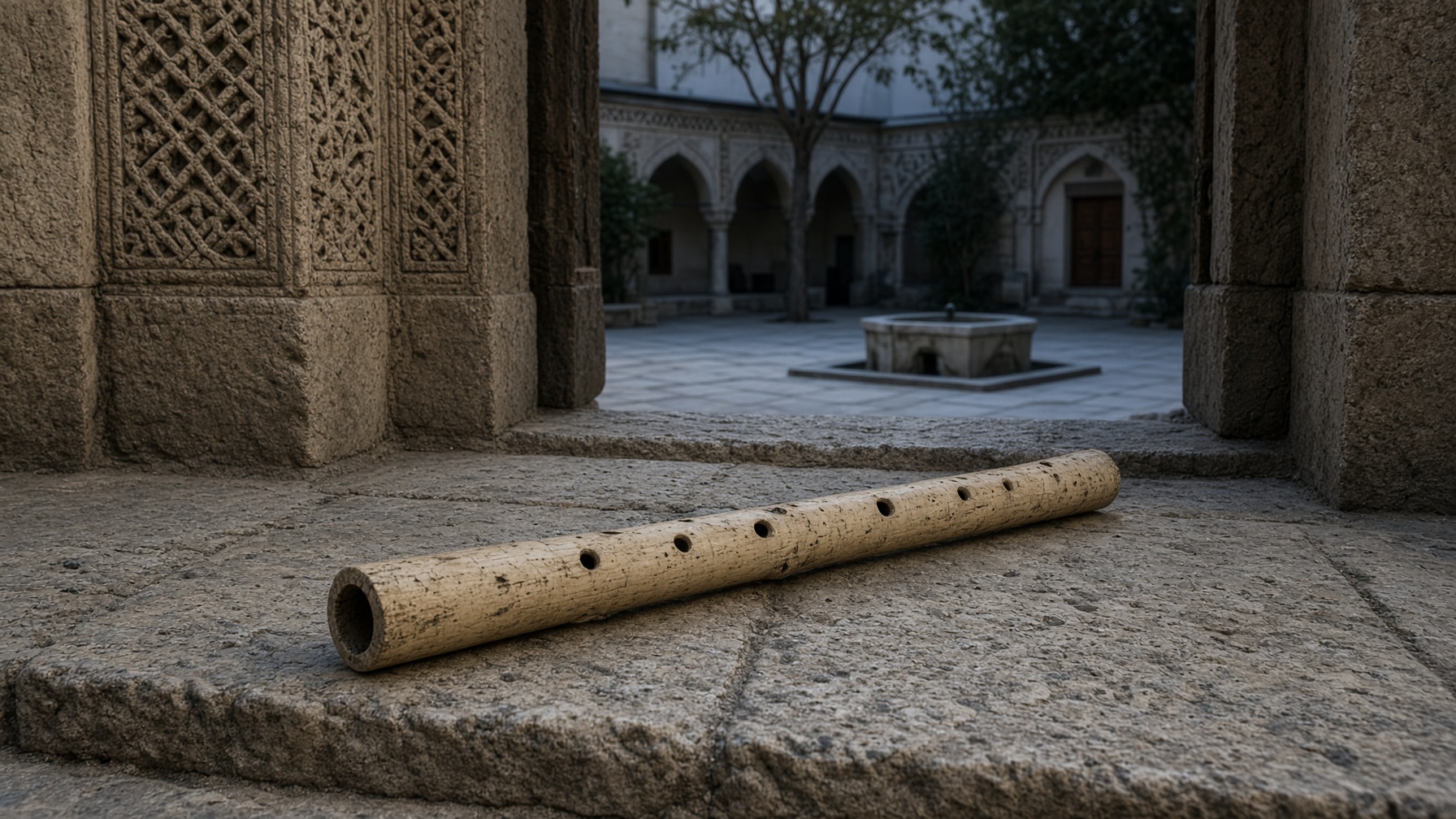
Rumi’s reed wants the reed-bed. ʿAṭṭār’s birds become the king they sought. Not one Sufism.
One question remains
Awakening · What changes when consciousness recognizes something differently?
If the king is the ones who arrive, who, if anyone, was doing the seeking?