
Event · Self · c. 4th century BCE
The Child and the Well
A Warring States teacher says that anyone, seeing a child about to fall into a well, would feel alarm. That feeling, he claims, is a sprout of the heart-mind.
- The courts and dialogues of the *Mencius*
- Warring States China
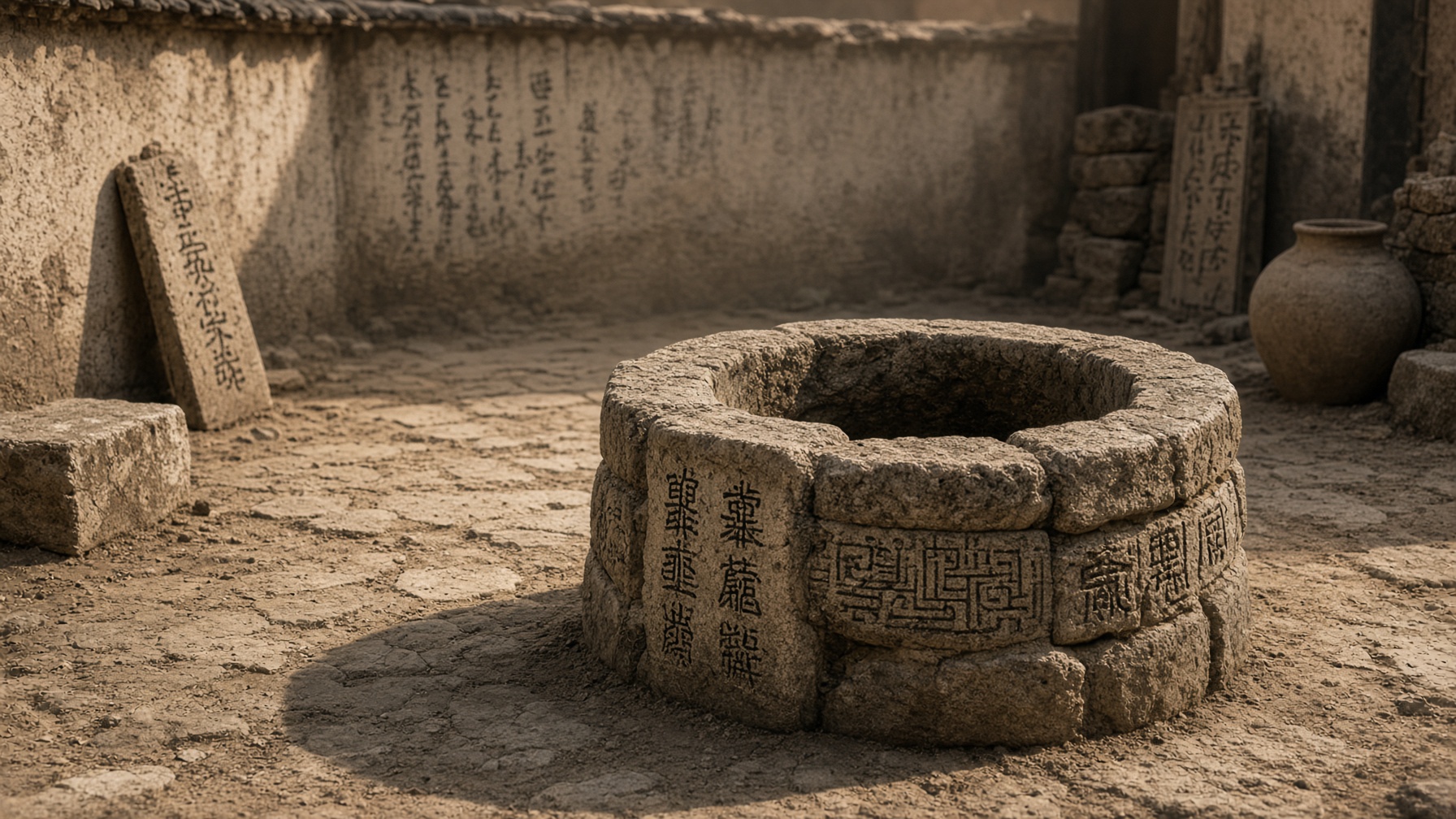
Plate · Generated interpretation
A child and a well, not yet fallen. What moves in you before a theory does?
Listen · Eve
0:00 / —:—
Mencius 2A6. The child and the well. Not because of acquaintance, not for praise, not from dislike of the child’s cry: a spontaneous commiseration. Mencius names four sprouts in xin, heart-mind. Xin is not English “mind” and not English “heart.” It is the organ of both feeling and thought in this grammar.
Mencius 2A6; also 6A. Lau, Mencius (Penguin), or Van Norden, Mengzi (Hackett). Wang Yangming, much later, will radicalize innate knowing. That is a later Confucianism.
This is not a modern empathy study, though later psychologists have staged similar scenes. It is an argument about human nature in a political school. Ubuntu will say a person is a person through others. Mencius says the sprout is already in the seeing. Do not fuse the proverbs.
Translating xin as conscience smuggles a Christian cousin. The house will say heart-mind and leave the seam visible.
Whether the alarm is knowledge, feeling, or a third that English splits, is the trouble of xin.
Distant echoes

Echo
Ming China · Jiangxi, and later on the page from remaining works
The bamboo as teacher
Wang Yangming later makes knowing and acting one. Mencius plants sprouts. Not one Confucianism.
One question remains
Self · Who or what is having the experience?
If alarm at a falling child needs no lesson, what kind of knowing is already in the seeing?