
Event · Attention · 1686
The Sound After
An old pond. A frog jumps in. Water’s sound. The poem is three lines and a whole practice of noticing.
- Edo, on the page of a hokku
- Edo Japan
- 35.69°N 139.69°E
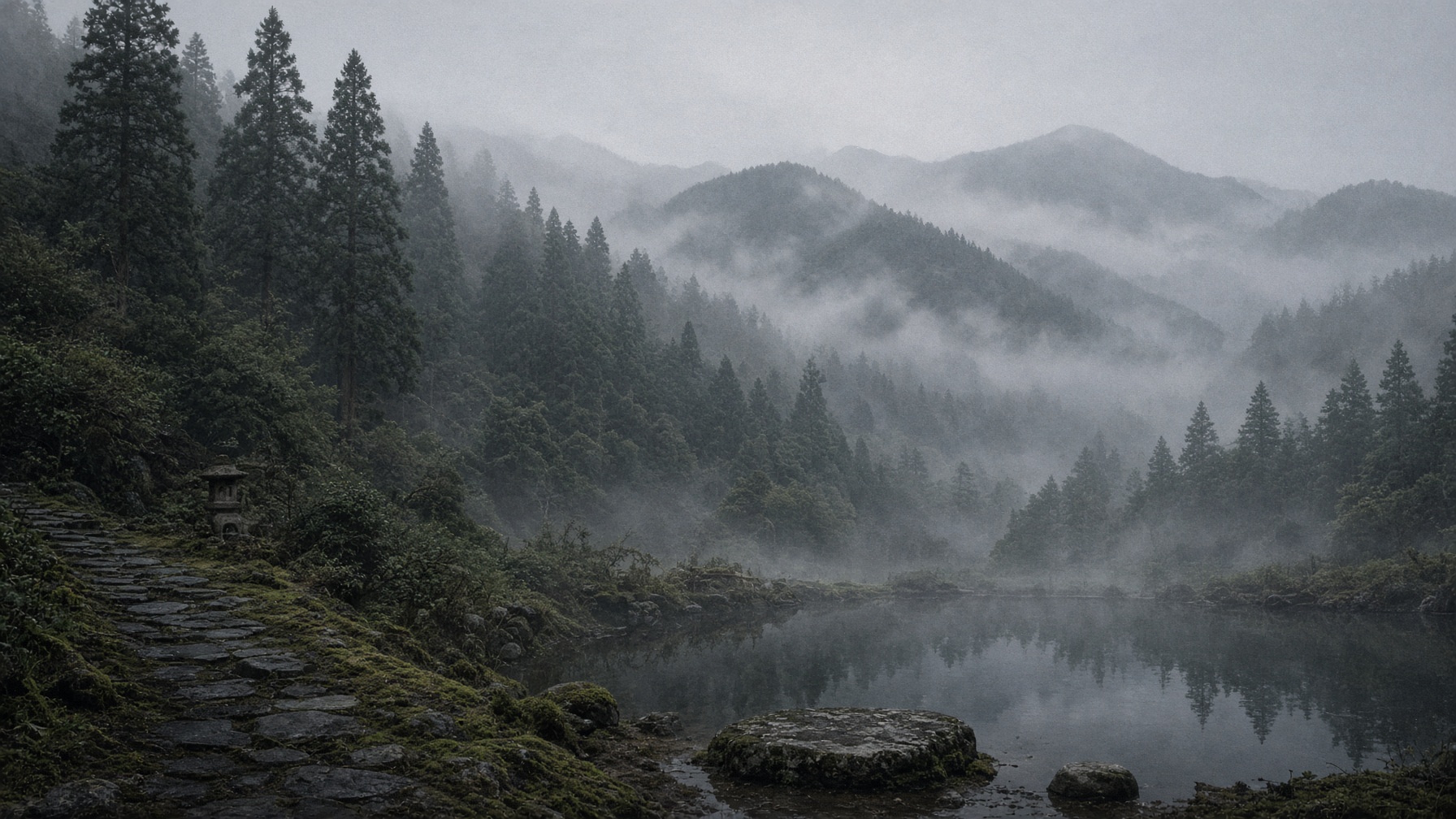
Motion · Ambient plate · Generated interpretation
The pond is still. Do not wait for the frog. What is already sound?
Listen · Eve
0:00 / —:—
Matsuo Bashō, the hokku 古池や / 蛙飛び込む / 水の音. Often dated 1686. An old pond; a frog jumps in; the sound of water. Later commentary heaps Zen upon it. The poem does not mention enlightenment. It mentions a pond, a frog, a sound.
Bashō. A standard English facing is in Haruo Shirane, Traces of Dreams (Stanford, 1998), and in many annotated editions. Oku no Hosomichi is a later journey. This hokku is not that book.
Dōgen’s mountains are a Dharma essay. Bashō’s pond is a seasonal verse in a communal sitting. To make every frog a kōan is a later piety. To make it only a nature snapshot is a later thinness.
Attention here is not Weil’s waiting on God. It is a Japanese poetic discipline of what a moment can hold. Keep the languages.
Whether the sound is in the water, in the ear, or in the verse that has to end is the poem’s leftover.
Distant echoes
Echo
Kamakura Japan · Eihei-ji, Echizen
Mountains and waters
Dōgen’s waters are suchness as teaching. Bashō’s water is a sound. Not one Japan.
One question remains
Attention · What enters awareness?
When the ripples stop, what remains of the frog: a memory, a line, or the pond as it was?