
Place · Awakening · 1240
Mountains Walking
A thirteenth-century Soto Zen teacher says that mountains walk, and that to know this is not a metaphor you can keep at arm’s length.
- Eihei-ji, Echizen
- Kamakura Japan
- 36.05°N 136.36°E
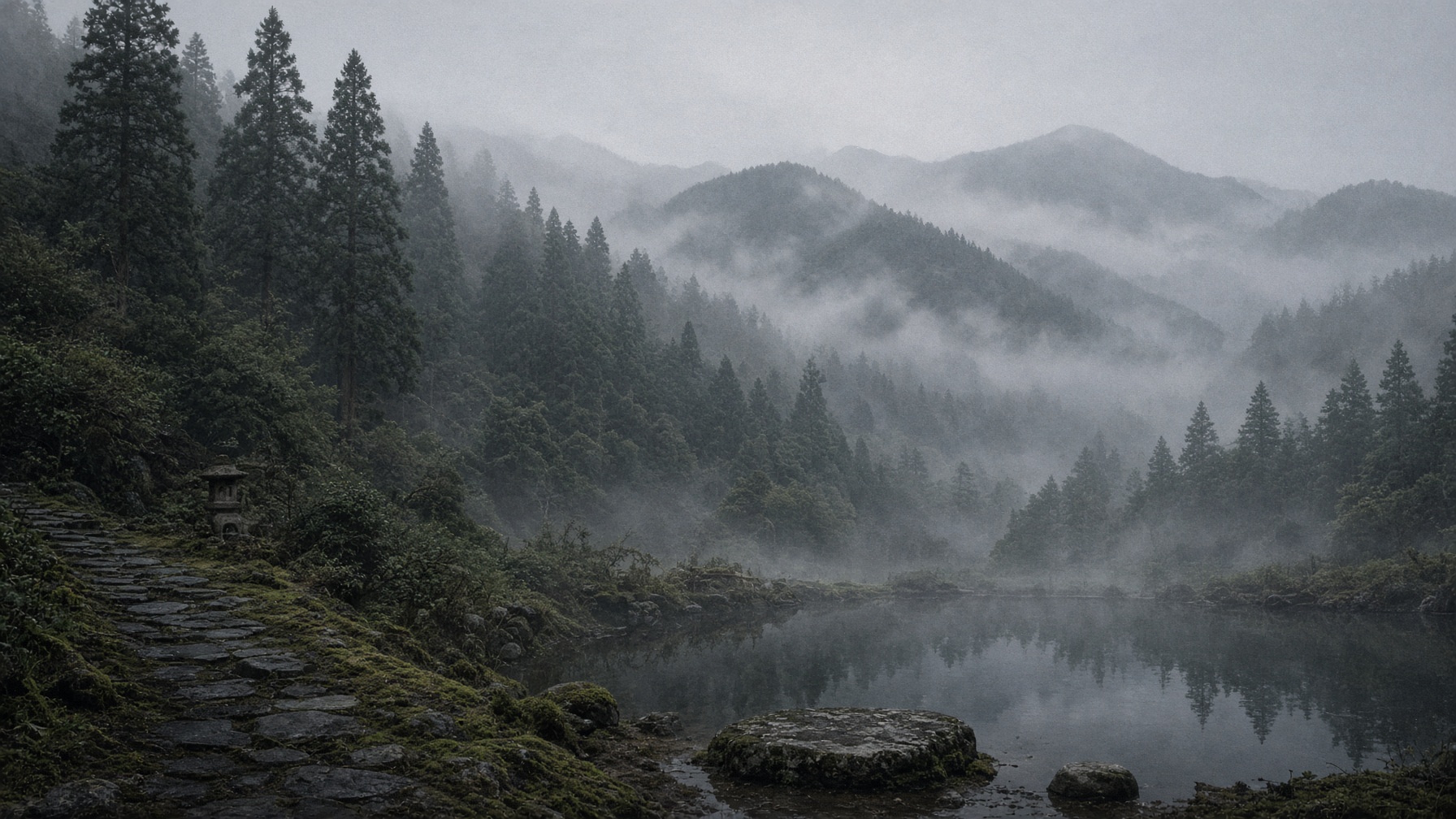
Plate · Generated interpretation
Do not decide yet whether anything in the plate is moving.
Listen · Eve
0:00 / —:—
Eihei Dōgen, having returned from China, writes the “Mountains and Waters Sutra” (Sansui-kyō) and, elsewhere, “Genjōkōan.” The sentences are famous and easy to misuse: “The blue mountains are constantly walking.” “To study the self is to forget the self.” He is not offering a pretty image of nature-mysticism. He is a monastic, arguing that Buddha-nature is not a kernel hidden in persons, and that time, mountain, and mind do not sit in the boxes English later builds for them.
Shōbōgenzō, including “Sansui-kyō” (c. 1240) and “Genjōkōan.” Japanese Soto Zen, written in a mixed Japanese that resists tidy translation. Every English sentence here is already an interpretation.
If mountains walk, then walking is not only what a human does with legs. The claim is ontological and practical: the world is not a stage for an inner witness. Practice is not a tool for improving a self that remains. When Dōgen says that to study the Buddha Way is to study the self, and to study the self is to forget the self, he is not recommending amnesia. He is describing a drop of the owner. The drop is not Descartes’s remainder. It is closer to a world that no longer has a tenant.
To study the Buddha Way is to study the self. To study the self is to forget the self. To forget the self is to be actualized by the myriad things.
“Mountains walking” can be read as poetry, as Huayan interpenetration, as a shock to subject-object grammar. It is not a geology paper. Labeling it myth here means: another grammar, not a lab result. The grammar still has to be lived to be known.
Western readers have sometimes recruited Dōgen for process philosophy, for ecology, for a soft “oneness.” He was stricter. He was also funnier. The mountains do not need our oneness. They walk whether we agree.
A word
genjōkōan
現成公案: the present, fully manifest, as the kōan. Not a riddle to solve later. The thing as it is, which is already the question.
Distant echoes
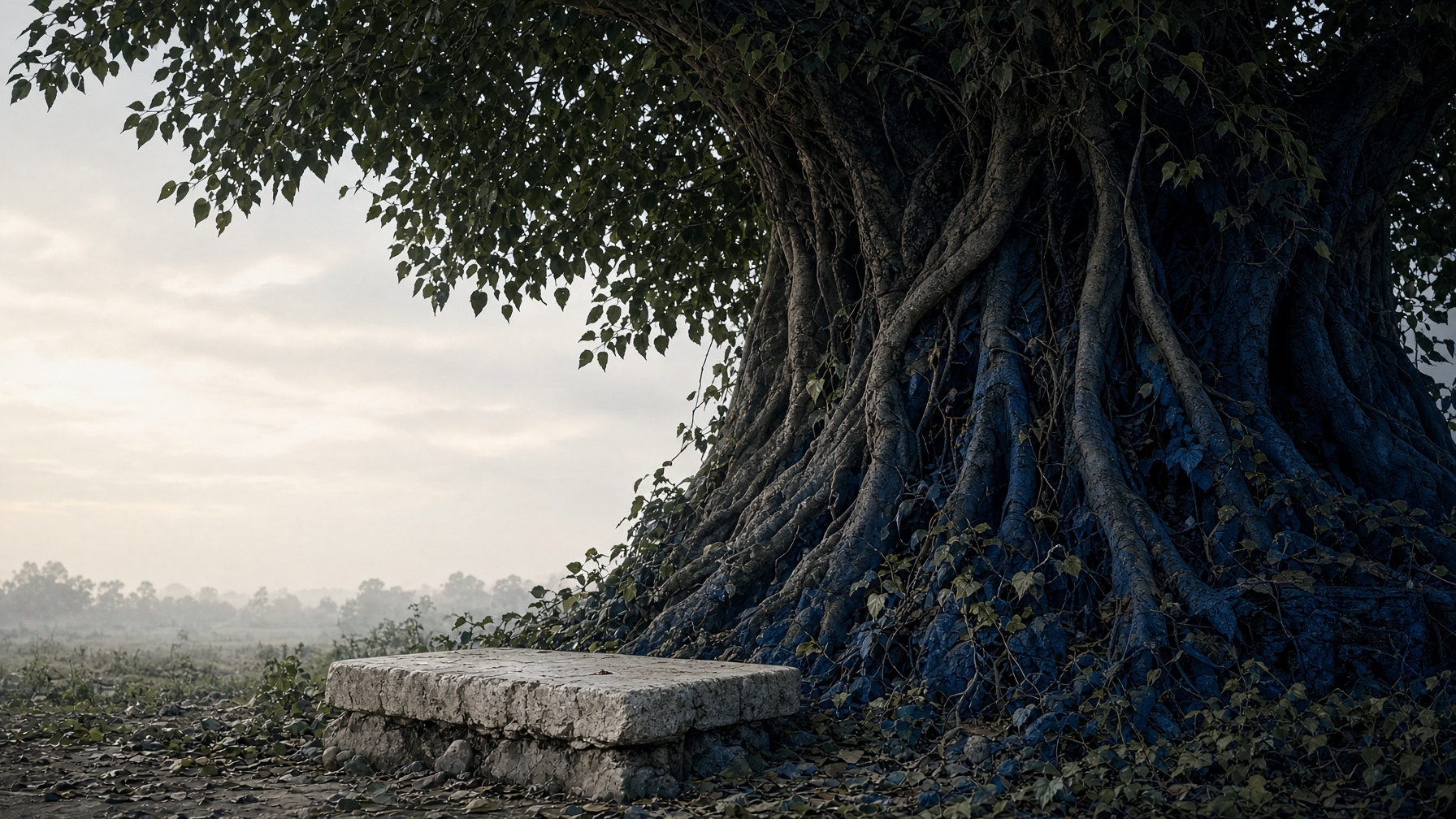
Echo
Second urbanization of the Ganges plain · Uruvelā, later Bodh Gayā
Beneath the fig
Two awakenings, two countries, two centuries apart in a larger Buddhist field. Dōgen would not say the Buddha “had” an experience under a tree as a private trophy. He would say the myriad things.
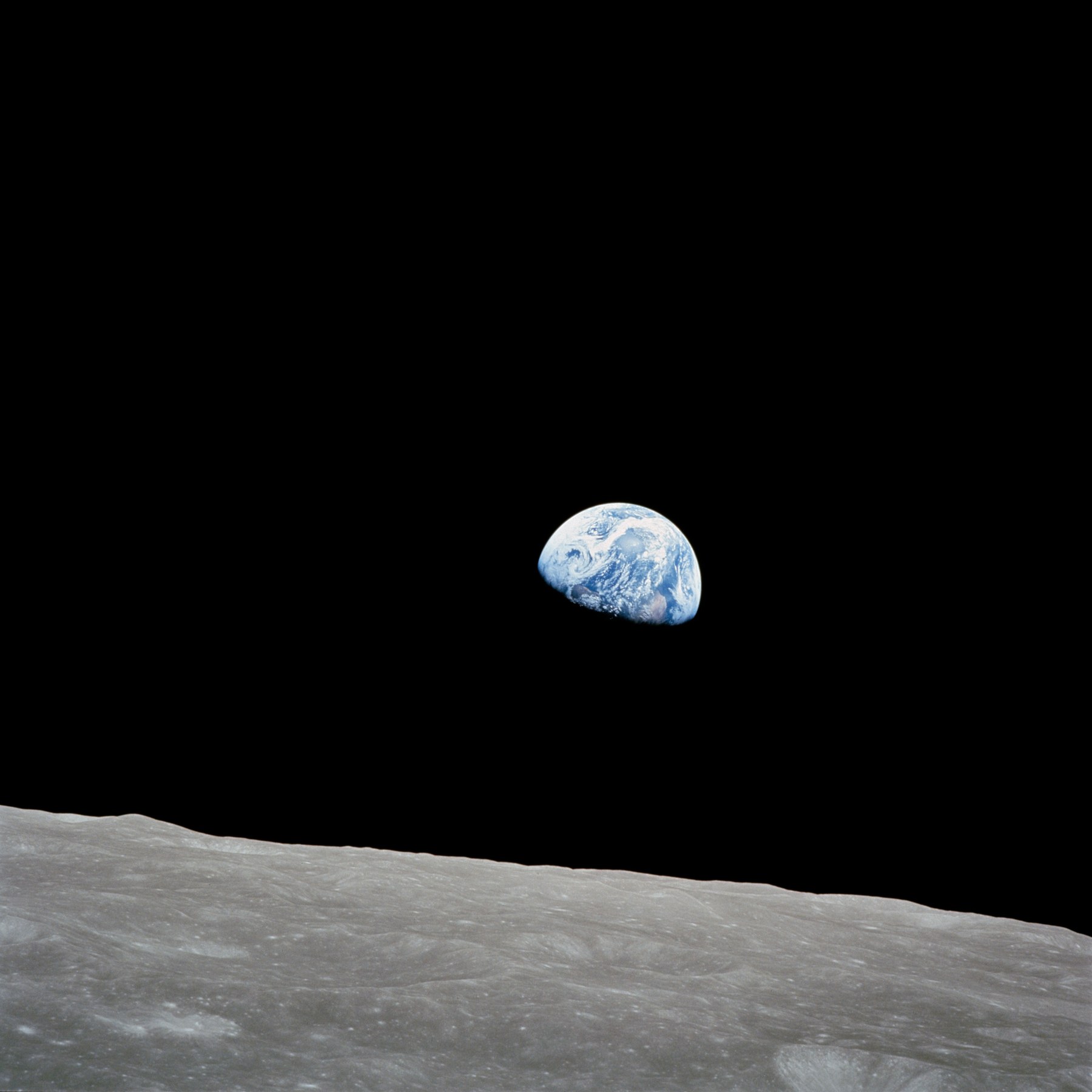
Counterpoint
The space age · Cislunar space, and later low Earth orbit
The pale blue disc
The overview effect is a self shrinking before a planet. Dōgen’s mountains do not wait for a window in space. They were already not other.

Another language
Gilded Age America · Cambridge, Massachusetts
The stream of thought
James describes a stream owned by someone. Dōgen forgets the owner. Description and drop are not the same practice.
One question remains
Awakening · What changes when consciousness recognizes something differently?
If the mountains walk, is that a fact about the world, a fact about the mind, or a refusal of the difference?