
Science · Memory · 1920s–1968
A Memory That Would Not Thin
In Moscow a psychologist follows a man who cannot forget a list. The gift is also a clogging. Ordinary forgetting, it turns out, is a kind of mercy.
- Moscow
- Soviet neuropsychology
- 55.75°N 37.62°E
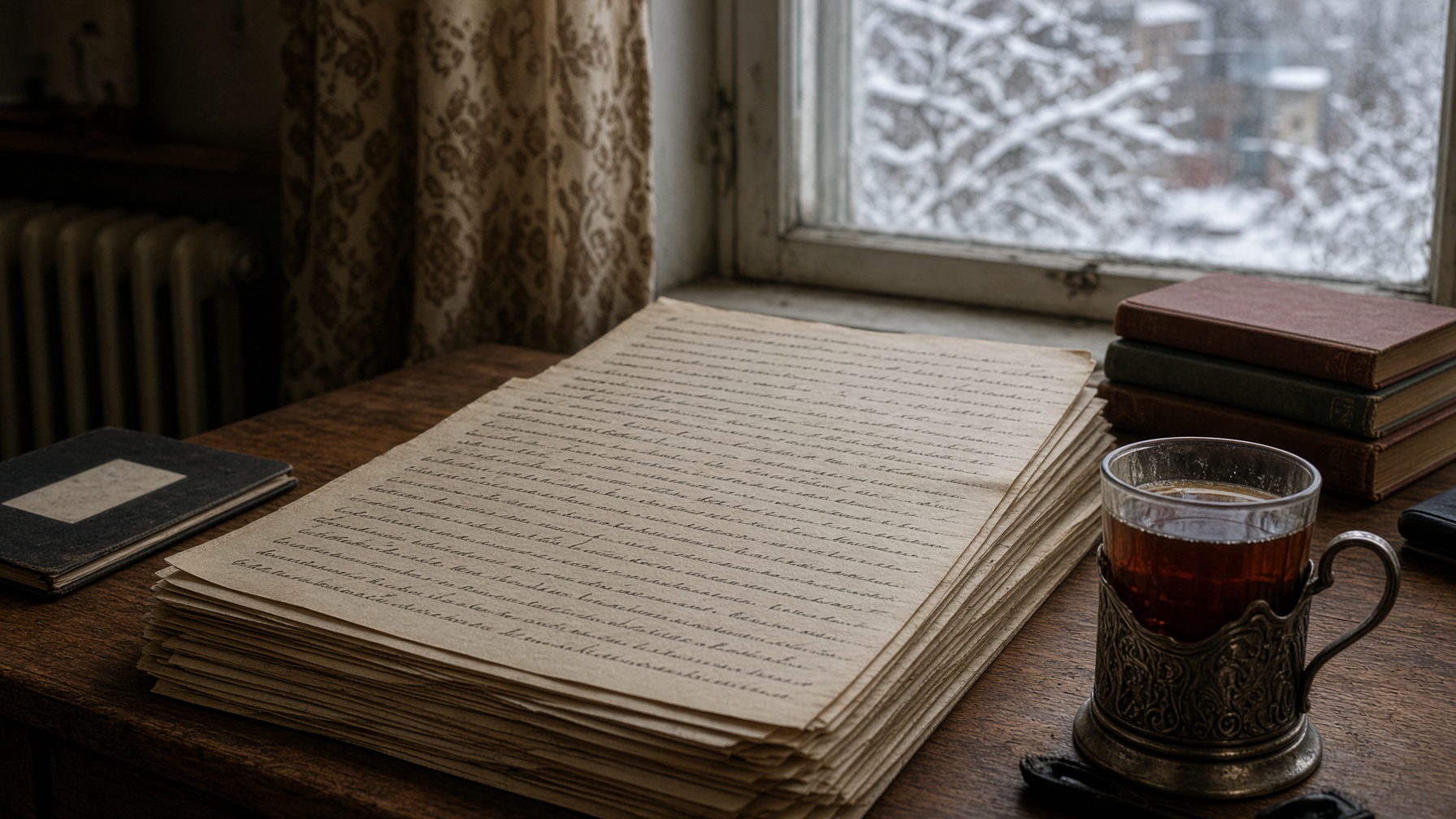
Plate · Generated interpretation
A list too long to be useful. What would it cost to forget a street?
Listen · Eve
0:00 / —:—
Moscow, the mid-1920s. A newspaper editor meets the staff each morning and hands out the day’s assignments: a long list of places, names, what to obtain. One reporter never takes notes. The editor is about to reproach him for inattention when, asked, the man repeats the list word for word. The reporter is surprised that this should be remarkable. The editor sends him to a psychology laboratory. A. R. Luria, still early in his work, meets the man he will call S.
The book, The Mind of a Mnemonist, is published in 1968, in Russian and in Lynn Solotaroff’s English, after decades of notes. Luria does not print the civil name. Later accounts identify S. as Solomon Veniaminovich Shereshevsky (1886–1958), journalist, then stage mnemonist. The 1968 pages keep S. An increase in the length of a series, Luria writes, led to no noticeable increase in difficulty. He could not do what a psychologist thinks simplest: measure the capacity of a memory. He had to admit it had no distinct limits.
A. R. Luria, The Mind of a Mnemonist: A Little Book about a Vast Memory. Trans. Lynn Solotaroff. New York: Basic Books, 1968. Foreword by Jerome Bruner. The meeting is Luria’s telling of the 1920s. Records inside the book run into the 1930s and after. “Romantic science,” as a name for this kind of case study, is Luria’s later phrase, in The Making of Mind (1979). It is not the 1968 title’s self-description.
I simply had to admit that the capacity of his memory had no distinct limits.
Voices have colors. A second voice, breaking in, blurs the syllables. Numbers have people: 7 a man with a mustache; 8 a very stout woman; 87, in a record of September 1936, a fat woman and a man twirling his mustache. When a series is long, S. distributes the images along a road. Often it is Gorky Street in Moscow, from Mayakovsky Square, houses, gates, store windows. Simonides, in another century, taught places as a trained art. S.’s crowding is not that art first. It arrives unsought, and then he uses streets as a craft. Faces, he complains, are too changeable: light and shade, like watching waves. A story read quickly becomes chaos, because each word calls up images that collide.
Forgetting has to be invented. He writes what he wishes to lose on slips of paper. He burns the slips. Traces remain on the embers, and in the mind. The gift is also a clogging. Borges will write Funes, a fiction of too much memory. Luria’s S. is a clinic of it. They share a problem and not a method. The 1968 book is not Funes confirmed, and unlimited storage is not the goal of a mind.
Memory here is not retrieval of a true past. It is a present that will not make room. That is evidence about a life. It is not a model of everyone’s store. Augustine’s palace is searched on purpose. S. cannot leave his. Two interiors, two offices.
If nothing thins, what is a self that needs yesterday to recede?
Distant echoes
Echo
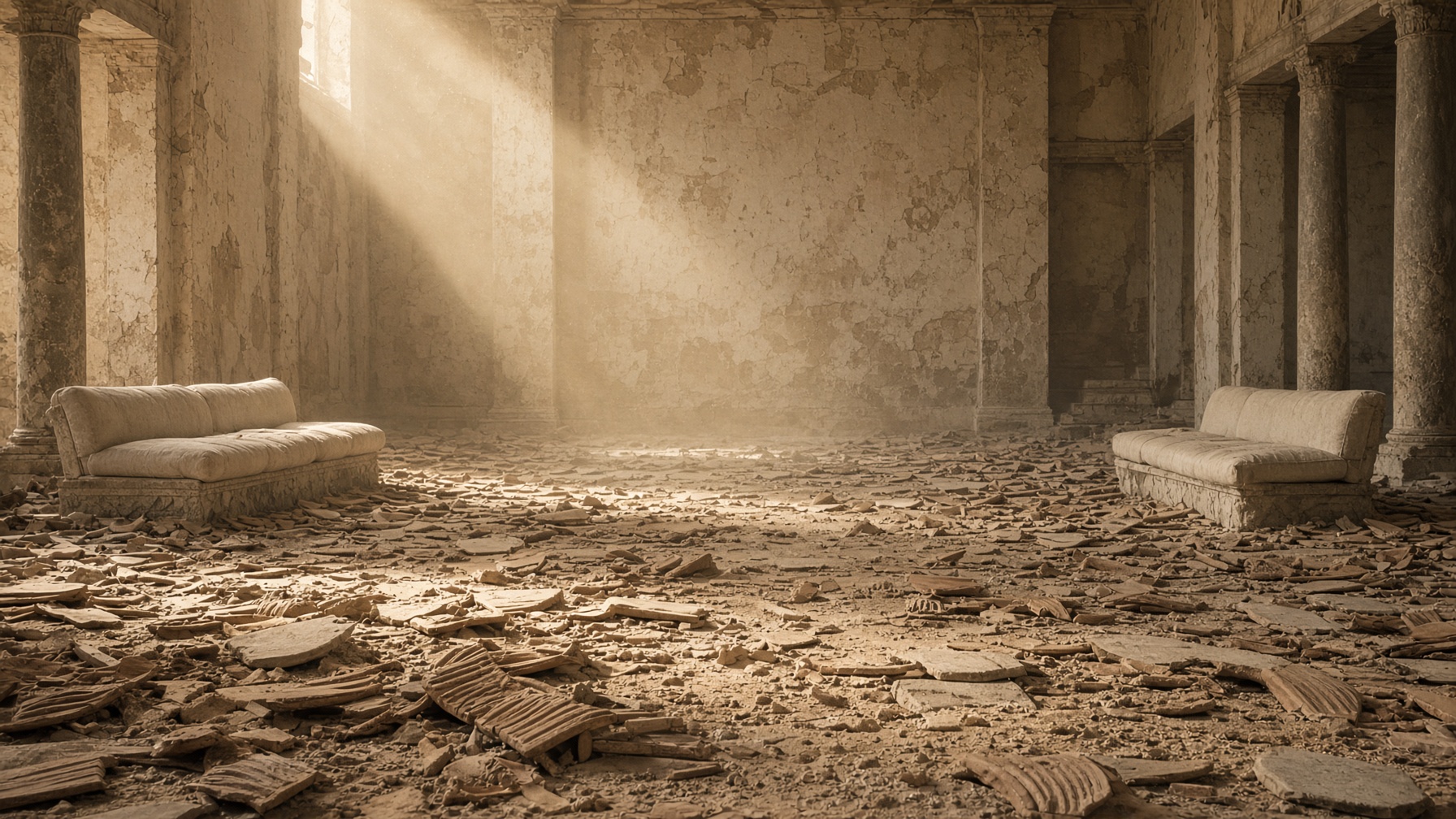
Greek telling, Roman handbook · Thessaly, as Cicero tells it
The places of the guests
Simonides trains places so a list can be walked. S. walks Gorky Street because the images will not go. One is an art. One is a clogging that learned an art.
Echo
Late antiquity · Hippo Regius
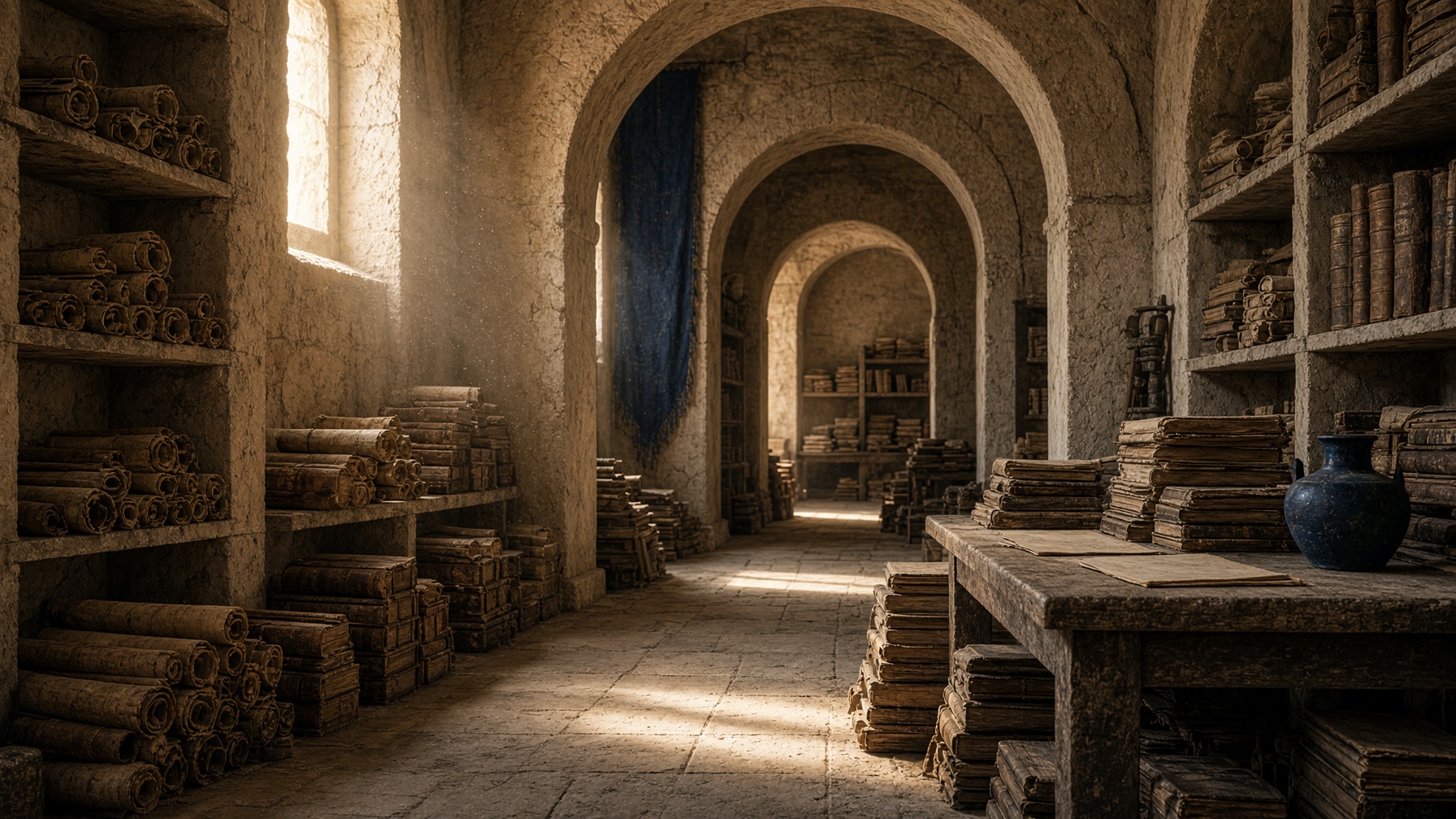
The palaces of memory
Augustine searches a vast interior. S. cannot leave his. Not one memory.
One question remains
Memory · What remains, and what is reconstructed?
If a list will not leave, is the person the one who remembers, or the one who can no longer make a present?