
Myth · Awakening · c. 7th–8th century, as later told
No Mirror, No Dust
A verse contest in a monastery: one poem wipes a mirror. Another says there was never a mirror. The second is the one the tradition keeps.
- Huangmei, then Shaozhou, on the page of the Platform Sūtra
- Early Chan, as later told
- 24.81°N 113.60°E
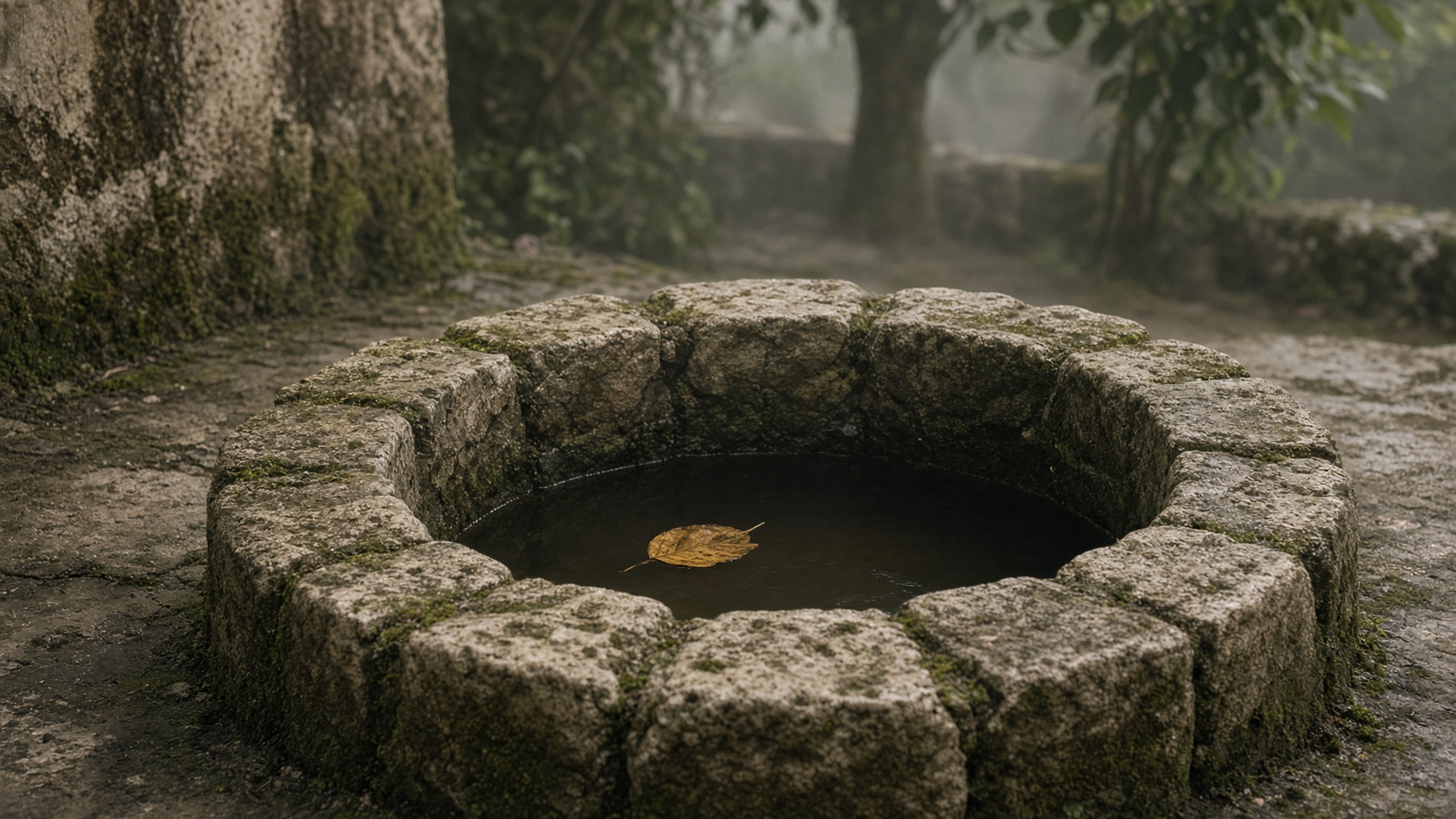
Plate · Generated interpretation
No-mirror, no-dust. What were you wiping?
Listen · Eve
0:00 / —:—
The Platform Sūtra of the Sixth Patriarch, associated with Huineng. Shenxiu’s verse: the mind as mirror, wipe it. Huineng’s: no mirror, no dust. Dunhuang manuscripts (eighth–tenth century) differ from later mature versions. The story of the illiterate laborer is already a telling.
Yampolsky, The Platform Sutra of the Sixth Patriarch (Columbia, 1967), from the Dunhuang text. McRae and others caution that the biography is construction. Sudden awakening is a polemic as well as a claim.
Dōgen will later refuse to treat sitting as a means to a later mirror. That is another century, another language. The Platform’s “no-thought” (wunian) is not Weil’s waiting and not a modern mindfulness app.
A verse that denies a mirror can still be used as a mirror. The tradition knows the irony.
If there is no dust, what was the wiping for, and who was tired?
Distant echoes

Echo
Kamakura Japan · Eihei-ji, Echizen
Mountains and waters
Dōgen also refuses a before-and-after of enlightenment as furniture. Not the same text.
One question remains
Awakening · What changes when consciousness recognizes something differently?
If the mirror was never there, what, exactly, was doing the seeing that thought it needed to be wiped?