
Portrait · Perception · 1200–1240
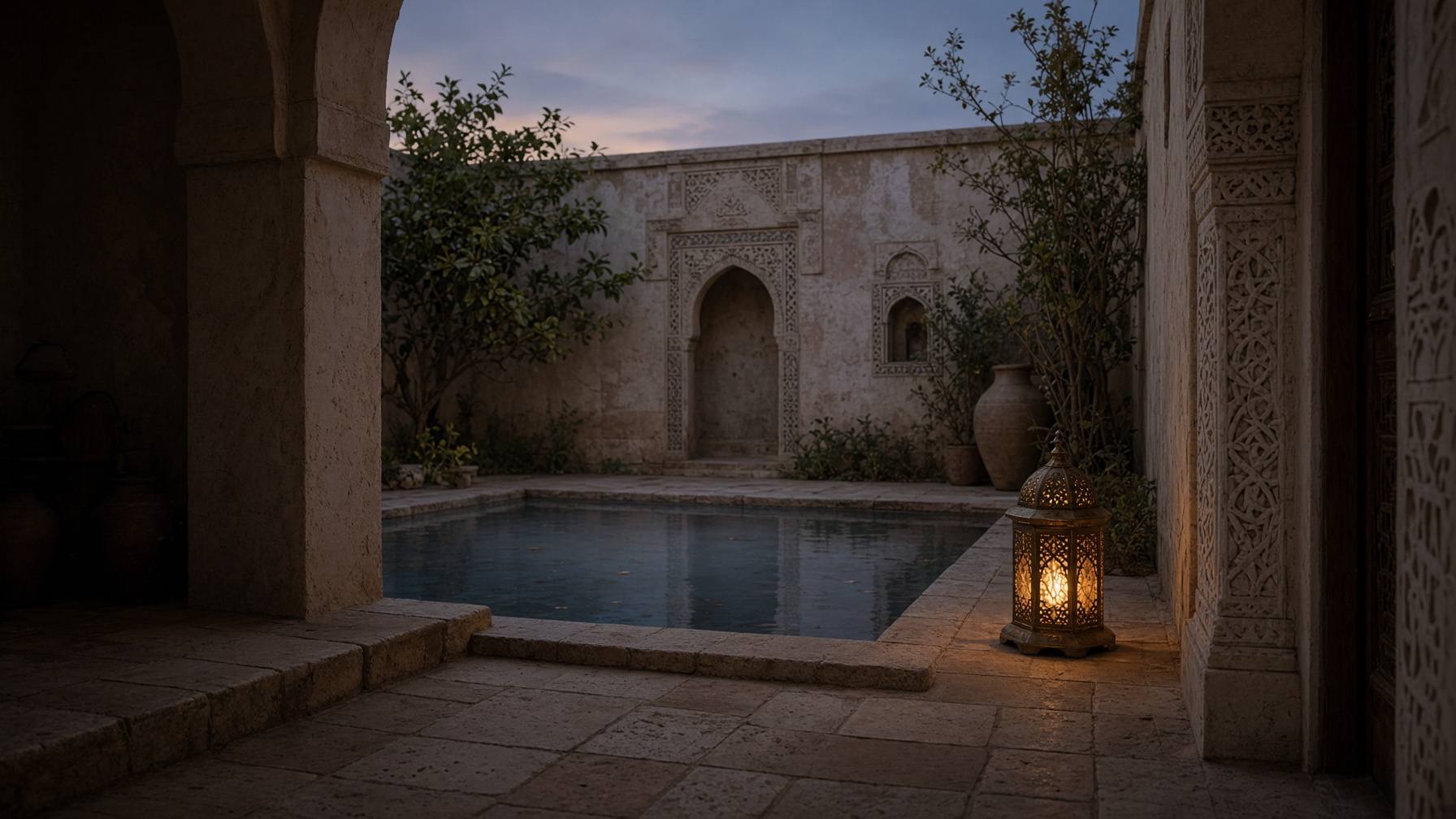
Plate · Generated interpretation
The Isthmus
A Murcia-born Sufi describes a realm that is neither spirit nor body: the barzakh, where imagination is a world, not a mistake.
- Damascus, after Andalusia and Mecca
- Thirteenth-century Islam
- 33.51°N 36.29°E
A shore that is not land or sea. What do you put in the interval?
Listen · Eve
0:00 / —:—
Ibn ʿArabī (d. 1240). Al-Futūḥāt al-Makkiyya (The Meccan Openings) and Fuṣūṣ al-ḥikam (The Bezels of Wisdom). Barzakh is an isthmus: the imaginal world (ʿālam al-khayāl) in which meaning takes form. This is not “just imagination” as English dismisses a fancy.
Ibn ʿArabī, The Meccan Revelations. Partial English: Pir Press. Chittick, The Sufi Path of Knowledge (SUNY, 1989), is a scholarly door. Treat later “oneness of being” slogans as later.
Suhrawardī’s light is another Islamic philosophy of seeing. Ibn ʿArabī’s barzakh is a metaphysics of the between. They are not one illumination. Rumi’s reed is a poem. Keep the offices.
A modern reader may hear Jung’s psychoid. That is analogy. It is not Ibn ʿArabī’s vocabulary.
Whether a world of images is less real than stone, or another mode of the real, is the claim the isthmus makes.
Distant echoes
Echo
Twelfth-century Syria · Aleppo
Illumination
Suhrawardī also writes a world of seeing. The schools are not one.
One question remains
Perception · What does sensing give us?
If an isthmus is neither shore, what kind of knowing can stand there without pretending to be land?