
Portrait · Knowledge · 1186 / 1191
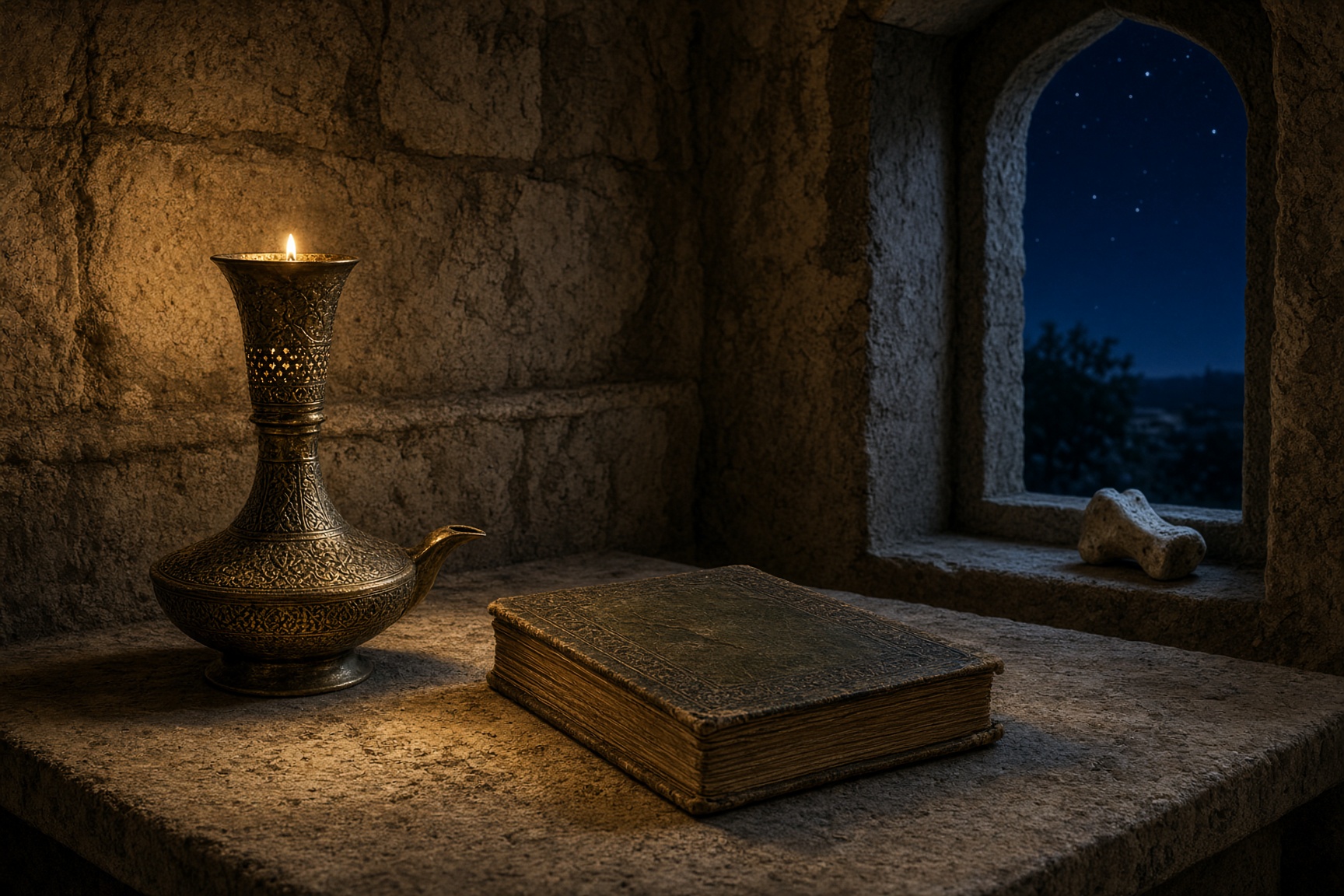
Plate · Generated interpretation
Things Are Lights
A philosopher in Aleppo writes a metaphysics in which things are degrees of light. He will be killed. The book remains.
- Aleppo
- Twelfth-century Syria
- 36.20°N 37.16°E
A lamp. Is the light in the brass, in the air, or in the seeing?
Listen · Eve
0:00 / —:—
Aleppo, 1183. Shihāb al-Dīn Yaḥyā al-Suhrawardī, born in 1154 in Suhraward in northwestern Iran, arrives in a city newly held by al-Malik al-Ẓāhir, son of Ṣalāḥ al-Dīn. He is young, sure, and soon close to the prince. In 1186, at thirty-two, he completes Ḥikmat al-Ishrāq (The Philosophy of Illumination). In 1191 he is killed in Aleppo. The circumstances are not one story: charges of corrupting religion, of claims that frightened jurists, an order from Ṣalāḥ al-Dīn or from his son under pressure. Later he is al-Maqtūl, the slain. The book remains.
Ishrāq is illumination, a rising light. In this system, things are lights of different ranks. Knowing is not only a chaining of predicates. It has a taste of presence, a seeing that is not Helmholtz’s optics and not Hildegard’s visio. Al-Ghazālī’s tasting (dhawq) is a neighbor. Ibn Sīnā’s floating man is another. They are not one Islamic mind. Suhrawardī is writing after the Peripatetic school, against parts of it, in Arabic, with a Persian imaginary he does not hide.
Ḥikmat al-Ishrāq, completed 1186. John Walbridge and Hossein Ziai, The Philosophy of Illumination (Brigham Young University Press, 1999), is a facing-page door. Henry Corbin’s later reading of Suhrawardī as an Iranian theosopher of ancient Persia is a twentieth-century career of the text, not the 1186 room.
Light here is a technical first fact, not a metaphor for consciousness in English. To treat it as a bulb, or as a mood, is already a translation. The ranks of light, the barriers, the way a thing is more or less present: these are the book’s machinery. Whether illumination is a kind of seeing or a kind of being is the hinge. The execution is not a proof of the metaphysics. It is why the author did not revise the book in old age.
Light is a technical image in this system. Treating it as a metaphor for consciousness in English is already a translation. Distinguishing Suhrawardī from later illuminationist branding, and from Corbin’s revival, is part of staying with the page.
Whether illumination is a kind of seeing or a kind of being is the book’s hinge.
A word
ishrāq
Arabic. Illumination, rising light. Not a synonym for enlightenment as a product.
Distant echoes
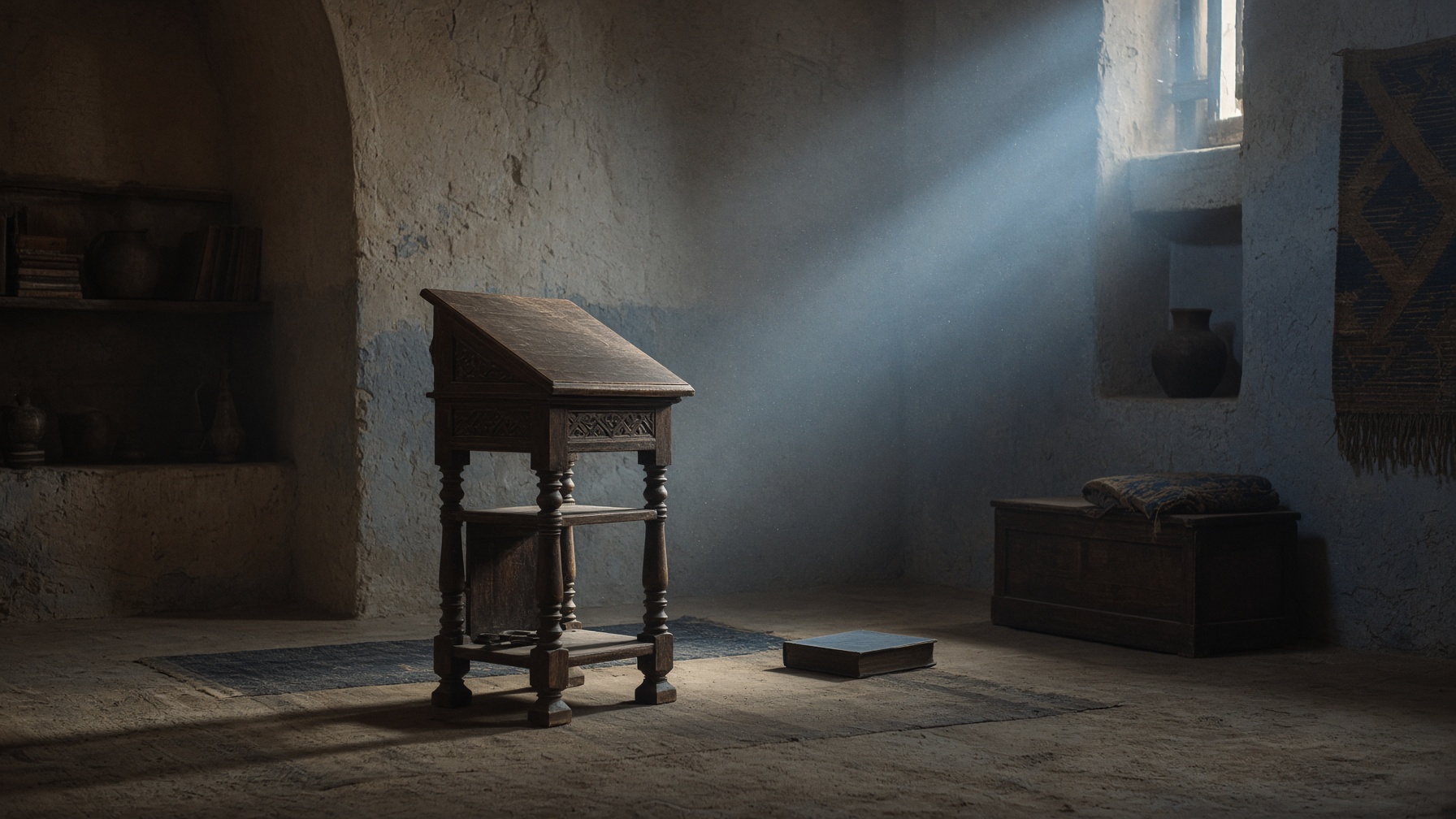
Echo
Abbasid / Seljuk world · Baghdad, then Damascus and Tus
When knowledge would not sit still
Ghazālī tastes. Suhrawardī illuminates. Two inheritances, two techniques.
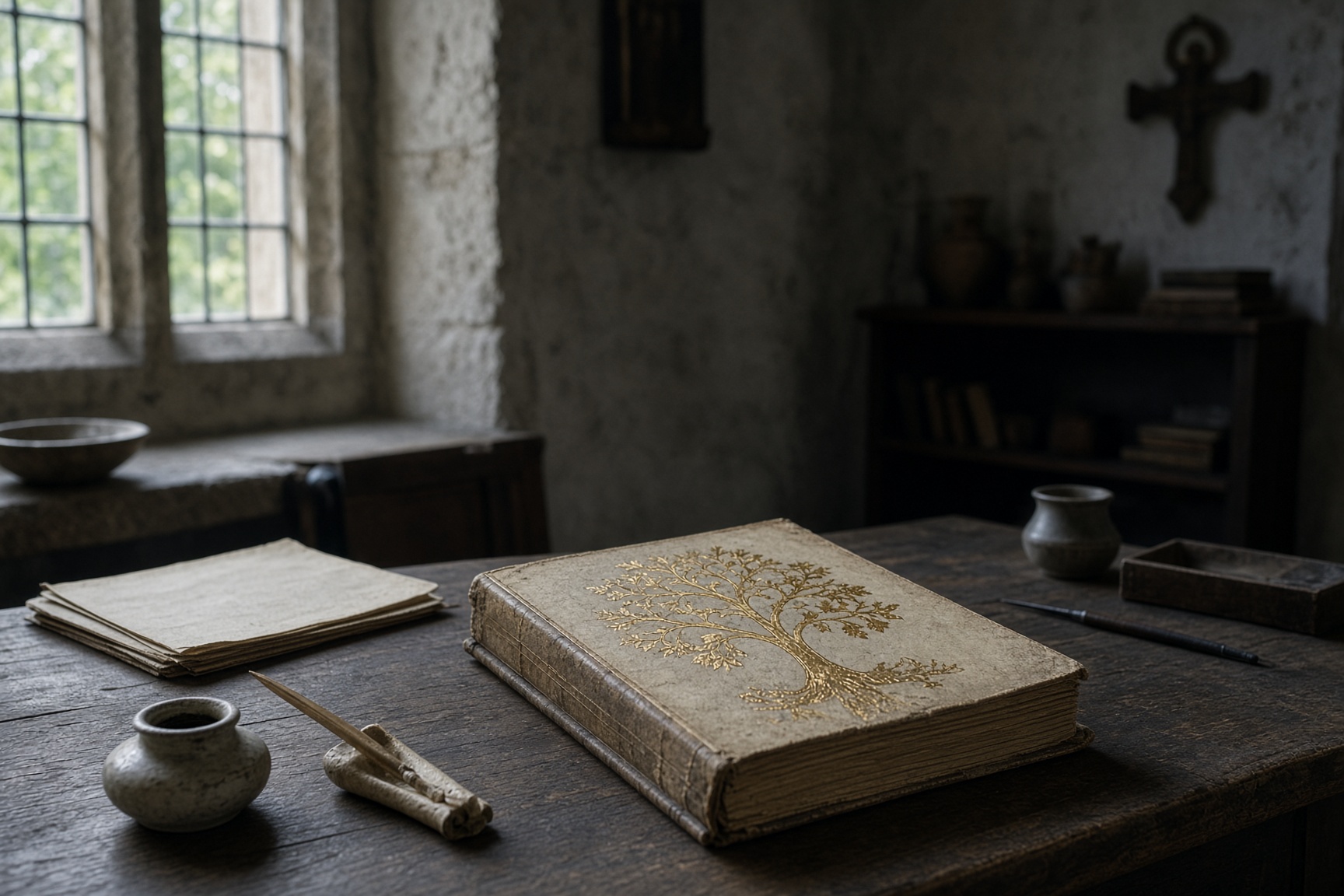
Echo
Twelfth-century Rhineland · Disibodenberg, then Rupertsberg
A light that did not stay outside
Hildegard’s visio is a seeing given. Suhrawardī’s ishrāq is a metaphysics of degrees of light. Two lights, not one inner glow.
One question remains
Knowledge · What counts as knowing?
If a thing is a light, what is the dark, and who is in a position to name it?