
Portrait · Awakening · 1141–1151
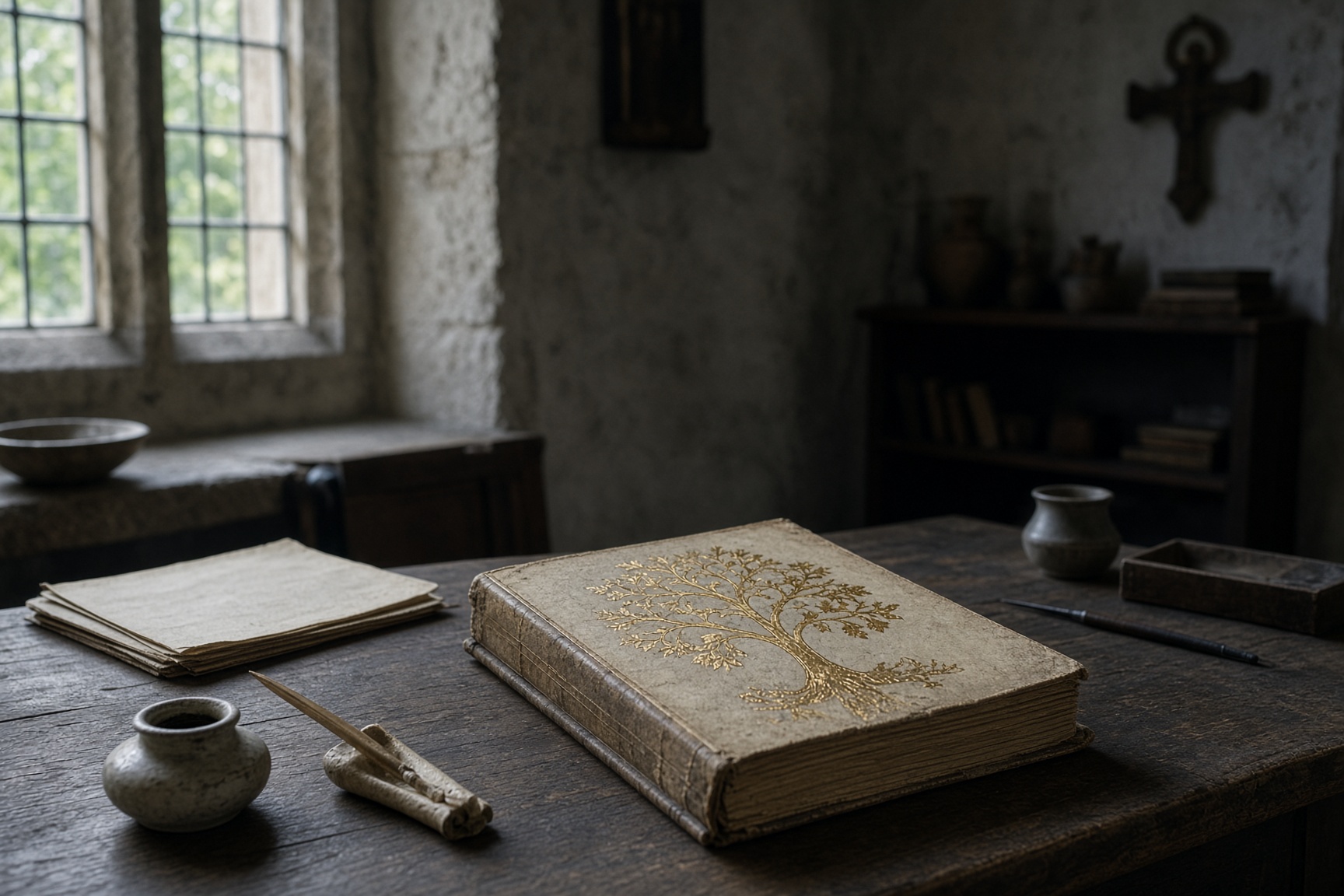
Plate · Generated interpretation
A Light That Did Not Stay Outside
A Benedictine woman writes visions she calls living light. The book is theology, not a laboratory of inner glow.
- Disibodenberg, then Rupertsberg
- Twelfth-century Rhineland
- 49.91°N 7.86°E
How much light can a closed book still hold?
Listen · Eve
0:00 / —:—
The Rhineland, 1141, in the forty-second year and seventh month of her life. Hildegard, a Benedictine at Disibodenberg, records that heaven was opened and a fiery light of exceeding brilliance permeated her brain and inflamed heart and breast, not like a burning but like a warming flame, as the sun warms anything its rays touch. A voice told her to say and write what she saw and heard. She had seen since childhood. This is the command to make a book. She delayed. Illness, she writes, finally set her hand to the writing, with the help of a monk, Volmar, and a noble maiden of good conduct.
Hildegard of Bingen was born in 1098 and enclosed at Disibodenberg with Jutta of Sponheim. After Jutta’s death she became magistra of the women there. Scivias (Know the Ways) is the first of her major books, written 1141–1151: twenty-six visions in three parts, each vision described and then interpreted in Latin. She is writing as a nun under obedience, not as a modern subject of altered states. The seeing, she insists, was not in dreams, sleep, or delirium, nor by the outer eyes and ears, but awake, with the eyes and ears of the inner self. Lux vivens, living light, is her name for what gives the seeing. A voice in the Protestificatio says: I am the Living Light, who illuminates the darkness.
Scivias. English: Columba Hart and Jane Bishop, Paulist Press, 1990, with Barbara Newman’s introduction. The Protestificatio is Hildegard’s own framing of 1141. A copy of writings went to the Synod of Trier (November 1147–February 1148). Tradition holds that Pope Eugene III, with Bernard of Clairvaux among those present, heard them and permitted her to continue. The illuminated Rupertsberg codex of Scivias was lost in 1945; photographs and a later facsimile survive. Whether she designed the illuminations remains contested.
I am the Living Light, Who illuminates the darkness.
Around 1150 she moved her community to Rupertsberg, against resistance from Disibodenberg. Volmar remained as provost and secretary. Later books, letters, songs, and a physica follow; they are not this story. Julian of Norwich will write seeing in another century and another English. Suhrawardī will rank lights in Arabic. Plotinus had written of an ascent of the alone. They are not one inner glow. Charles Singer, in the twentieth century, and later Oliver Sacks, will propose migraine as a key to the illuminations. That is a later medical reading of a theological document. It is not Hildegard’s office, and it is not a proof of heaven either.
Inner light here is given and interpreted inside a Christian cosmos. It is not James’s stream, and it is not a laboratory photism. Whether a visio is perception, imagination, illness, or gift is a later sorting. Scivias is teaching. The writing is part of the seeing: a book made under a command, with a secretary, over ten years.
Whether a visio is perception, imagination, illness, or gift is a later sorting. Scivias is teaching.
A word
scivias
Latin: know the ways. A title, not a modern slogan for consciousness.
Distant echoes
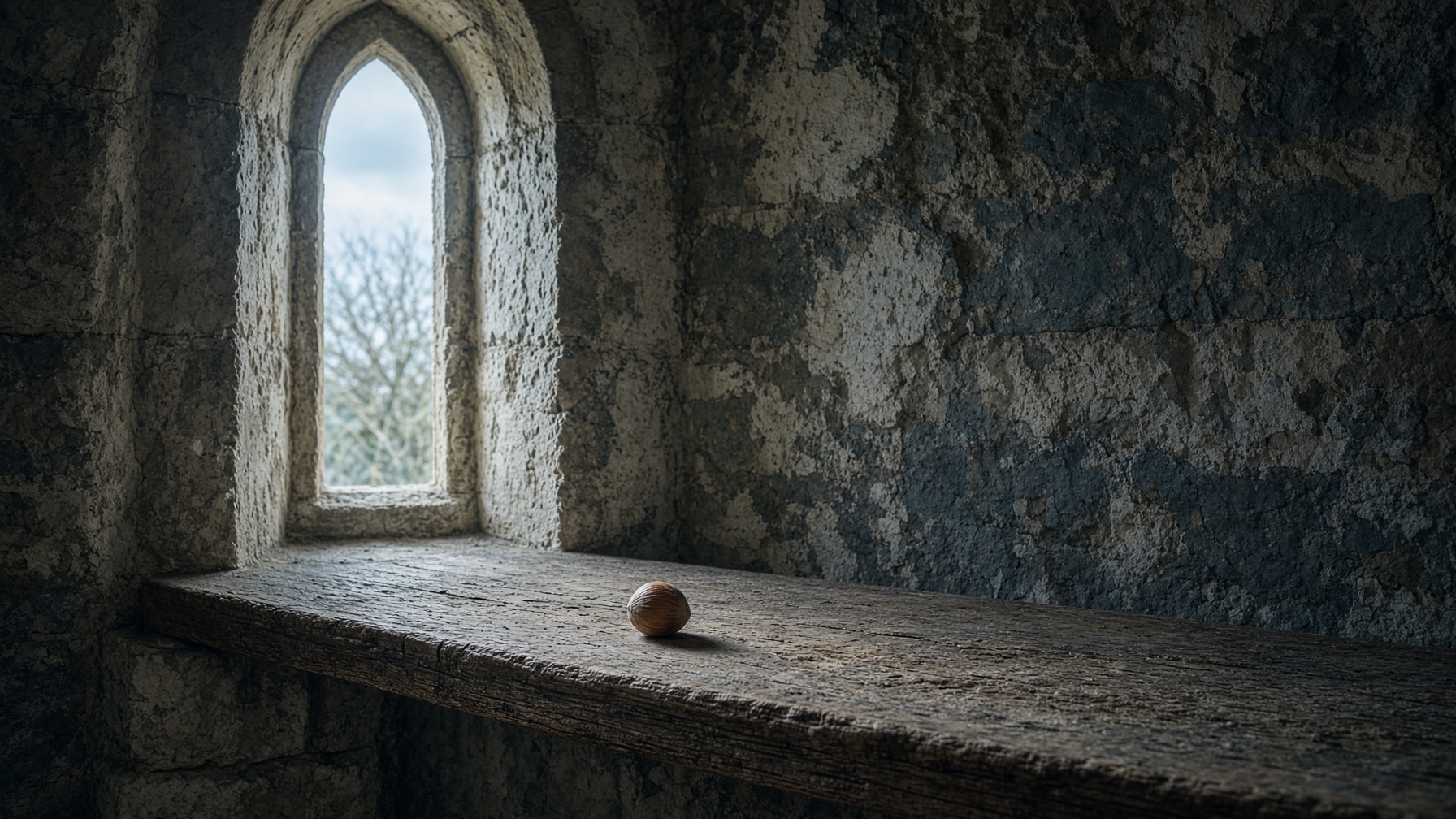
Echo
Late medieval England · Norwich
A little thing, the size of a hazelnut
Julian also writes seeing. The centuries, the orders, and the images are not one mystic.
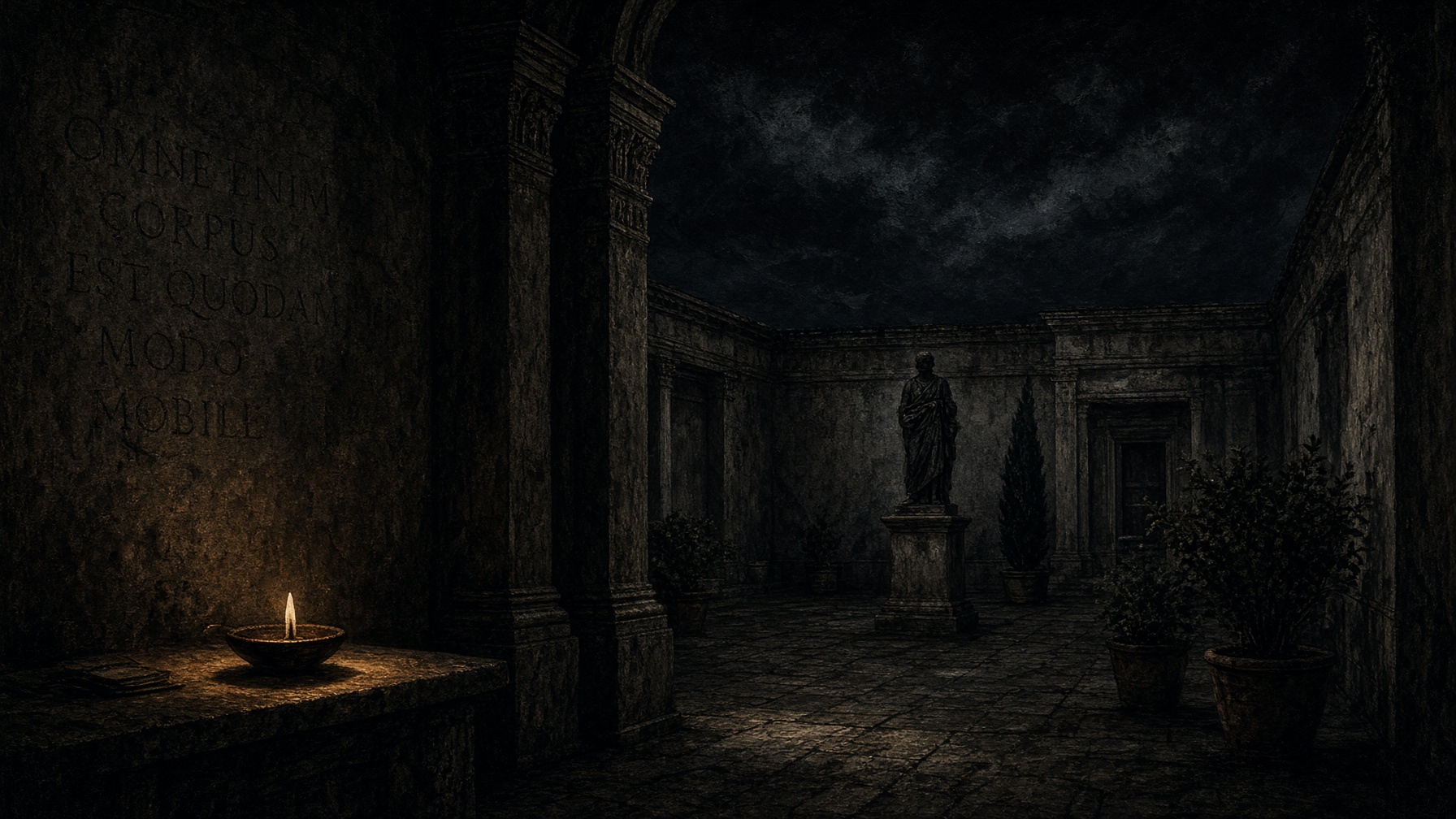
Counterpoint
Third-century Roman Empire · Rome, of the seminars Porphyry later edited
The flight of the alone
Plotinus writes an ascent until seer and seen fall away. Hildegard writes a seeing she is commanded to keep as a book. Two lights, two offices.
One question remains
Awakening · What changes when consciousness recognizes something differently?
If a light is living, is the life in the seeing, in what is seen, or in the writing that has to hold both?