
Animal · Other minds · 1977–2007
Same and Different
An African grey parrot, in a long experiment, uses English words for color, number, and the category of a match. The words are data. They are not a confession.
- Chicago, then Purdue, Northwestern, Arizona, MIT, Brandeis, Harvard
- Late twentieth-century animal laboratory
- 42.37°N 71.26°W
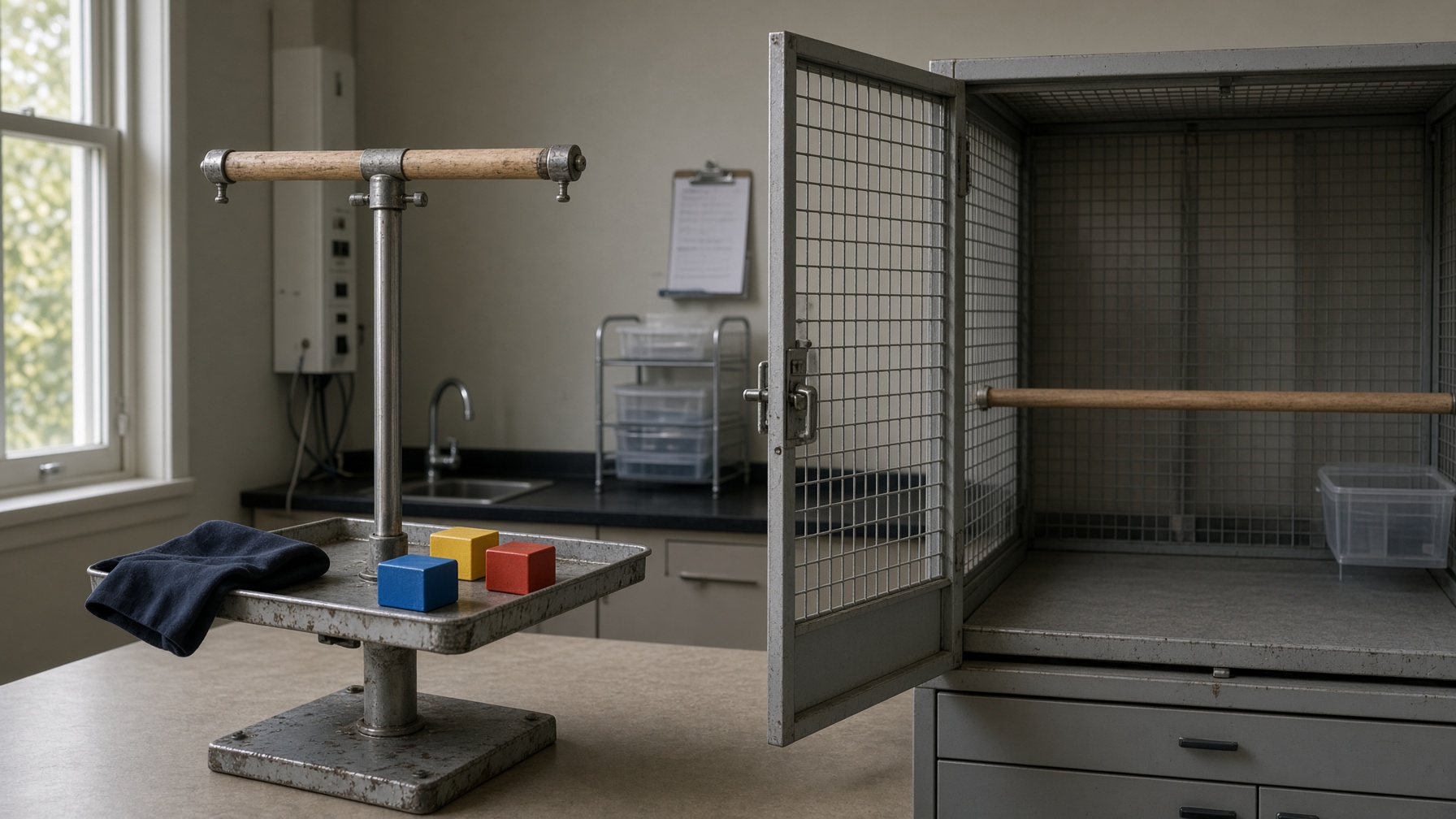
Plate · Generated interpretation
The perch is empty. What would count, for you, as an answer from a bird?
Listen · Eve
0:00 / —:—
Two objects are held up. The question is not whether they match. The question is what matches, or what does not: color, shape, or the stuff they are made of. The bird is to answer with that category, in English. When the stuff is the issue, the word he uses is mah-mah, for matter. The paper that reports the work is 1987. The bird has already been in the rooms for ten years.
June 1977, a Chicago pet shop. Irene Pepperberg, twenty-eight, has a doctorate in chemical physics from Harvard, finished the year before. She buys an African grey parrot twelve or thirteen months old. She does not choose the bird for a known talent. The name she gives the work is Avian Language Experiment. The bird is called Alex. The shop is not a laboratory. The question is whether a parrot’s speech can be more than mimicry under a protocol someone else can check.
Grey parrots were already famous for repeating household sound. The scientific default was that the sound was empty: a throat copying a throat. The laboratory animals of language in those years were mostly apes. A pet-shop parrot was not a prestige subject. She took him to Purdue, then to Northwestern, the University of Arizona, a spell at the MIT Media Lab, Brandeis, and Harvard. The rooms changed. The work did not become a tour.
The method is called model/rival. It comes, as she records, from Dietmar Todt’s 1975 work on how grey parrots learn vocal patterns socially. Two people sit with the bird. One acts as trainer. The other acts as a student, and as a rival for the trainer’s attention. The student is shown an object, asked its name or color or shape, and praised or corrected in the bird’s hearing. Then the roles reverse, so the word is not one person’s trick. The reward for saying the label is the object itself, to hold or chew, not an unrelated treat. Todt had used a version of this for phrases. Pepperberg tied the sound to a thing in the room, and to a question that could be asked of a new thing.
Pepperberg, The Alex Studies: Cognitive and Communicative Abilities of Grey Parrots (Harvard, 1999), and the papers the book gathers. Model/rival is described there, and in her later review, as a training and testing procedure, not as a window into a soul. Todt, “Social Learning of Vocal Patterns and Modes of their Application in Grey Parrots,” Zeitschrift für Tierpsychologie 39 (1975). The Alex Foundation keeps a bibliography and a life-history of the bird: purchased June 1977, Chicago, age twelve or thirteen months.
Same and different, in the 1987 paper, are not yes and no. Alex is asked “What’s same?” or “What’s different?” of a pair, and is to reply with the category: color, shape, or matter. The objects vary in any combination of those. On pairs of familiar objects not used in training, his accuracy sat between about seventy and seventy-seven percent. On pairs whose combinations of color, shape, and material were new to him, it sat between about eighty-two and eighty-five. Further trials were run to show he was answering the question posed, not only a cue on the objects. By the time that paper appeared, ape-language claims were under heavy fire. The parrot work continued.
Pepperberg, “Acquisition of the same/different concept by an African Grey parrot (Psittacus erithacus),” Animal Learning & Behavior 15 (1987). Accuracy 69.7–76.6 percent on familiar untrained pairs; 82.3–85 percent on novel combinations. Performance on same/different, and later on number, is the finding. It is not a confession.
By 1999 she reports that he could label on the order of fifty objects, seven colors, five shapes, and quantities up to six. He could request. He could refuse. He could, in her reports, say “none” of a missing difference. Later papers take that “none” toward a zero-like absence, which she does not call the human zero. Those are trial sheets.
Critics of this kind of work always have Clever Hans in the room: the horse that tapped answers from a trainer’s face. Pepperberg’s tests tried to separate the person who trained a label from the person who asked, and to put novel combinations where a glance would have to do more work. Whether every session was clean is a live argument in the comparative literature. The argument does not erase the trial record. It also does not close it.
A protocol is not a soul. Alex used words in tasks. Whether those words were accompanied by something it is like to be a grey parrot is not in the sheets. Pepperberg, in the papers, claims performance. Popular retellings do not stay there.
On the night of 6 September 2007, as on other nights, he said the phrases used when she left the laboratory: you be good, I love you, see you tomorrow. He was found dead in the morning. He was thirty-one. Grey parrots in captivity often live into their forties or beyond. A necropsy that weekend found no apparent cause. A later pathology note from the Alex Foundation names a sudden event associated with arteriosclerosis: arrhythmia, heart attack, or stroke, not predicted by that week’s tests. The last words are a human story about a nightly routine. They are not the experiment.
David Chandler, “Farewell to a famous parrot,” Nature, 11 September 2007, reporting Pepperberg’s account of the last night and the weekend necropsy. Alex Foundation, pathology note posted 4 October 2007. Alex & Me (2008) is a later memoir. It is not the trial record.
After 2007 the work continued with other greys, Griffin among them. The laboratory did not become a shrine. Asked that week to summarize three decades, Pepperberg told Nature that people think more seriously about the intellectual abilities of these feathered creatures, and that she liked to think being called a birdbrain was now a compliment. That is a 2007 sentence. It is not why a chemist bought a parrot in 1977.
Whether a label is a concept, and whether a concept is a mind, remain separate questions. A death does not fuse them.
What we know
Scored trials, over thirty years, show a grey parrot using English labels for objects, colors, shapes, quantities, and for the category of a match or a difference. That is the work. It is not a window into a parrot.
What we cannot know
A protocol is not a soul. Failure to satisfy our test is not vacancy. The rest remains with the creature.
Distant echoes
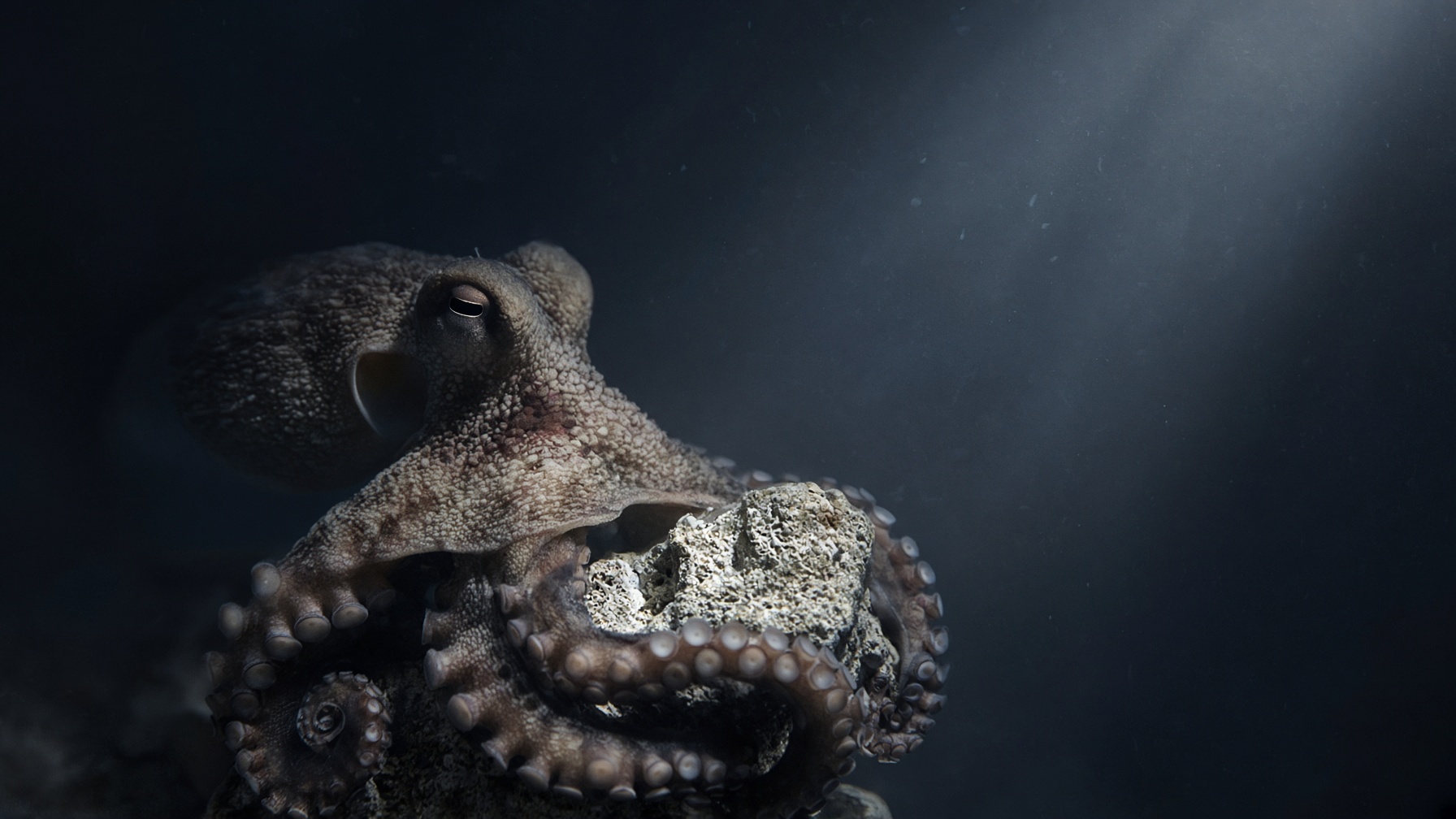
Echo
Contemporary biology · Oceans, and a few laboratories
A mind with eight arms
Octopus and parrot both strain the human sample. Neither is a proof of the other.
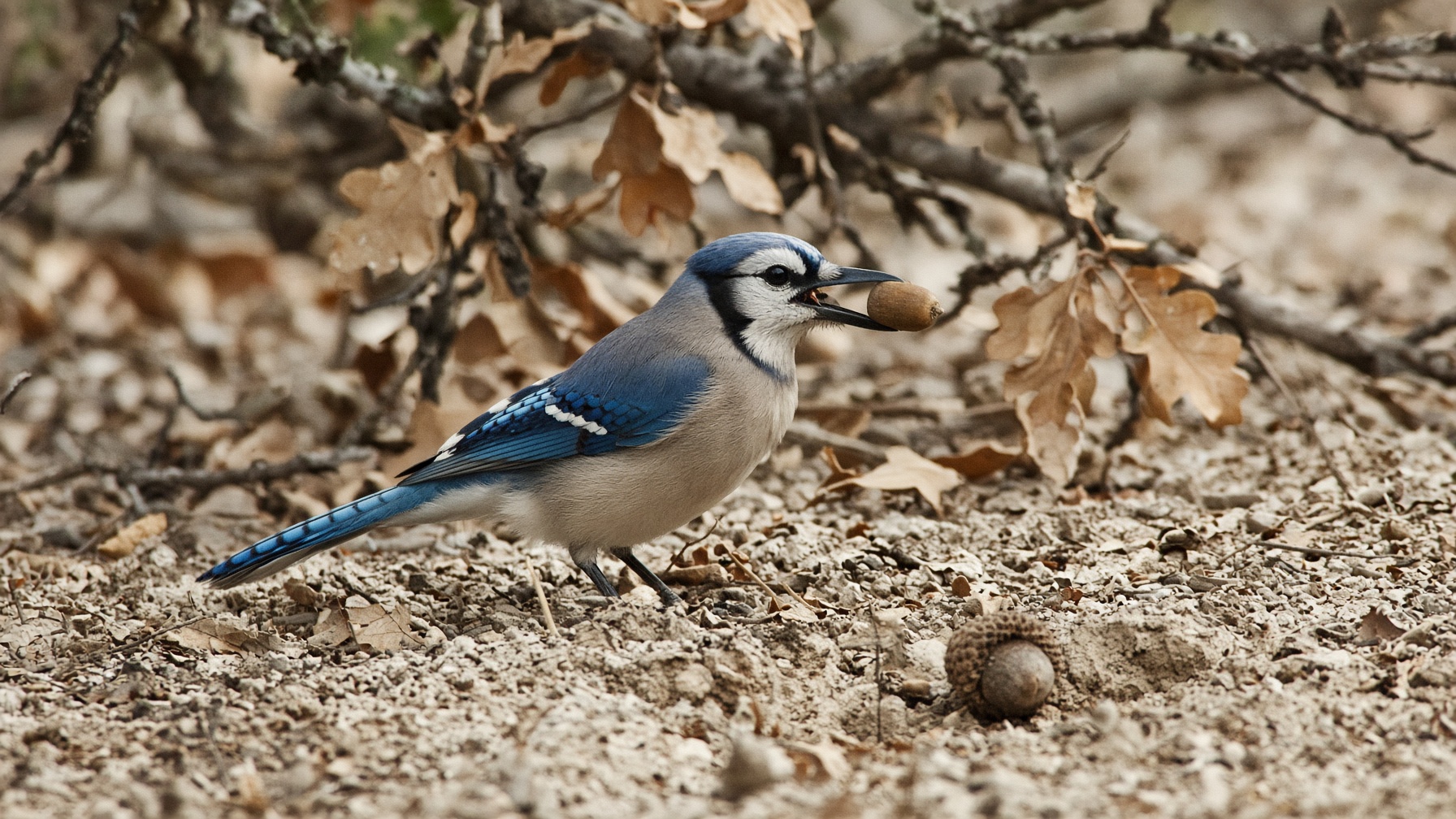
Echo
Contemporary ethology · Western oak woodlands, and Cambridge aviaries
The thief who remembers being a thief
A scrub-jay’s cache is a deed the experiment can score. Alex’s “same” is a word the experiment can score. Two animals, two protocols. Neither hands over a life.

Counterpoint
Mid-1960s computing · MIT, Project MAC
The secretary and the script
ELIZA’s words were a mirror people leaned into. Alex’s words were answers people scored. Projection and performance are not one event.
One question remains
Other minds · How do we know when another being is experiencing anything at all?
If a parrot can say what is same, who is the sayer when the word is correct?