Animal · Other minds · 1920s–1946
A Map Danced on Wax
A bee, back from a dish of sugar, turns a figure on the comb. Distance and direction, Karl von Frisch claims, are in the dance.
- Brünn, then Munich
- Mid-twentieth-century ethology
- 48.15°N 11.58°E
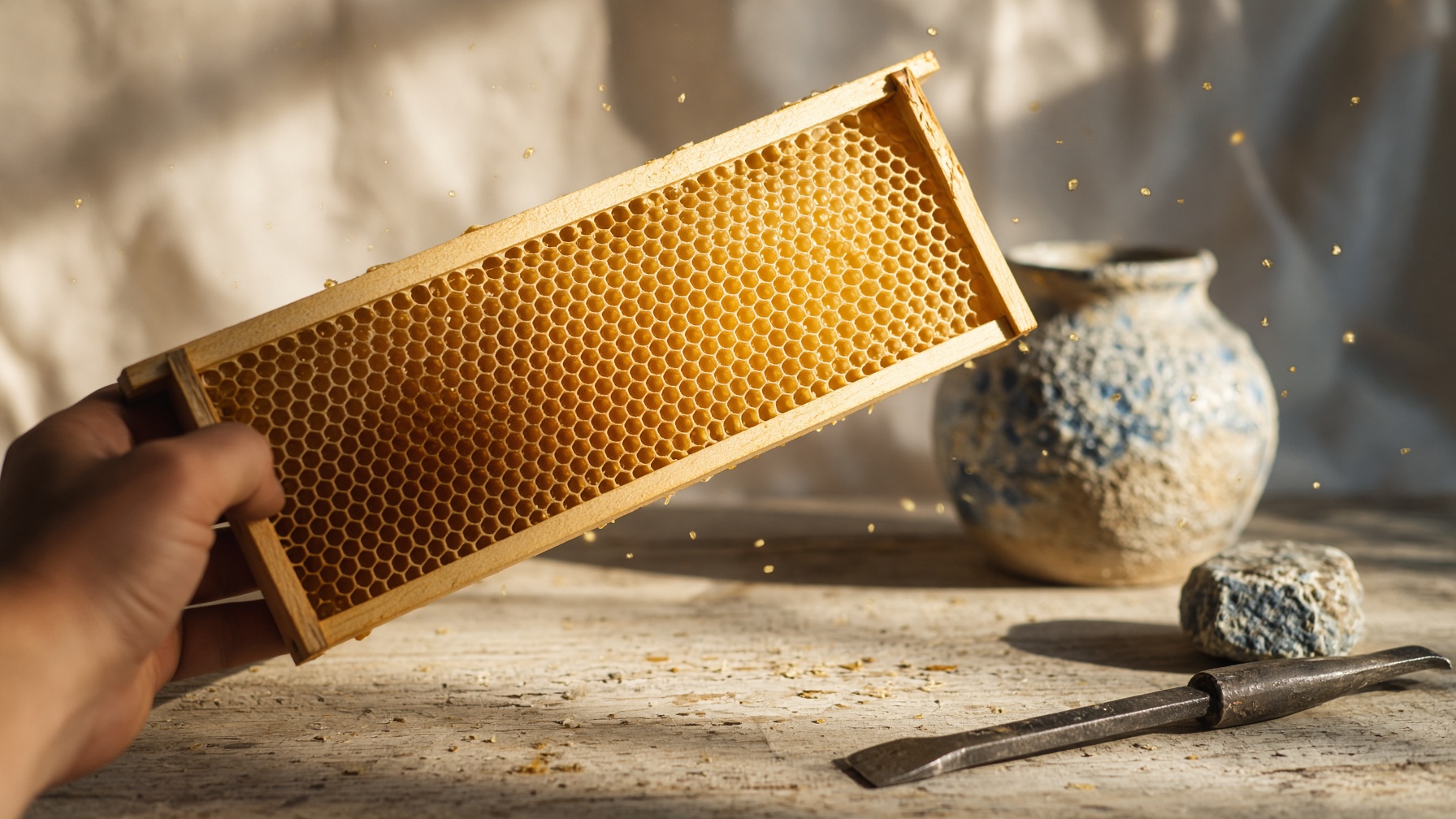
Plate · Generated interpretation
The comb is a floor. What would a direction look like if it had to be danced?
Listen · Eve
0:00 / —:—
Karl von Frisch. The waggle dance: angle to gravity on the vertical comb corresponding to angle to the sun; duration to distance. The Dance Language and Orientation of Bees (German 1965; Harvard 1967). Nobel Prize in Physiology or Medicine, 1973, shared with Lorenz and Tinbergen.
von Frisch, The Dance Language and Orientation of Bees. Cambridge, MA: Harvard University Press, 1967. Wenner later disputed that recruits use the dance as a map. Subsequent work has largely supported von Frisch, with qualifications about odor and following.
A protocol is not a soul. The dance is evidence of information. It is not a transcript of what, if anything, a bee experiences. Uexküll’s tick had a world of few signs. A hive has a shared geometry.
Calling it a language is already an analogy. von Frisch knew that. The house keeps the analogy labelled.
Whether a danced map is known as a map, or only followed, is not settled by a successful forage.
What we know
The story lets an animal communication stand without smuggling a human inner speech.
What we cannot know
A protocol is not a soul. Failure to satisfy our test is not vacancy. The rest remains with the creature.
Distant echoes
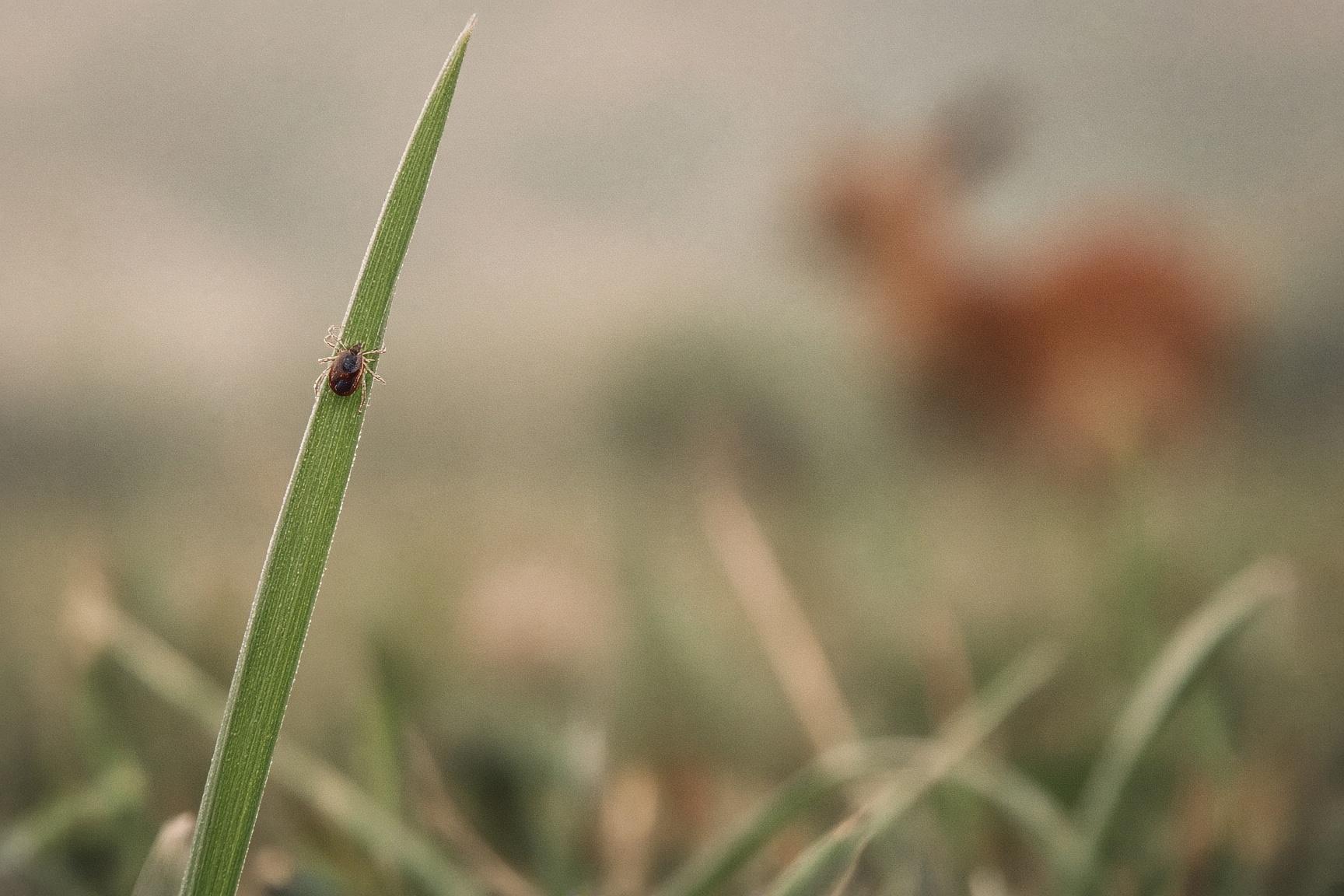
Echo
Weimar science · On the page, from Hamburg and the Baltic
A tick’s world
Uexküll’s few signs. von Frisch’s many angles. Both are claims about an animal’s world, not a proof of a self.
One question remains
Other minds · How do we know when another being is experiencing anything at all?
If a direction can be danced and used, does anyone in the dark hive have to see the field, or is seeing the wrong word?