
Animal · Other minds · 1960
A Twig, Stripped
On a Tanzanian lakeshore a young Englishwoman watches a chimpanzee fish for termites with a tool. The watching will take decades. The inner life of the chimpanzee is not in the first notebook.
- Gombe Stream, Tanzania
- Late twentieth-century field primatology
- 4.67°S 29.63°E
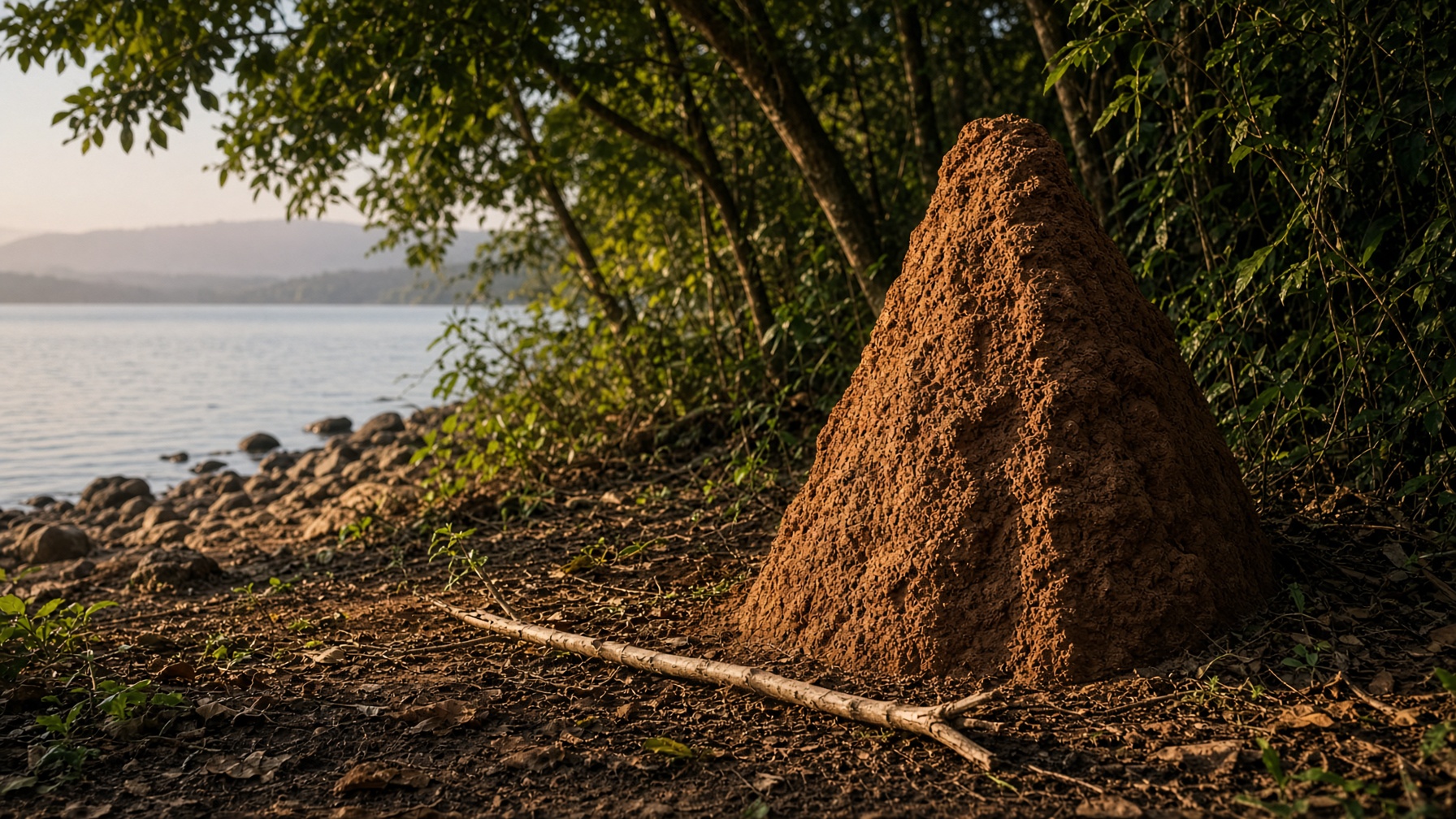
Plate · Generated interpretation
A stick in termite earth. Who do you assume is doing the wanting?
Listen · Eve
0:00 / —:—
Gombe Stream, on the eastern shore of Lake Tanganyika, November 1960. Jane Goodall, twenty-six, sent by Louis Leakey without a university degree, has been sitting with wild chimpanzees for months. In a field notebook she records two males at a termite mound. A piece of straw is held in the left hand, poked into the ground, withdrawn coated with termites. Soon after she sees twigs stripped of leaves to make the probes work. The animals are not only using an object. They are modifying one.
Leakey had wanted a long, patient watch of chimpanzees in the forest, not a zoo. Goodall named the animals. David Greybeard was the first to lose enough fear to be watched at close range. Naming was a method, and later a controversy: whether a proper name already grants a self. The 1960 pages do not settle that. They record a hand, a straw, a mound.
Goodall, In the Shadow of Man (Boston: Houghton Mifflin, 1971), a later telling of the first years. The November observation is in field notes and subsequent papers. Leakey’s reply, often given as a telegram: now we must redefine tool, man, or accept chimpanzees as human. That line is Leakey’s, in later recollection, not a 1960 laboratory result.
It was held in the left hand, poked onto the ground, and then removed coated with termites.
A tool is evidence of problem-solving. What the chimpanzees wanted is not in the straw. Grief at a death, play, hunting, war among groups: those arrive in later Gombe years, in a record that became decades. The first notebook is a twig. A twig is not a soul, and refusing the twig because a soul would be inconvenient is not better science.
Anthropomorphism can be a vice of projection. Anthropodenial, Frans de Waal’s later word, can be a vice of pride. Neither vice is a finding of 1960. De Waal is writing in another generation. The 1960 fact is a modified twig and a mouthful of termites.
Goodall stayed. The research centre at Gombe is a consequence, not a foregone conclusion of a first wet season. Cambridge later gave her a path to a doctorate without the usual first degree. The watching took the rest of a life. The inner life of the chimpanzee is still not in the first notebook. The hand is.
What kind of mind is required to strip a twig is not answered by our surprise.
What we know
The story keeps a lakeshore observation from hardening into a fable of almost-human. A tool is a deed. A deed is not yet a confession.
What we cannot know
A protocol is not a soul. Failure to satisfy our test is not vacancy. The rest remains with the creature.
Distant echoes
Echo
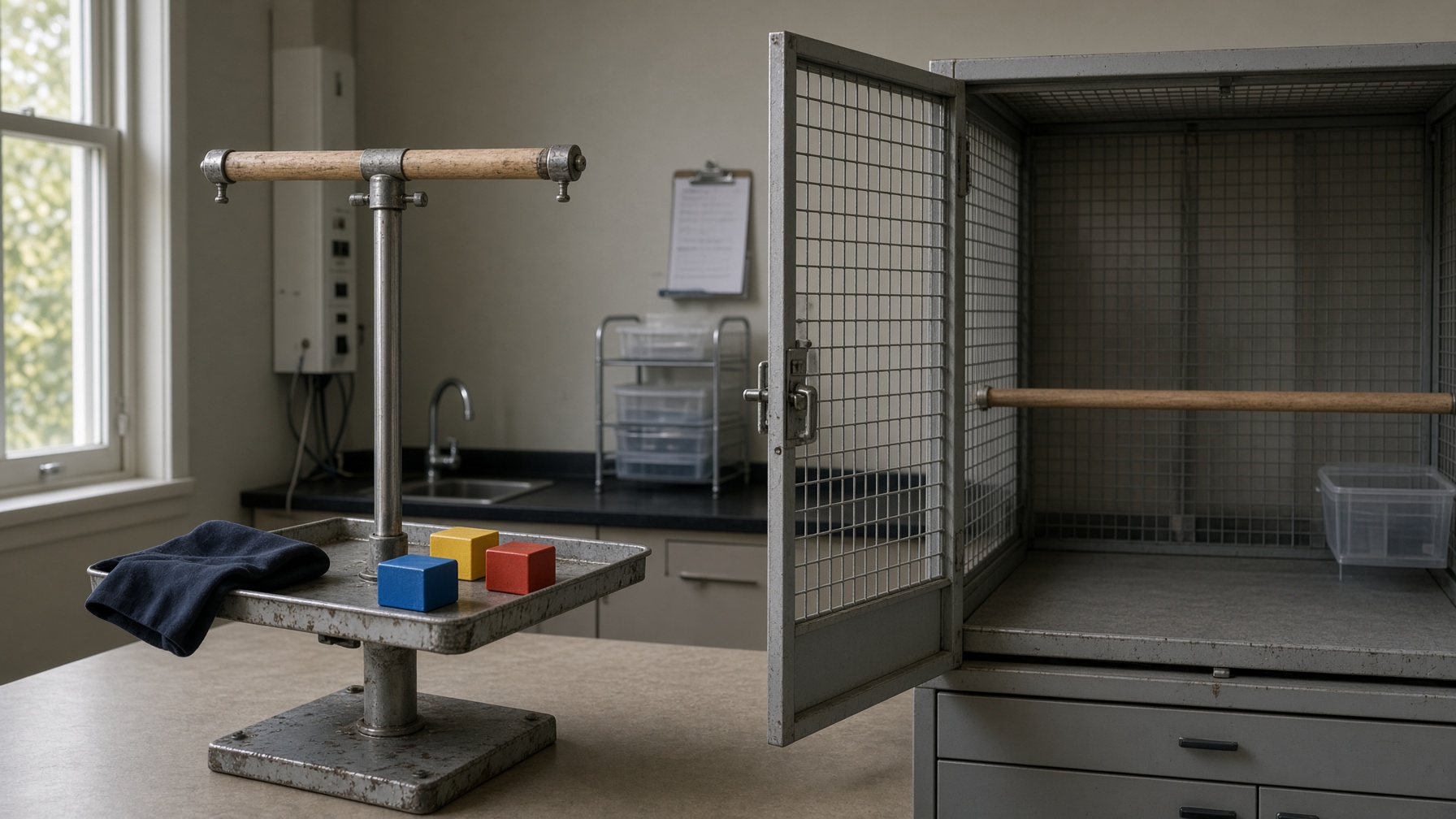
Late twentieth-century animal laboratory · Chicago, then Purdue, Northwestern, Arizona, MIT, Brandeis, Harvard
Same and different
A parrot in a lab, a chimpanzee on a shore. Both are asked to count as someone. The methods differ. The fences should.
Echo
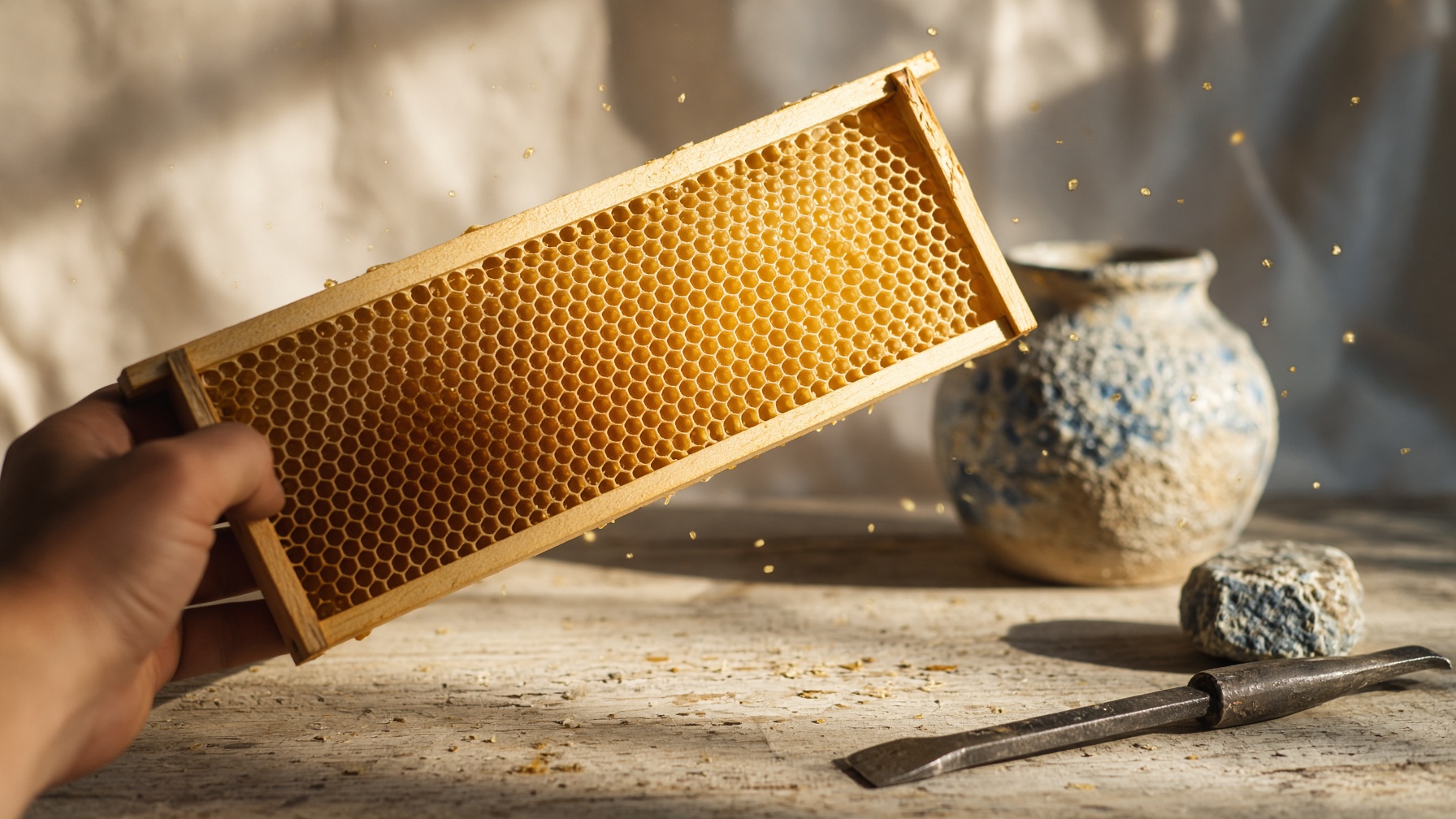
Mid-twentieth-century ethology · Brünn, then Munich
A map danced on wax
Von Frisch’s bees dance a location. Greybeard’s twig fetches a meal. Two nonhuman solutions that forced a human definition to move.
One question remains
Other minds · How do we know when another being is experiencing anything at all?
If a chimpanzee makes a tool, have we learned what it is like to want termites, or only what a hand can do?