
Animal · Perception · 1934
The Tick’s World
A Baltic-German biologist asks you to leave the human living-room and enter the few signs that make a tick’s entire universe.
- On the page, from Hamburg and the Baltic
- Weimar science
- 53.55°N 10.00°E
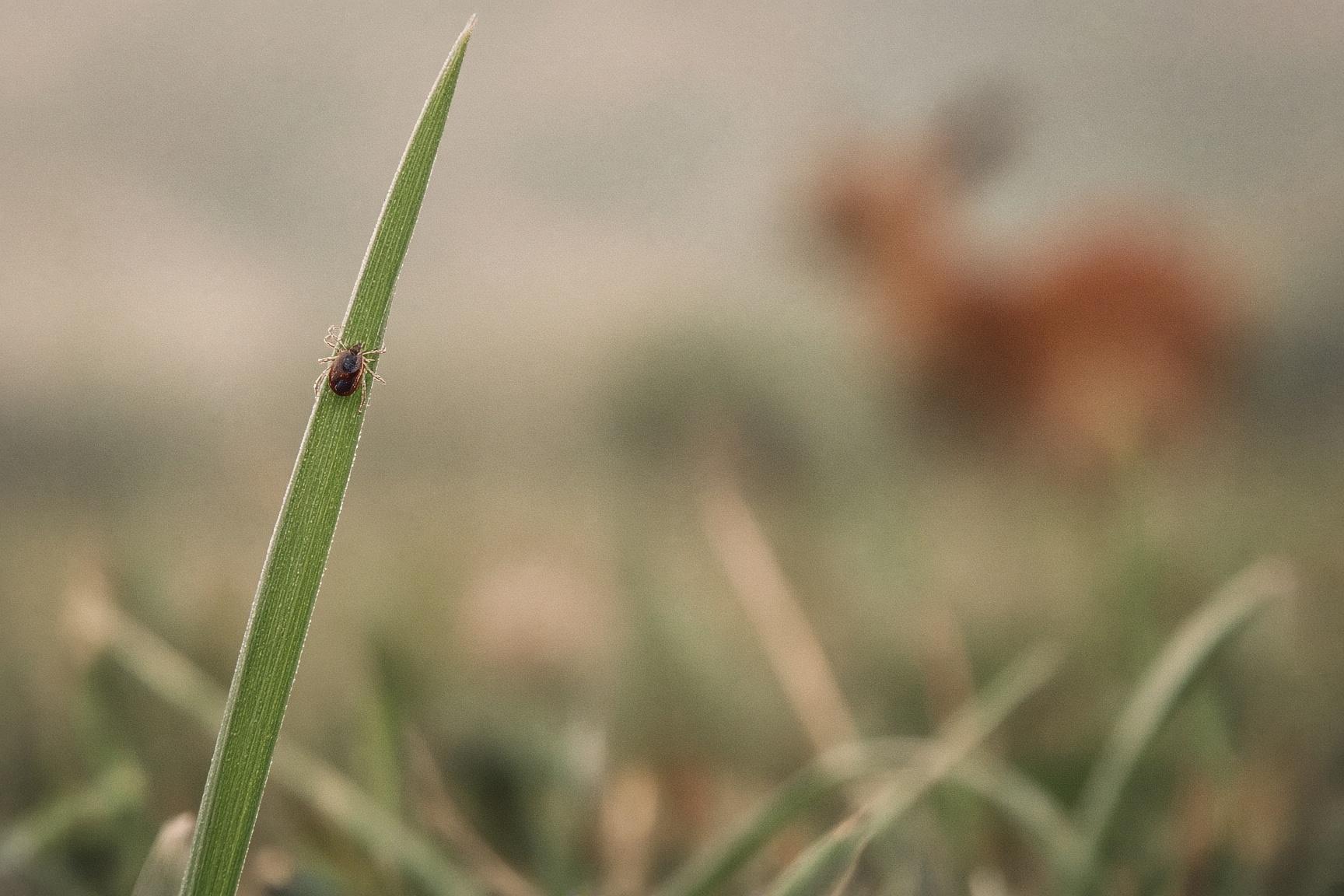
Plate · Generated interpretation
This is not a human world. Notice how little of it is given.
Listen · Eve
0:00 / —:—
Jakob von Uexküll, in A Foray into the Worlds of Animals and Humans (1934), invites the reader into Umwelten: the subjective worlds of creatures. His most famous guest is the tick. Blind, deaf, it waits on a grass stem, sometimes for years. Three signals compose almost the whole of its life: the butyric acid of mammal skin, the temperature of blood, the hair that must be parted. Then it drops, drinks, falls, lays eggs. The forest we see is not the forest it inhabits. Ours is crowded. Hers is exact.
Streifzüge durch die Umwelten von Tieren und Menschen, 1934. Uexküll is a biologist of meaning (Bedeutungslehre), not a laboratory of neurons. The tick is a pedagogical animal, based on known ethology, stylized to make a point about worlds.
Umwelt is not “environment” as a shared warehouse of objects. It is the set of marks that exist for a particular body. A stem is a waiting-place for the tick, a texture for a bird, a botanical fact for a botanist. The same meadow is many worlds, overlapping, not communicating. Uexküll draws little bubbles. Later philosophers (Heidegger with a quarrel, Merleau-Ponty, Deleuze, contemporary biosemiotics) will take the bubble as a problem for any view in which there is one world and then, added, minds.
The tick hangs motionless on the tip of a branch… a guest of the forest, waiting for her prey.
Ticks do respond to butyric acid, warmth, and contact; they can wait extraordinarily long. That is ethology. That this constitutes “a world” in Uexküll’s sense is a philosophical framing of the ethology, not a further measurement.
Whether an Umwelt is consciousness is exactly the open door. Uexküll gives you a structured world-for. He does not give you what-it-is-like, if that is something more. Nagel will later say the more cannot be had from outside. Uexküll thought the outside could at least be mapped as a score of signs.
What we know
The story is a solvent for human default. Consciousness, if it belongs to more than us, may not look like a stream of thought. It may look like a long wait and three signals. A tick is not a person. She is not a machine because she does not speak.
What we cannot know
A protocol is not a soul. Failure to satisfy our test is not vacancy. The rest remains with the creature.
A word
Umwelt
German: the world around, but in Uexküll’s use, the world as it exists for a creature. Not Umgebung (the surroundings as a surveyor might list them). The distinction is the essay.
Distant echoes

Echo
Late analytic philosophy · Princeton, on the page of *The Philosophical Review*
What it is like to be a bat
Nagel wants the inner feel; Uexküll wants the outer score of signs. Both refuse to let the human living-room stand in for every mind.
Echo
Contemporary biology · Oceans, and a few laboratories
The octopus
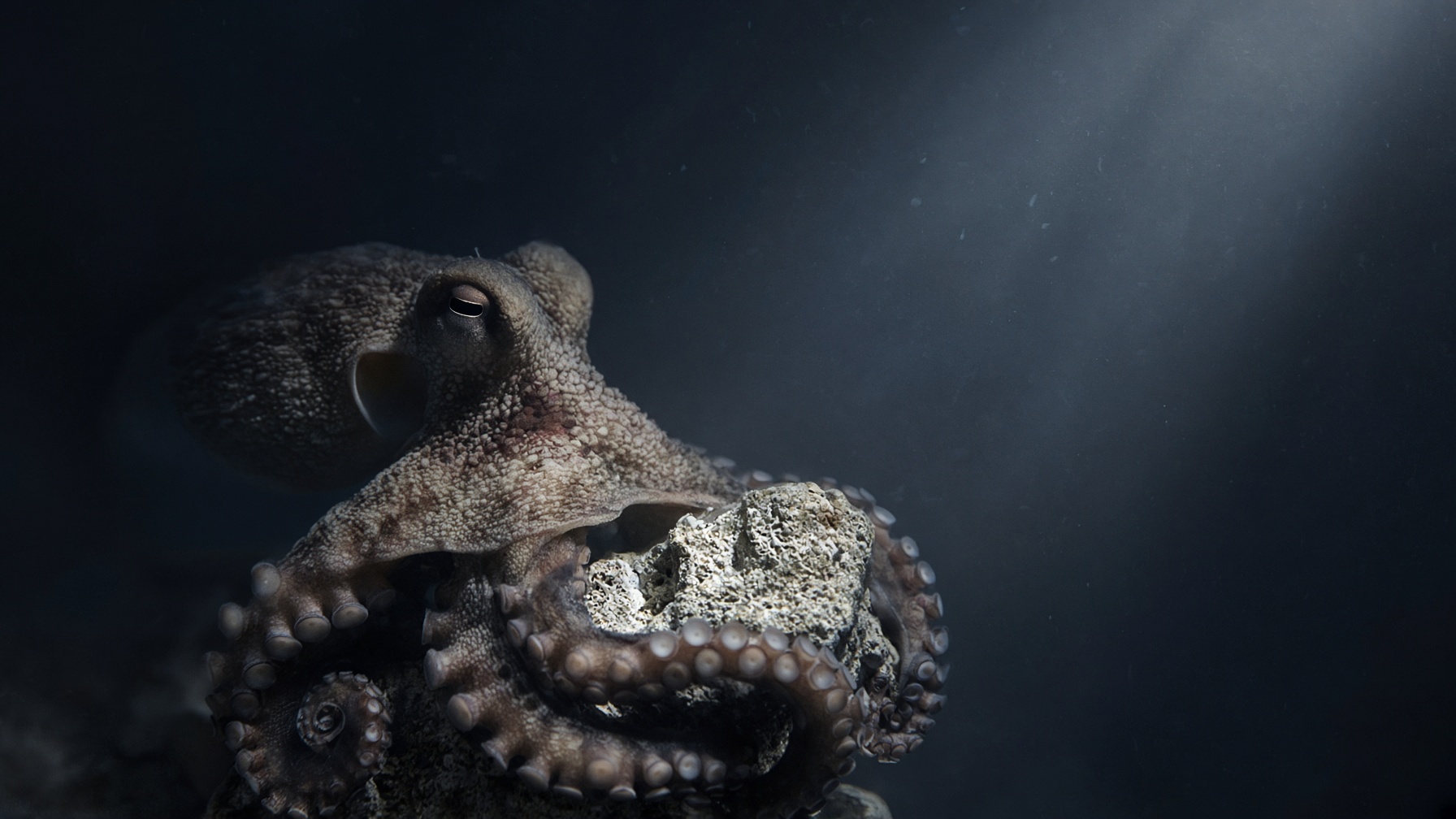
Another body, another score. Eight arms, skin that thinks. Uexküll would have drawn a different bubble. He did not live to see the lab.
Counterpoint
Analytic philosophy · A gray room that does not exist
Mary’s room
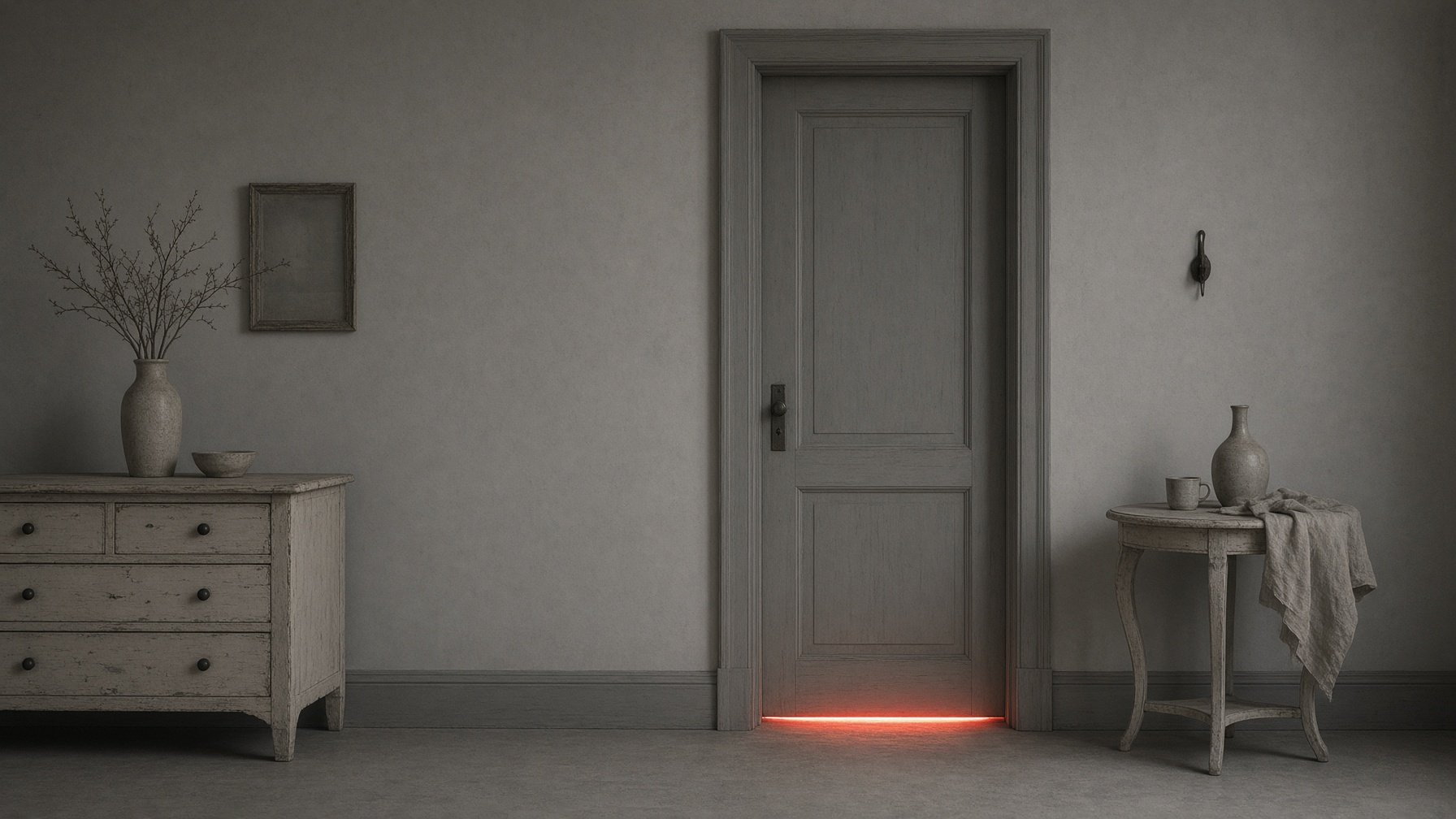
Mary has every physical fact and no red. The tick has almost no facts and a complete life. Poverty of signs is not poverty of world.
One question remains
Perception · What does sensing give us?
If a life can be complete in three signals, what are we doing when we call our crowded world the real one?