
Science · Other minds · 1974
What It Is Like
A philosopher chooses a bat, not as a mascot, but as a limit: a mind we can study and still not occupy.
- Princeton, on the page of *The Philosophical Review*
- Late analytic philosophy
- 40.34°N 74.66°W

Plate · Generated interpretation
Listen · Eve
0:00 / —:—
Thomas Nagel, in “What Is It Like to Be a Bat?” (The Philosophical Review, 1974), grants everything the physiologist wants: bats perceive by sonar, their brains can be mapped, their behavior explained. He then asks for something that would still be missing. There is something it is like to be a bat. That something is not available from the third person. If we imagine ourselves flying with webbed arms, we imagine ourselves in a bat costume. We do not occupy the bat’s point of view.
The Philosophical Review 83, no. 4 (1974). An essay in analytic philosophy of mind, written against the confidence that physical description will one day exhaust experience. Nagel is not offering a mystical remainder. He is offering a structural limit: the subjective character of experience.
The phrase “what it is like” becomes, for a generation, almost a definition of consciousness. It is a useful phrase and a trap. It makes innerness sound like a quality we already know how to point to. Nagel’s bat is meant to show that even when we know a lot, the like-ness may not come along. Reduction, he argues, works by leaving behind the appearance (lightning as electrical discharge). Consciousness is the appearance. Leave it behind and you have changed the subject.
An organism has conscious mental states if and only if there is something that it is like to be that organism: something it is like for the organism.
Later work (Mary’s room, the hard problem, illusionism) fights over this sentence. Some say Nagel named a real residue. Some say he named a confusion. The fight is not finished. The bat remains a limit-case: a creature close enough to study, far enough that our empathy becomes costume.
That bats echolocate is established biology. That there is “something it is like” for them is, on Nagel’s own terms, not an additional laboratory finding. It is a claim about what consciousness is, if it is anything.
Why it matters
The story is the modern English lock on the inner. After it, you can still be a physicalist, a dualist, a mystic, a skeptic. You cannot, honestly, pretend that a complete diagram of sonar is the same as occupying a sonar life. Whether that gap is eternal or temporary is the question the essay leaves on the table.
A word
subjective
From subjectum, that which is thrown under, the underlying. In Nagel it means: available only from a point of view. The word used to mean the real. It now often means the merely personal. The essay lives in that slide.
Distant echoes

Echo
Weimar science · On the page, from Hamburg and the Baltic
The tick’s world
Uexküll maps the signs. Nagel refuses the occupancy. A complete score is still not a seat.
Echo
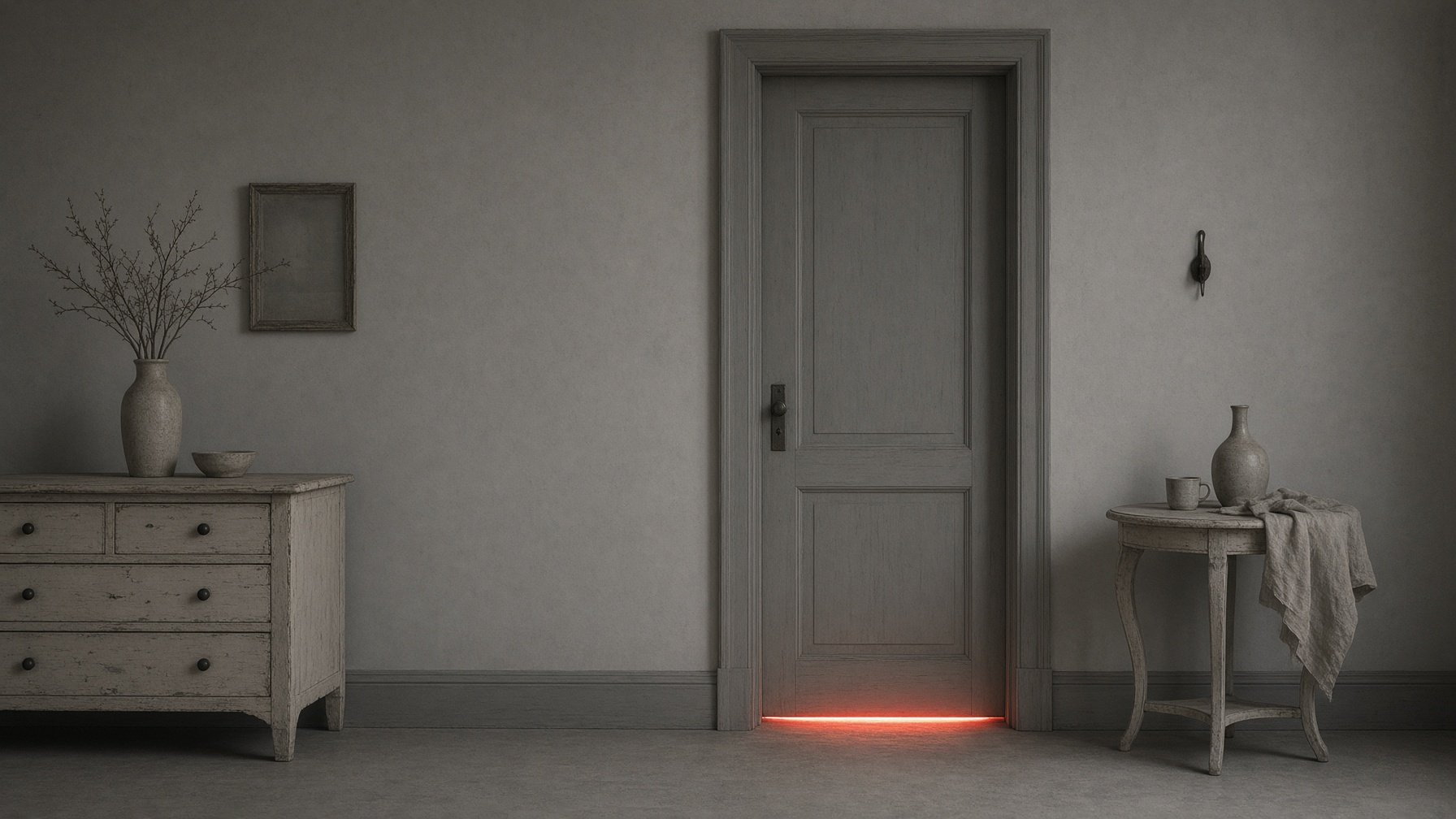
Analytic philosophy · A gray room that does not exist
Mary’s gray room
Mary has the physical facts of red and has not seen red. The bat has a sonar life we can describe and not occupy. Two missing first persons.

Counterpoint
Postwar Britain · Manchester, on the page of Mind
The imitation game
Turing declines inner lights as a public criterion. Nagel insists they are the subject. One wants a game we can play. One wants a fact we cannot share.
One question remains
Other minds · How do we know when another being is experiencing anything at all?
If we someday have a complete science of echolocation, will we know what it is like to be a bat, or only know more about what we are not?