
Event · Language · 1887
The Word at the Pump
A child who cannot hear or see has water run over one hand while letters are spelled into the other. Something that was wet becomes a name.
- Ivy Green, Tuscumbia
- Late nineteenth-century Alabama
- 34.73°N 87.70°W
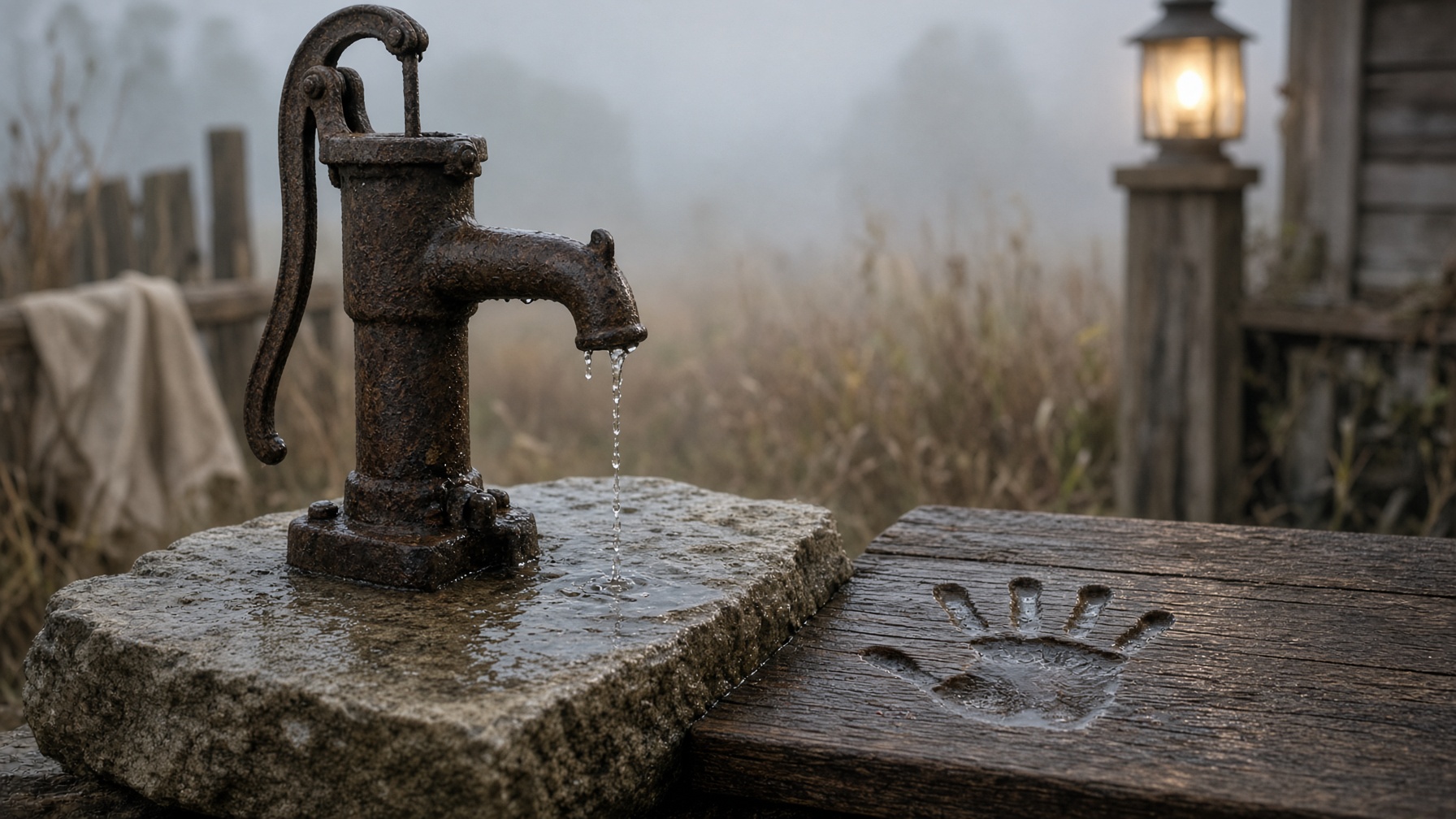
Plate · Generated interpretation
Water is running. What is the difference between wet and a name?
Listen · Eve
0:00 / —:—
Ivy Green, Tuscumbia, Alabama, 5 April 1887. Anne Mansfield Sullivan, twenty, arrived from the Perkins Institution on 3 March. For a month she has been spelling into a six-year-old’s hand: doll, mug, water, the letters as a finger-game the child copies without taking them for names. This morning, while Helen is washing, she wants a name for water. Sullivan spells it, then takes her to the pump-house with a mug. Cold water fills the mug. Sullivan spells w-a-t-e-r into the free hand. The child drops the mug.
Helen Keller was born in Tuscumbia in 1880. An illness in February, when she was nineteen months old, took her sight and hearing. The doctor called it acute congestion of the stomach and brain. She had had, she later writes, glimpses of fields and sky that the darkness did not wholly blot. What remained, before Sullivan, were home signs: a nod, a pull, a temper. Sullivan herself had been a Perkins student, nearly blind as a child, and had known Laura Bridgman’s work there. The doll she brought on the first morning had been dressed by Bridgman. The pump is not the first day. It is the day the finger-game becomes a name.
Two tellings, not one. Sullivan’s letter to Sophia C. Hopkins, 5 April 1887, is the contemporary report: the mug, the spout, the dropped mug, the child transfixed, then asking for the pump, the trellis, Teacher, baby, and, by evening, some thirty words. Keller’s The Story of My Life (1903) is a later public telling, shaped with Sullivan and John Macy. In it the well-house is covered with honeysuckle; the cool stream runs over one hand while the word is spelled into the other. The book does not give 5 April. Treat 1903 as testimony, not as a laboratory of language origin, and not as the 1887 letter.
I knew then that w-a-t-e-r meant the wonderful cool something that was flowing over my hand.
Sullivan’s letter is drier and closer to the hour. The word coming so close upon the sensation of cold water, she writes, seemed to startle her. She dropped the mug and stood as one transfixed. A new light came into her face. She spelled water several times, then dropped on the ground and asked for names. The nurse brought the baby. That night, Sullivan adds, Helen stole into her arms and kissed her for the first time. Neither woman is writing a theory of concepts. One is a teacher reporting a lesson. One, sixteen years later, is a writer naming a living word.
The scene is a pedagogy, not a proof that there was no awareness before English. Keller’s own before is not empty. It is not yet a word that can be spelled. Nicaraguan children, a century later, will invent a language together without a teacher at a pump. Ḥayy, in Ibn Ṭufayl’s book, comes to intellect without a city. Keller’s scene is one child, one teacher, one join of wet and sign. They are not the same event. William Gibson’s later play will call Sullivan a miracle worker. That title is not 1887, and not Keller’s word.
Whether the water was already a world, or only became one when it was spelled, is the trouble the scene leaves.
Distant echoes
Counterpoint
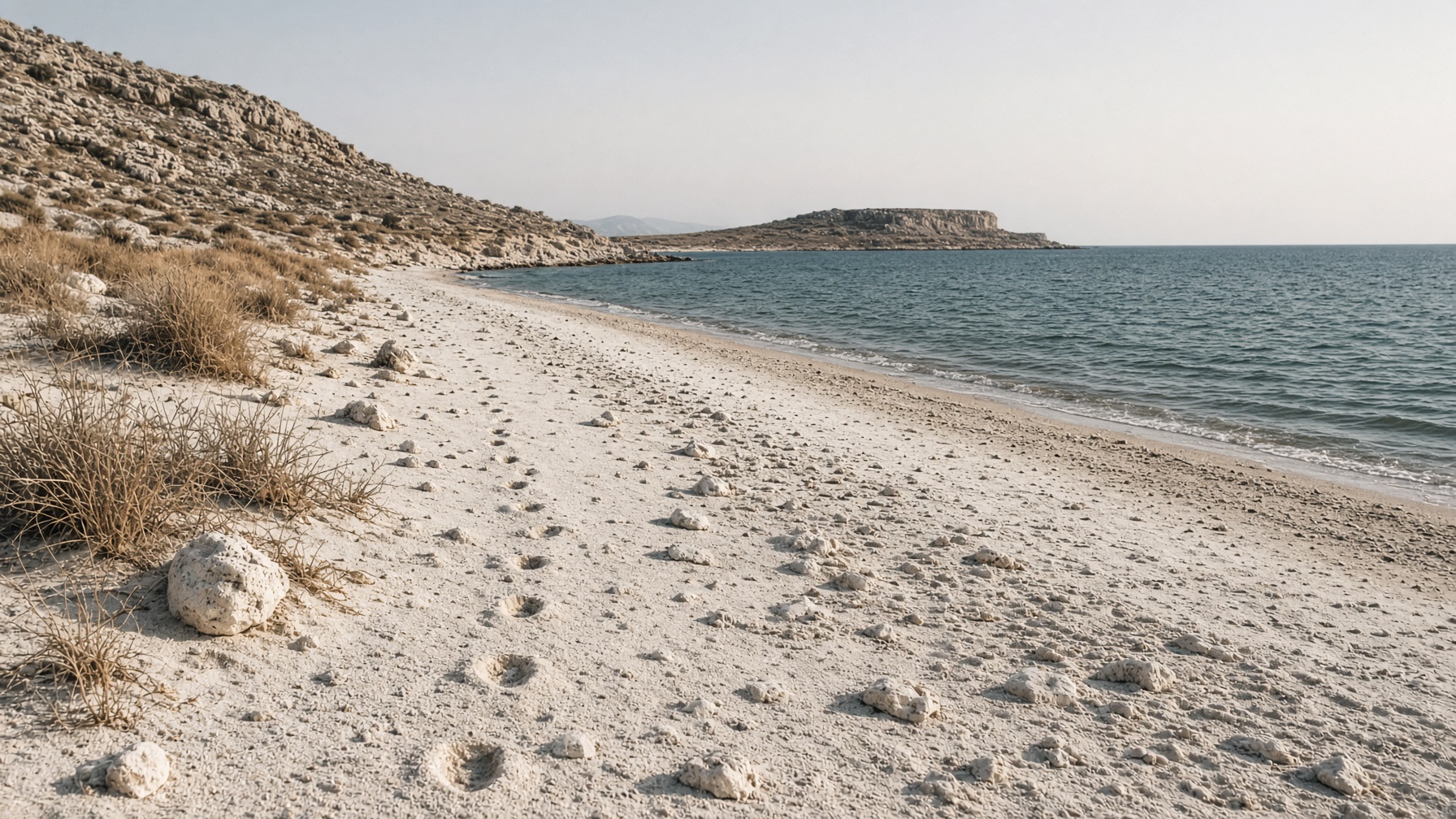
Twelfth-century al-Andalus · An island, on the page
The child and the gazelle
Ḥayy comes to intellect without a teacher. Keller comes to a word with one, at a pump. Two first knowings, two conditions.
Echo
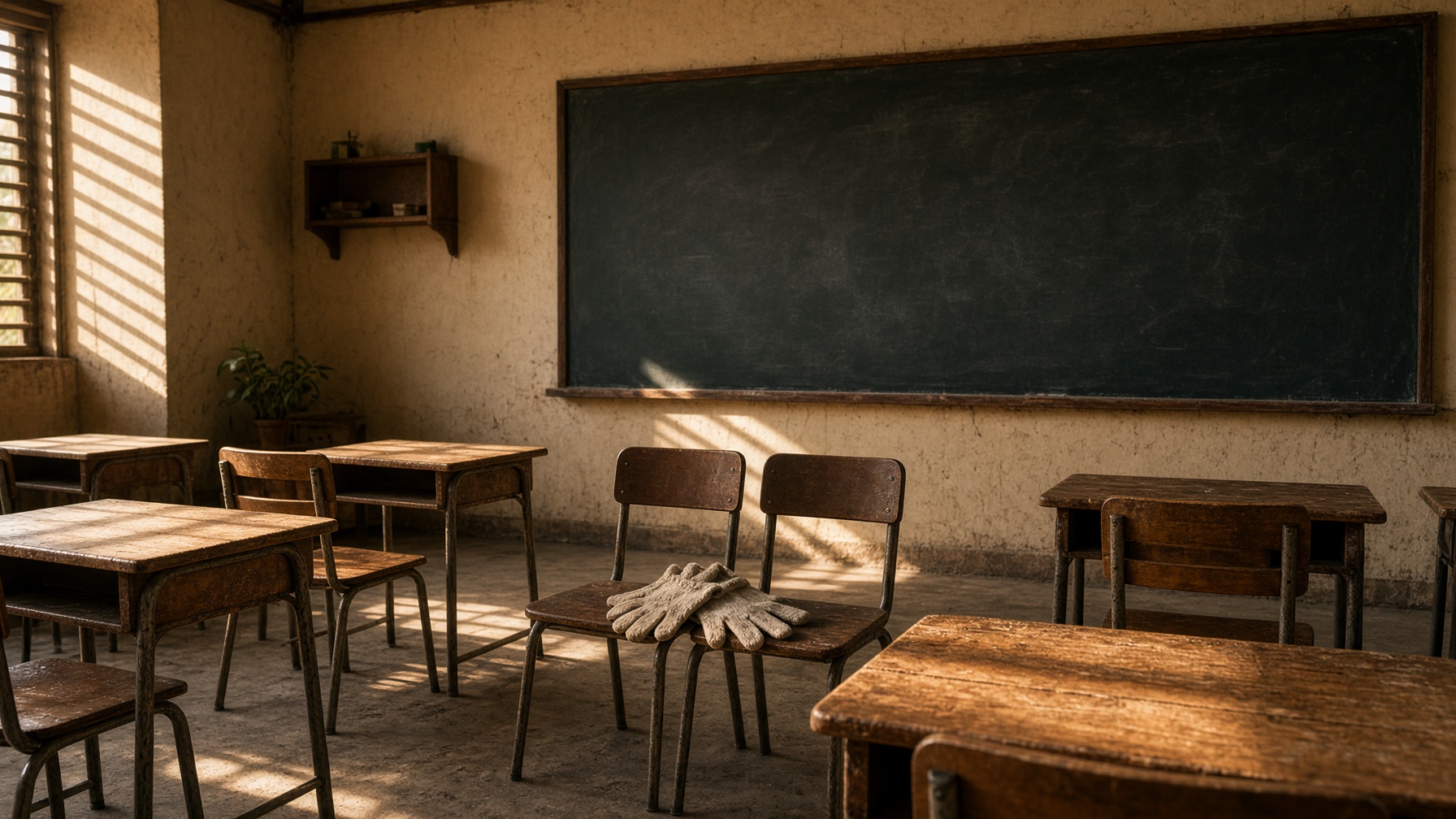
Late twentieth-century Nicaragua · Managua
A language with no parents
In Managua, children invent a language together. At Ivy Green, one child receives a language from one teacher. Both enlarge what a first word can be.
One question remains
Language · What changes when experience becomes a word?
If a living water can be felt before it is named, what, then, does the name add that the wet did not already give?