
Myth · Knowledge · c. 1160s
The Child and the Gazelle
A philosophical novel from al-Andalus imagines a child raised by a gazelle who comes, without a teacher, to intellect and then to a God.
- An island, on the page
- Twelfth-century al-Andalus
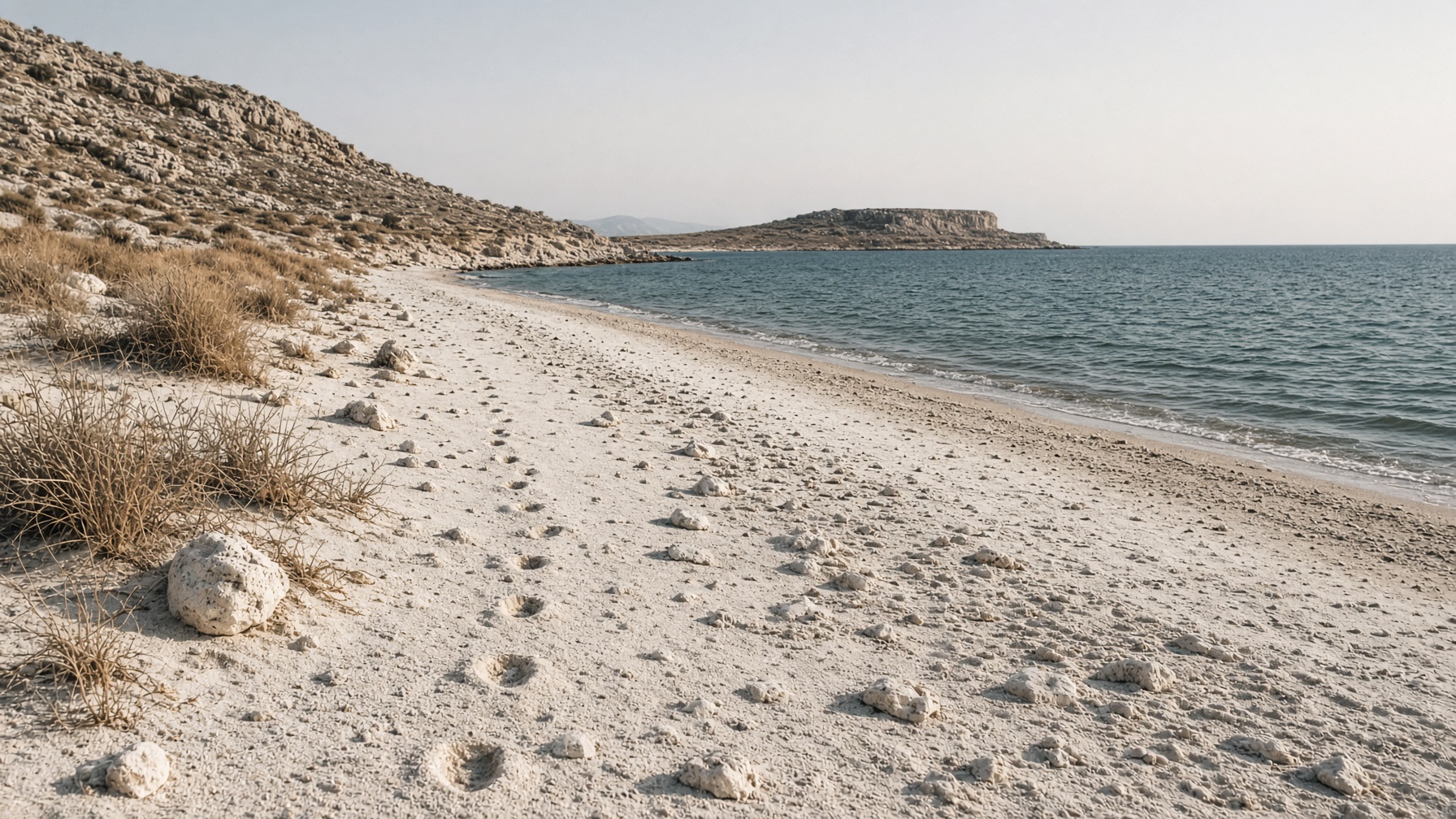
Plate · Generated interpretation
Tracks without a child. Who do you put on the shore?
Listen · Eve
0:00 / —:—
The book gives the child two origins, and will not choose. In one, a woman of a royal house sets her infant on the water in a basket, and the sea takes him to an uninhabited equatorial island. In the other, the island itself generates him from clay and sun. Either way he is Ḥayy ibn Yaqẓān: Alive, son of Awake. A gazelle finds him. She nurses him. Ibn Ṭufayl, a physician and courtier of the Almohads, writing in Arabic in the twelfth century, is not reporting a foundling. He is asking what a mind would do without a city.
Abū Bakr ibn Ṭufayl was born near Guadix, in al-Andalus, around 1105. He served the Almohad court at Marrakesh as secretary and later as physician. He is remembered for this book, and for bringing Ibn Rushd to the caliph’s attention. The island in Ḥayy ibn Yaqẓān has no coordinates. It is a device. The names Ḥayy, Absāl, and Salāmān are borrowed from an allegory of Ibn Sīnā. This is not Ibn Sīnā’s floating man, and not Ibn Sīnā’s own Ḥayy. It is a romance of autodidactic intellect, written inside Andalusian philosophy.
Ḥayy ibn Yaqẓān. Lenn Evan Goodman’s English is a common door. Edward Pococke’s Latin, Philosophus Autodidactus (1671), is a later European life of the book, not the conditions of its writing. Treat the narrative as a literary argument.
The gazelle dies. Ḥayy opens her body, looking for the thing that has left: the heat, the motion, what he had loved. Anatomy becomes a first metaphysics. He watches plants, fire, the sky. The book measures his life in sevens of years. By fifty, in the story’s count, he has reasoned his way to a Necessary Being and then tried, by fasting and spinning and retreat, to match himself to what he has found. That last turn is not a laboratory of reason. It is a contemplative practice the book does not apologize for.
Then another man arrives. Absāl has left a neighboring island, where a law like a religion is kept in symbols, because he wants solitude. He teaches Ḥayy language. They discover that they have been talking, in two idioms, about the same truth. Compassion sends them to Absāl’s city, to teach. The people are hospitable and unmoved. Ḥayy learns that the law is what most lives can bear, and that stripping the symbols would not perfect the city. He and Absāl go back to the island, and stay.
A gazelle is not a theory of other minds. She is a first other. When she dies, the book becomes anatomy and then metaphysics. The city at the end is not a failure of the island. It is the book’s second thought: that a mind can arrive without being told, and that telling still has a use for those who will not arrive that way. Later Europe will read the tale as a proof of unaided reason. That is Pococke’s century talking. It is not why Ibn Ṭufayl wrote.
Whether a mind can arrive at the same God without a tradition is the novel’s wager, not a finding.
Distant echoes
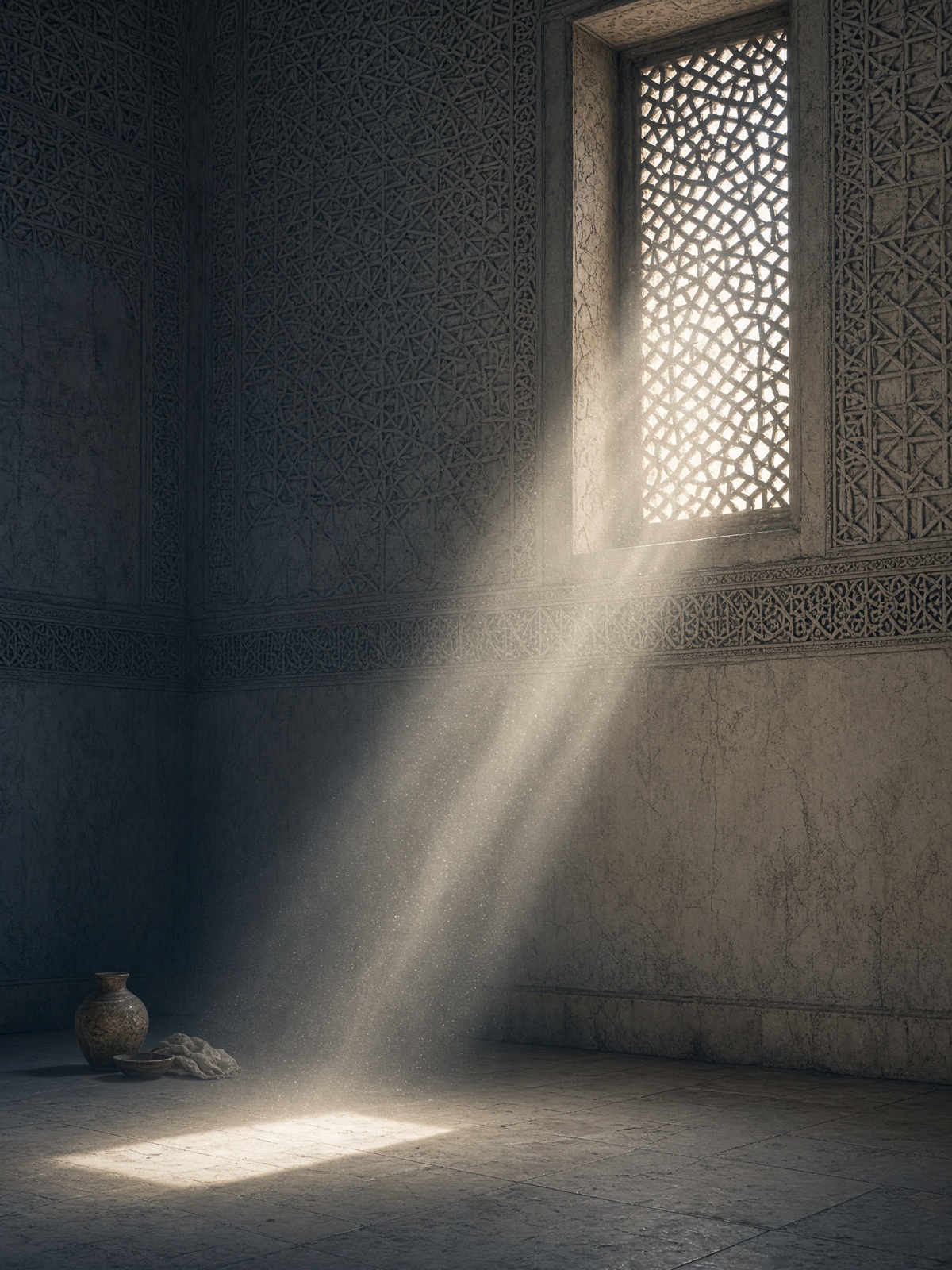
Echo
Islamic Golden Age · On the page, from Bukhara to Hamadan to Isfahan
The floating man
Ibn Sīnā suspends the body. Ibn Ṭufayl grows a body without a city. Two thought-devices from one philosophical world, not one thought.

Echo
Late nineteenth-century Alabama · Ivy Green, Tuscumbia
The word at the pump
Language arrives for Ḥayy as a second education, after the island has already taught. Keller’s pump is a first word. Two scenes of what telling does, and does not, add.
One question remains
Knowledge · What counts as knowing?
If a child can know without being told, what was the telling for?