
Event · Attention · 2013
The Grammar of Animacy
A botanist and enrolled member of the Citizen Potawatomi Nation writes that some languages already know how to say a living world. Attention, here, is a practice of address.
- Great Lakes, on the page
- Early twenty-first century
- Great Lakes, region

Plate · Generated interpretation
The braid is still a plant. What word would you use if you could not say it?
Listen · Eve
0:00 / —:—
Robin Wall Kimmerer, botanist, enrolled member of the Citizen Potawatomi Nation, sits with a dictionary of her grandfather’s language and finds that Saturday is a verb. Then: wiikwegamaa, to be a bay. She is ready, she writes, to throw the book down. A bay is a noun. Everyone knows that. The essay that follows, in Braiding Sweetgrass (Milkweed, 2013), is the correction she performs on herself. English had taught her to make the living world into furniture. Potawatomi had not finished doing that.
She is a scientist. She is also a person whose language was interrupted: boarding schools, a grandfather who did not pass the words, a later adult class. Those are not one credential swallowing the other. The grammar of animacy, as she names it, is not a proof that plants have a hard problem. It is a claim that some languages already know how to say a world that can be addressed as living, and that English, in its common use, often does not.
Braiding Sweetgrass: Indigenous Wisdom, Scientific Knowledge, and the Teachings of Plants. Minneapolis: Milkweed Editions, 2013. The grammar-of-animacy pages are one essay in a braided book. Kimmerer is a named author in a living nation, not “Indigenous wisdom” as a proverb card.
A bay is a noun only if water is dead.
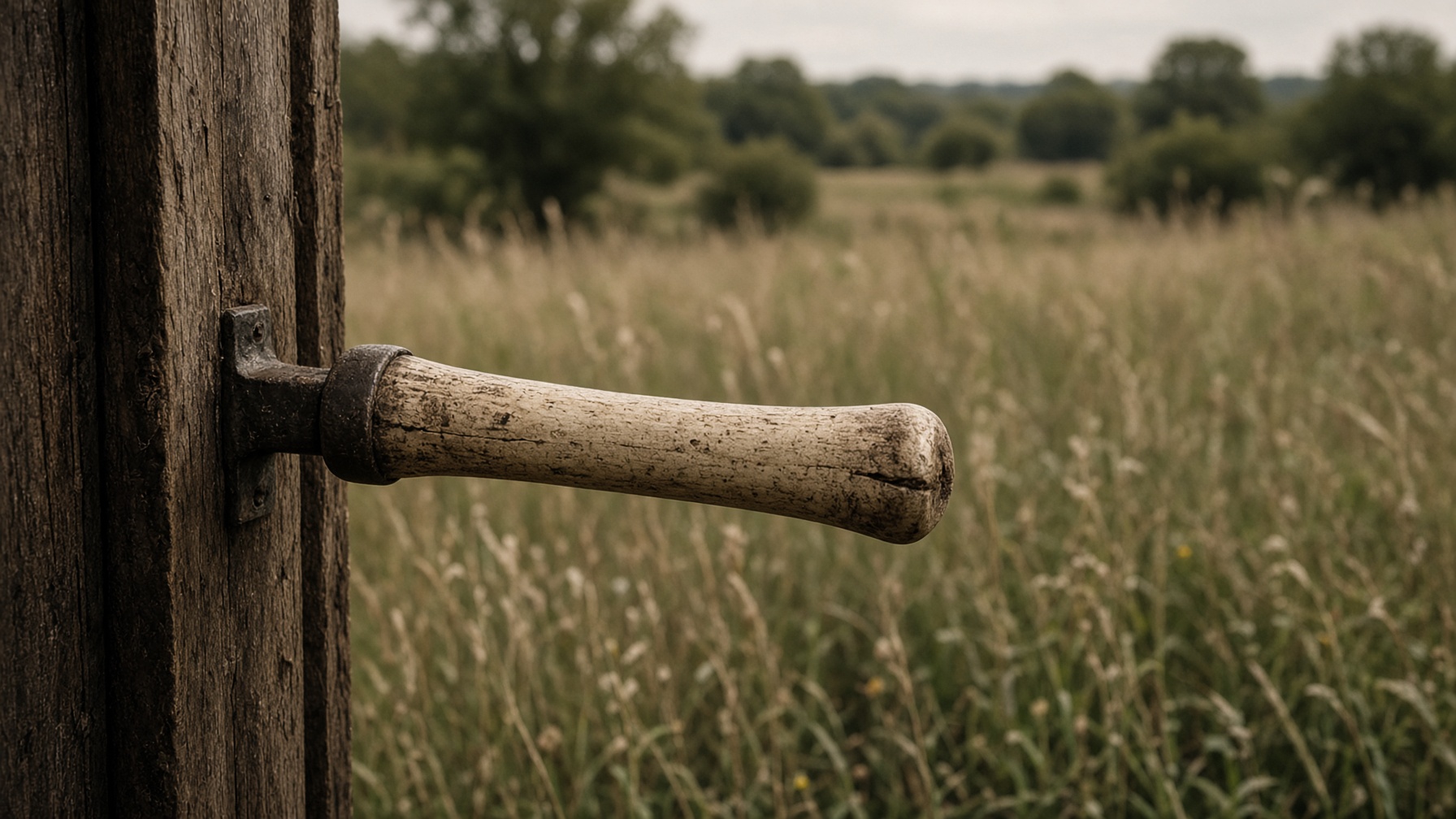
To be a bay, she writes, is to let the water be doing something between these shores, this day, with cedar and mergansers, not to trap it as a thing defined by humans. Gibson’s handle offers itself to a hand. Kimmerer’s grammar offers a world that can be addressed. They can sit together. They are not the same ecology. One is a psychology of affordance. One is a restoration of a language and an ethics of reciprocity, sweetgrass gathered as gift, not as stock.
Animacy is a linguistic and ethical claim here. It is not a laboratory finding about plant minds. Whether a language can teach a people to see, or only record how they already see, is the leftover. A Potawatomi verb is not a slogan for attention as a wellness product.
Whether a language can teach a people to see, or only record how they already see, is the leftover.
Distant echoes
Echo
Late twentieth-century ecological psychology · Cornell, on the page
The door handle
Gibson’s world affords acts. Kimmerer’s world affords address. Two refusals of a dead furniture universe.

Echo
Late twentieth-century Nicaragua · Managua
A language with no parents
Nicaraguan Sign Language grew a grammar among children. Potawatomi is a grammar being learned back. Two stories of what a language can do when it is, or is not, given.
One question remains
Attention · What enters awareness?
If a language can treat a bay as a verb, what was English doing when it made it a thing?