
Portrait · Self · 1914–1935

Plate · Generated interpretation
A Firm of Selves
In Lisbon a poet writes under names that have biographies, styles, and disagreements. The page is crowded, and the civil name is only one of them.
- Lisbon
- Early twentieth-century Lisbon
- 38.71°N 9.14°W
Several names on a table. Which one would you sign?
Listen · Eve
0:00 / —:—
Lisbon, 13 January 1935. Fernando Pessoa writes to the critic Adolfo Casais Monteiro, who has asked how the heteronyms appeared. Pessoa answers with a morning twenty-one years earlier. On 8 March 1914, he says, he stood before a tall chest of drawers, took paper, and wrote standing, as he preferred. Thirty-odd poems came in a row, in a kind of ecstasy he will not define. It was, in the letter, the triumphant day of his life. What followed was the appearance of someone in him to whom he gave the name Alberto Caeiro. Forgive the absurdity of the sentence, he writes: in me there appeared my master. The letter is a later scene. It is not a diary of 1914. Some scholarship treats even that morning as another of Pessoa’s fictions. Mark the difference.
Fernando António Nogueira Pessoa was born in Lisbon on 13 June 1888. Childhood years in Durban gave him English. He returned to Lisbon, earned little, published less than he wrote, and died on 30 November 1935. Afterward a trunk held more than twenty-five thousand sheets. The National Library of Portugal keeps them. The civil name is one of the signatures. He reserved “orthonym” for the poems signed Fernando Pessoa. Heteronym is his word for a name that is not a mask over one life but a life with a biography, a style, a body, a disagreement. A pseudonym hides an author. A heteronym employs one.
Letter to Adolfo Casais Monteiro, 13 January 1935. Casa Fernando Pessoa is a public door for the system. Pessoa named three heteronyms as “characters without drama”: Alberto Caeiro, Ricardo Reis, Álvaro de Campos. Bernardo Soares, assistant bookkeeper, author of Livro do Desassossego (The Book of Disquiet), he called a semi-heteronym: closer to the civil man, still a written person. The Book of Disquiet was assembled after his death. Richard Zenith’s English (Penguin, 2001) is one door among others, not a book Pessoa saw through the press.
Caeiro, in the fiction, is born 1889, dies 1915, a keeper of sheep who will not turn seeing into metaphysics. Reis is a physician, a Latinist, writing odes as if Horace had a Lisbon desk. Campos is a naval engineer, taller than Pessoa by two centimeters in the notes, torrential, a monocle. They contradict one another. That is the point of a firm. Dozens of other names exist in the trunk. The three are the ones Pessoa put forward as the system. This is not a split brain. It is not a diagnosis. It is a literary technology of being several. Borges will later dream authors into fire. Pessoa staffed an office and left the papers.
A heteronym is evidence that a self can be written in the plural. It is not evidence that there is no one at the desk. Arendt’s two-in-one is a civic solitude, a mind that must live with itself. Pessoa’s firm is several authors with addresses. They can sit on the table. They are not one plurality.
Whether the civil name is the real one, or only the passport of the firm, is a question the archive will not close.
Distant echoes
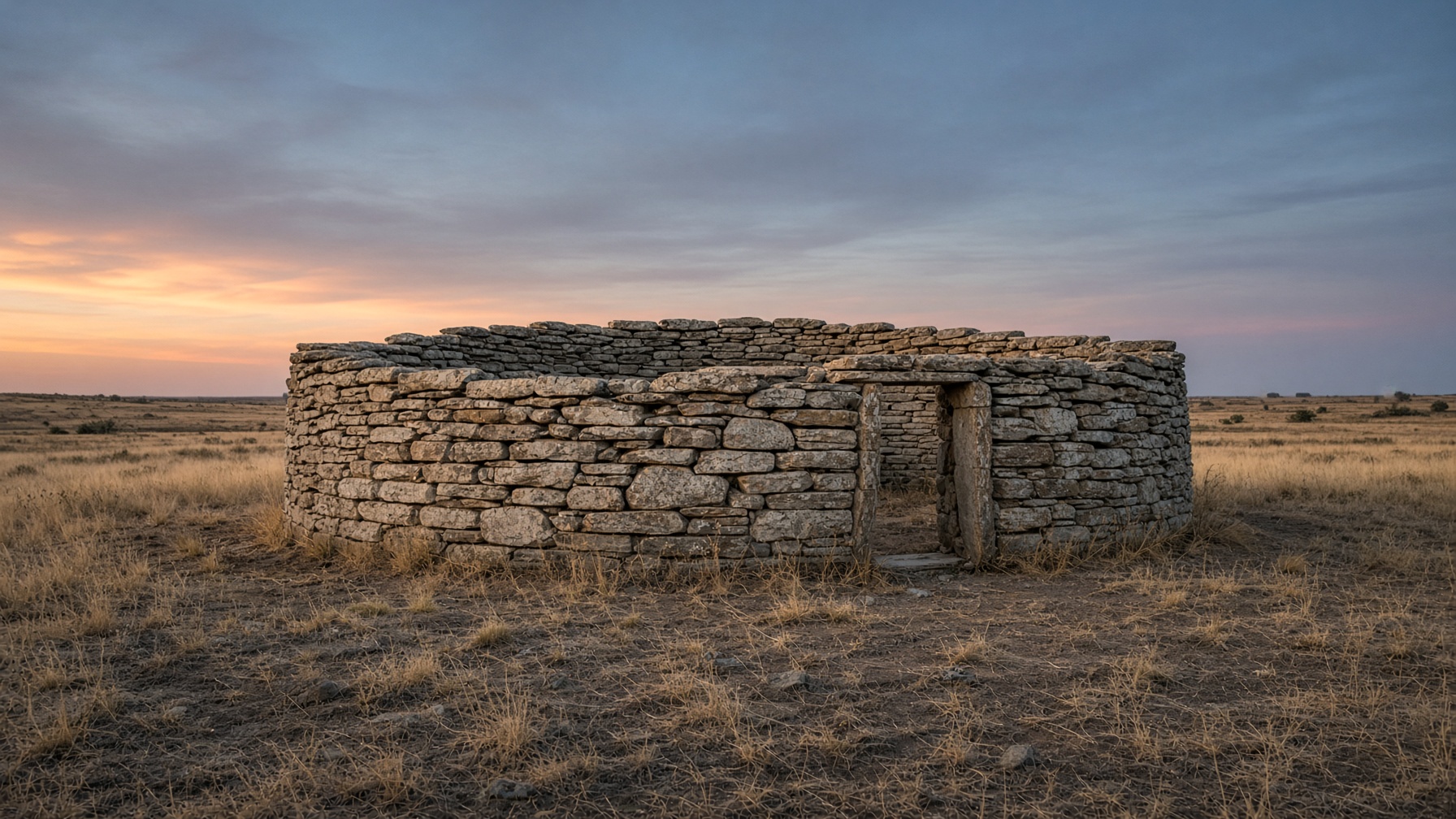
Echo
Twentieth-century literature · A temple the story will not locate
The circular ruins
Borges dreams a man into fire. Pessoa staffs an office of written men. Two crafts of making a someone who can sign.
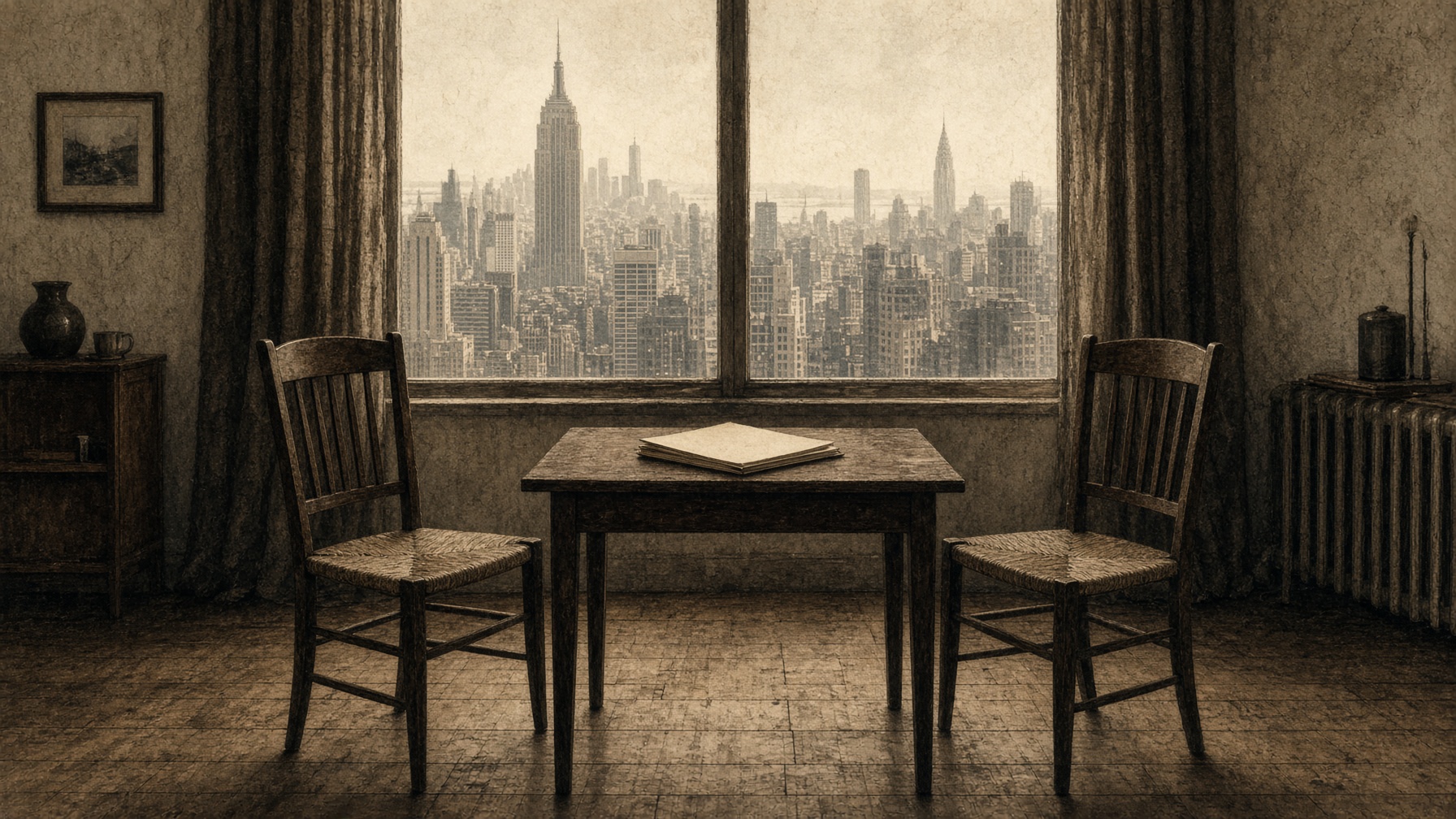
Counterpoint
Late twentieth-century New York · New York
The two-in-one
Arendt’s thinking is a solitude that is populated by two. Pessoa’s desk is populated by a firm. Not one plurality.
One question remains
Self · Who or what is having the experience?
If a life can be signed several ways, what, if anything, do the signatures share besides paper?