
Myth · Self · 1940
The Circular Ruins
A magician dreams a man with such care that the dreamed one can stand, and then learns the cost of that care.
- A temple the story will not locate
- Twentieth-century literature
- 34.60°S 58.38°W
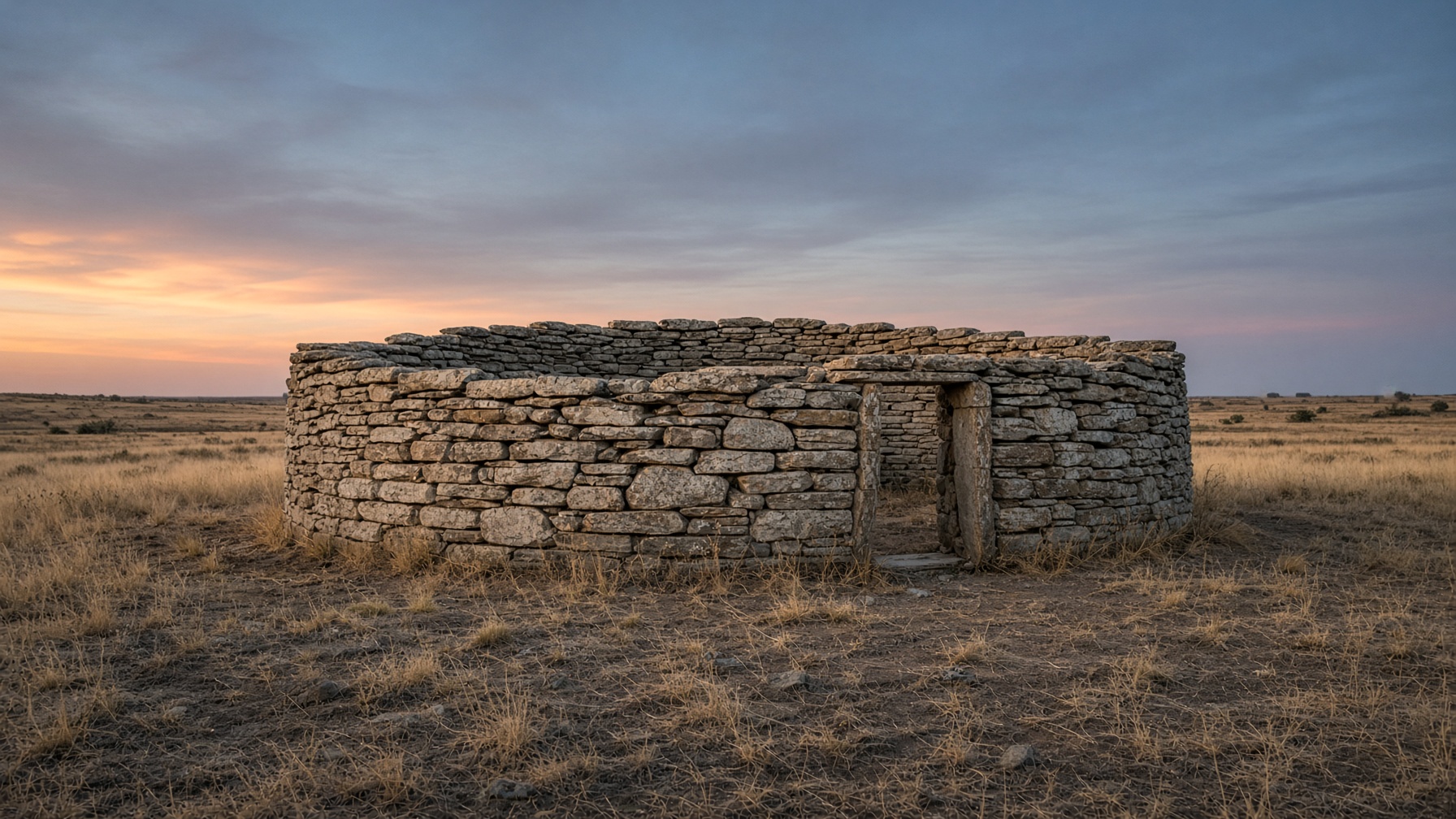
Plate · Generated interpretation
Listen · Eve
0:00 / —:—
A man arrives from the south at the circular ruins of an abandoned temple. He sleeps. He intends to dream a human being, in meticulous detail, and to make the dream real. The first dreams are chaotic. He begins again, more strictly, like a teacher, like a god of anatomy. A boy takes form, is instructed, is sent into the world believing himself flesh. Then a fire comes to the ruins, and the magician walks into it. The flames do not burn him. He understands, with humiliation and relief, that he too is someone’s dream.
Jorge Luis Borges, “Las ruinas circulares,” first published in 1940, later in Ficciones. It is fiction. It is also a machine for thinking about making minds: older than the computer, younger than the Golem and the nested dreams of idealism.
The horror is not that the world is unreal. It is that unreality can be careful, paternal, and incomplete. The dreamed boy is protected from knowing what he is. The dreamer is not granted the same mercy. Consciousness, in the story, can be conferred, inherited, and mistaken about its ontological rank.
Readers now hear simulation, nested virtual worlds, the ethics of creating aware AI. Borges did not write a research program. He wrote a fable that those programs cannot help walking through. The fable is not evidence that we are dreamed. It is a clarification of what it would feel like to find out.
A word
dream
Old English drēam once meant joy, music, revelry; the vision-in-sleep sense is later. Borges’s sueño holds sleep, dream, and the wish to create.
Distant echoes

Echo
Warring States China · The state of Song, traditionally
Once he dreamed he was a butterfly
Zhuangzi will not decide. Borges decides, and the decision is a humiliation. Two temperatures of the same doubt.

Echo
Postwar Britain · Manchester, on the page of Mind
The imitation game
Turing asks if we can tell. Borges asks what happens when we cannot tell about ourselves. One is a test; one is a fate.

Another language
Early twenty-first century · A stage in California, then the feed
A public bet on simulation
A contemporary engineer’s remarks about base reality. Borges is not his source. The fable was already waiting.
One question remains
Self · Who or what is having the experience?
If you learned you were dreamed, would the learning count as waking, or as a more precise sleep?