
Science · Self · 1972
Before the Mark Is a Face
Eighty-eight children are placed before a mirror. Recognition, if that is the word, arrives late, and not as a theory of self.
- Infant observation, reported from the University of North Carolina, 1972
- Early 1970s laboratory
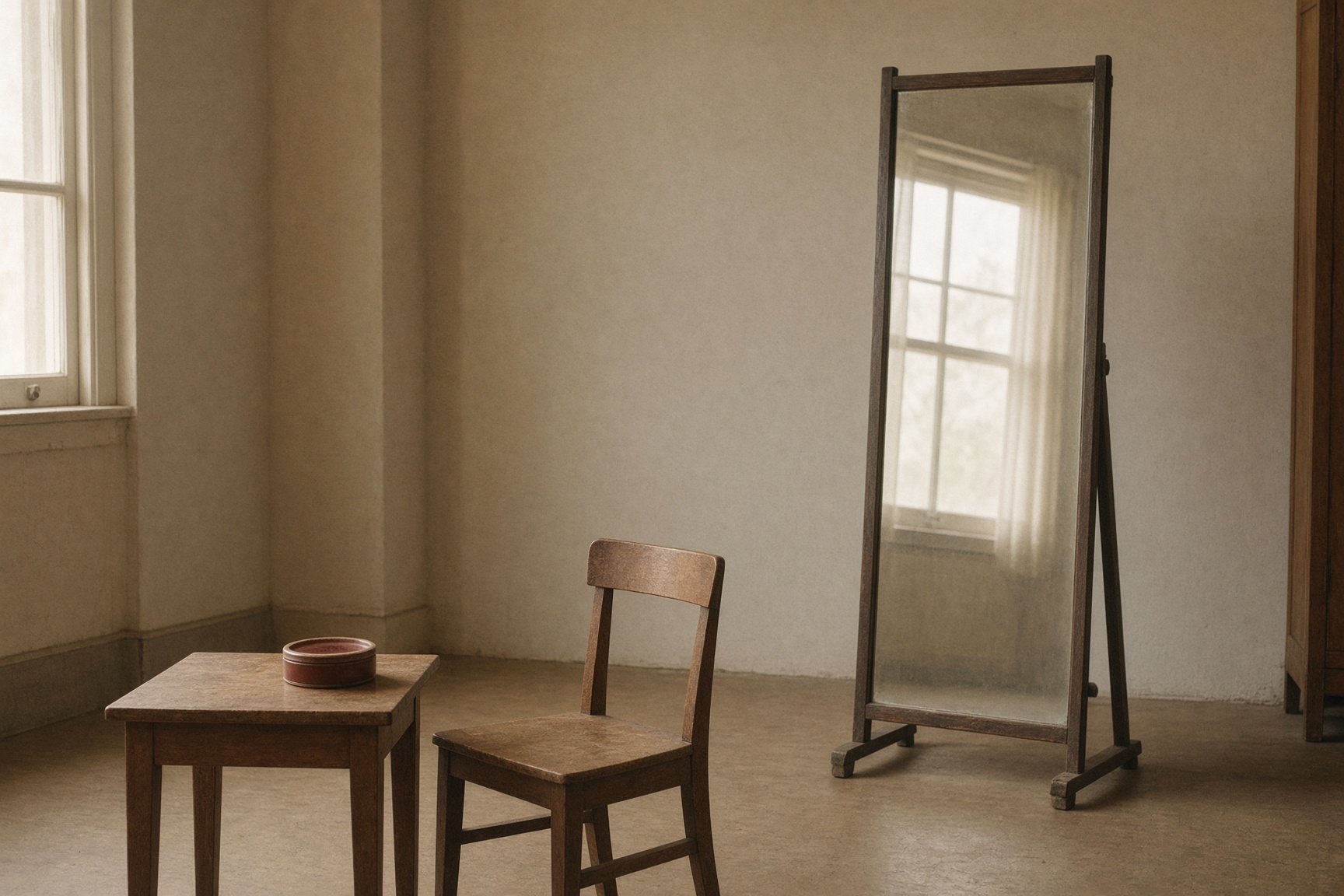
Plate · Generated interpretation
The glass holds a window. Who did you expect to be sitting there?
Listen · Eve
0:00 / —:—
A child who is not yet two sits in front of a standing mirror. On the nose, where that child cannot see it without the glass, there is a mark of rouge. Beulah Amsterdam is not asking the child what a self is. She is watching what the child does. The paper is 1972, in Developmental Psychobiology. The sample is eighty-eight children between three months and twenty-four months.
Amsterdam was a developmental psychologist writing from the University of North Carolina. Two years earlier, Gordon Gallup Jr. had put a similar mark on chimpanzees. That is a neighboring method, not this nursery. She is working with human infants, in an age range that still includes children who treat a reflection as a playmate and children who have begun to treat it as connected to their own body. The paper’s title is exact: “Mirror self-image reactions before age two.” Reactions. Not revelations.
The method is an objective code of behavior before the glass. A mark the child has not seen applied is the observer’s trick. What Amsterdam reports is a sequence, not a single lightning. First, prolonged and repeated looking. From about six through twelve months, a sociable playmate in the glass: approaching, smiling, making noise at the image as if at another infant. Then wariness. From about fourteen months, self-admiring and embarrassed behavior. Mark-directed reaching, the gesture later papers treat as “recognition,” belongs to the older toddlers, toward the end of the second year.
The youngest in the sample are three months old. They look. They do not yet treat the image as a companion. The glass is an instrument the child did not ask for. No infant is taking an examination they understand as an examination. Amsterdam is scoring what a body does in front of a surface that returns a face.
A rouge mark is a trick for the observer. The child is doing something else: noticing a discrepancy, reaching, smiling, hiding. Adults want the moment to be metaphysical. The table wants a codeable act. Many infants, being infants, do not complete a clean trial. The published sequence is what she could score.
Beulah Amsterdam, “Mirror self-image reactions before age two,” Developmental Psychobiology 5 (1972): 297–305. DOI 10.1002/dev.420050403. Gallup’s chimpanzee mark test (1970) is a neighboring method, not this sample. Michael Lewis and Jeanne Brooks-Gunn later thicken the human developmental story. None of these papers photograph an inner I.
The age trend is the finding. Younger infants treat the image as a playmate or as uninteresting. Older toddlers begin to treat it as connected to their own body. “Begin to treat” is already an interpretation of reaching.
Mirror self-recognition is a task. It is not a census of personhood. Animals that fail it are not thereby shown to be vacant. Children who have not yet passed it are not thereby shown to be selves-in-waiting only. The later popular story that a self “emerges” at the glass is a story we bring. Amsterdam reported reactions.
Distant echoes
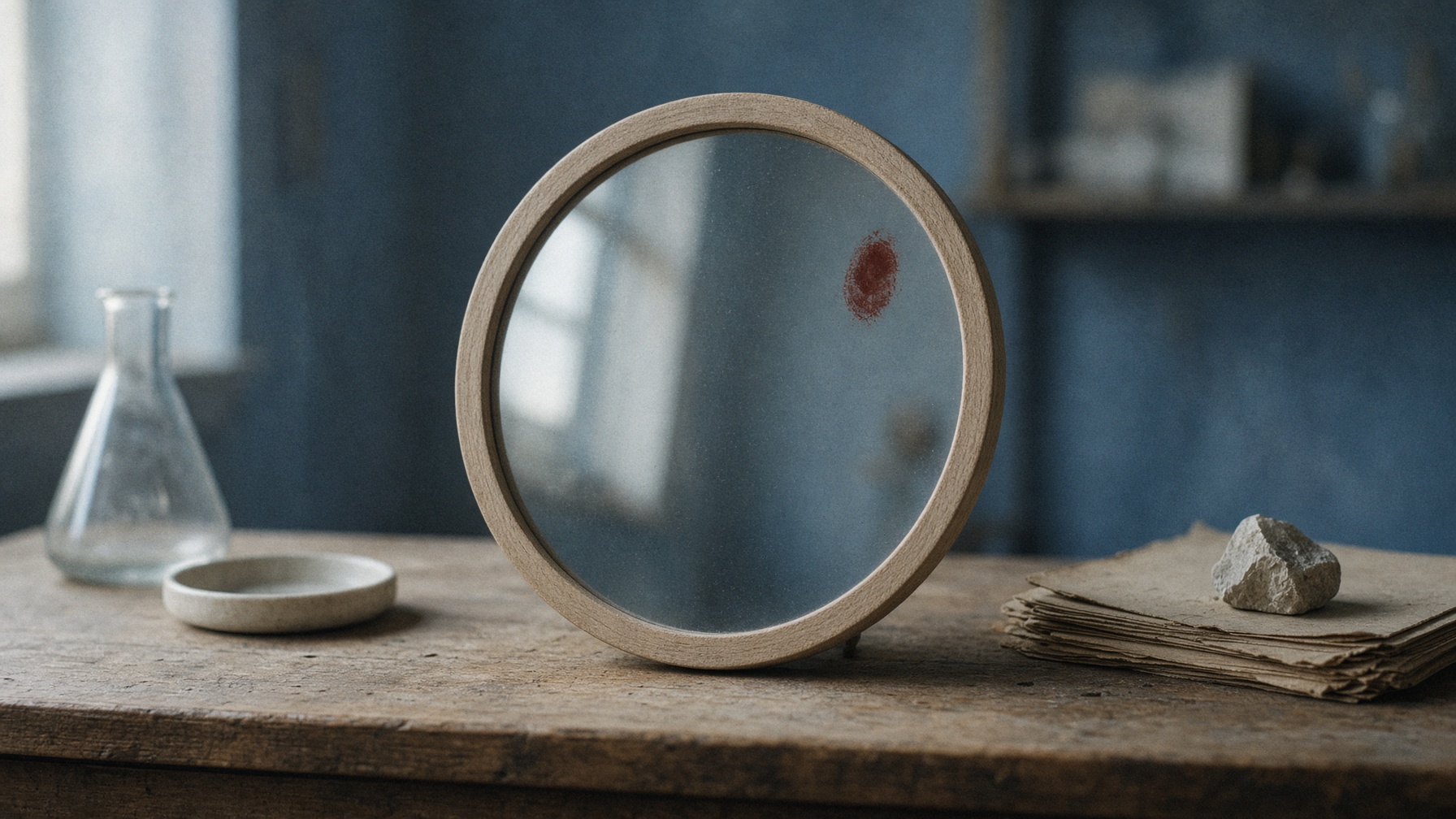
Echo
Comparative psychology · Laboratories, then field and farm
The creature at the glass
Gallup’s chimpanzees and Amsterdam’s toddlers share a method more than a conclusion. A mark is not a soul.
One question remains
Self · Who or what is having the experience?
When a child first treats the glass as herself, has a self appeared, or has a skill for using mirrors appeared, or is that distinction already too clean?