
Portrait · Knowledge · 1667
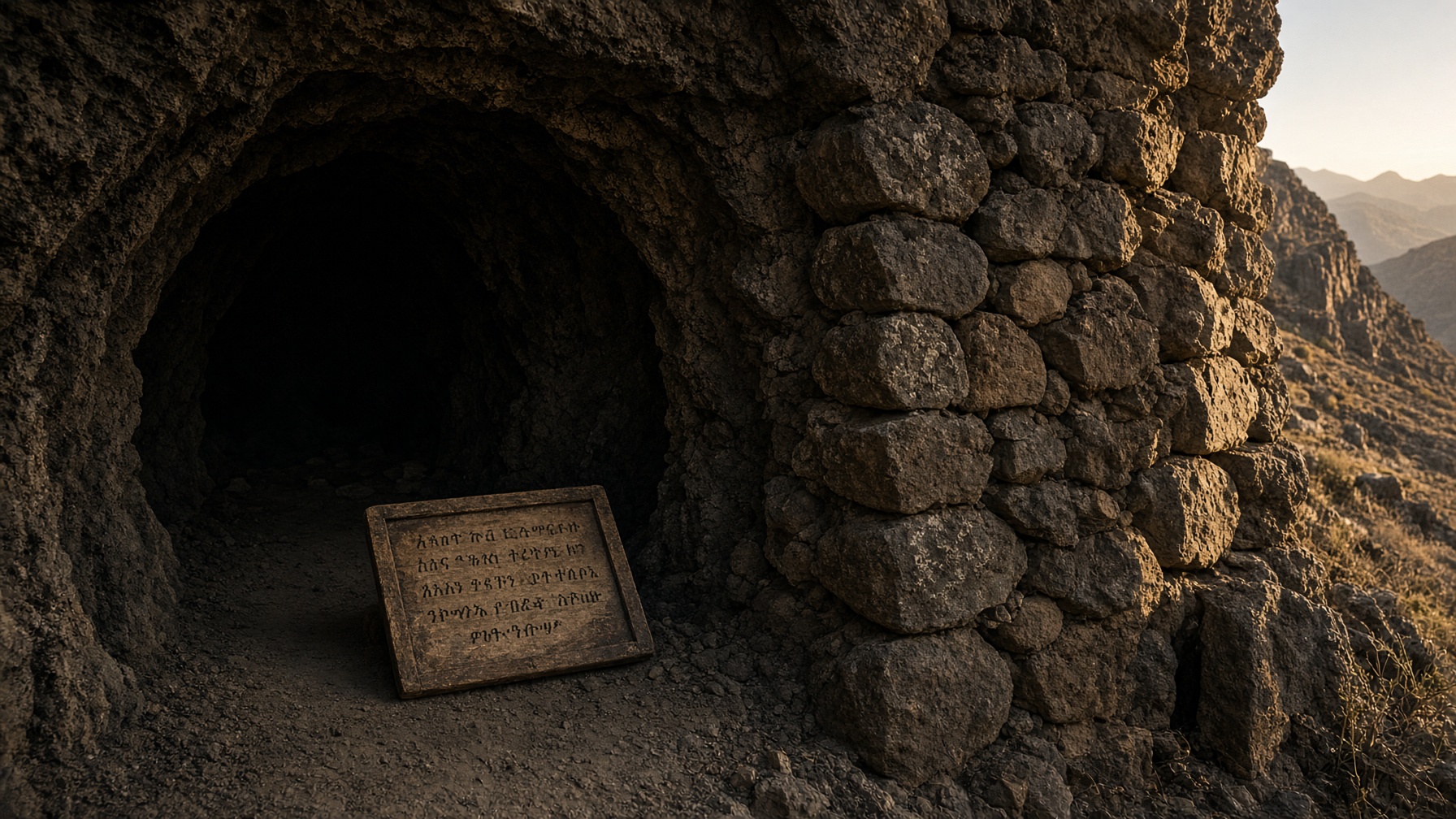
Plate · Generated interpretation
An Inquiry in Ge'ez
A treatise from the Ethiopian highlands puts reason to inherited faith. Whether its author is the man it names is itself an open scholarly fight.
- A cave of exile, in the text’s own telling
- Seventeenth-century Ethiopia, if the attribution holds
- Aksum region, approximate
A cave, a board. Who do you assume held the pen?
Listen · Eve
0:00 / —:—
The Hatäta attributed to Zera Yacob (Zärʾa Yaʿǝqob), written in Ge'ez, tells of a learned man who flees religious violence, thinks in a cave, and tests custom by the light of reason. Claude Sumner treated it as early modern African philosophy. Carlo Conti Rossini called it a forgery by Giusto d’Urbino. Getatchew Haile and Anaïs Wion still disagree. That fight is not laundered here.
The Hatäta Zärʾa Yaʿǝqob. English access through Sumner and through the ongoing Lee, Belcher, and Worku translation work. Authorship is contested in print: Conti Rossini 1920; Sumner; Wion; Haile.
If the cave is historical, the story is a man thinking against confessional war. If the cave is a nineteenth-century fiction, the story is still a Ge'ez inquiry, and the insult that “Ethiopia could not have thought this” is part of what the debate has had to answer. Both sentences can be held.
There is a text. There is a manuscript history. There is no consensus on the man. That is the present state.
Whether reason in this book is Descartes’s cousin or another animal is a comparison, not a verdict.
A word
hatäta
Ge'ez. Inquiry, examination. Not a tidy English meditation.
Distant echoes

Echo
Early modern Europe · A stove-heated room in Germany, later on the page from the Netherlands
Beside the stove
Two seventeenth-century inquiries. One is securely authored. One is not. The dates rhyme. The archives do not.
One question remains
Knowledge · What counts as knowing?
If a mind on the page cannot be securely named, what kind of knowing is it still possible to do with the page?