
Myth · Perception · Later lives of a seventh-century monk
Water, Then a Skull
A later Korean Buddhist biography says a monk drinks rain in the night and finds, at dawn, that the bowl was a skull. The mind had sweetened the water. Treat the tale as a tale.
- A roadside shelter, in the biographies
- Silla Korea, in later telling
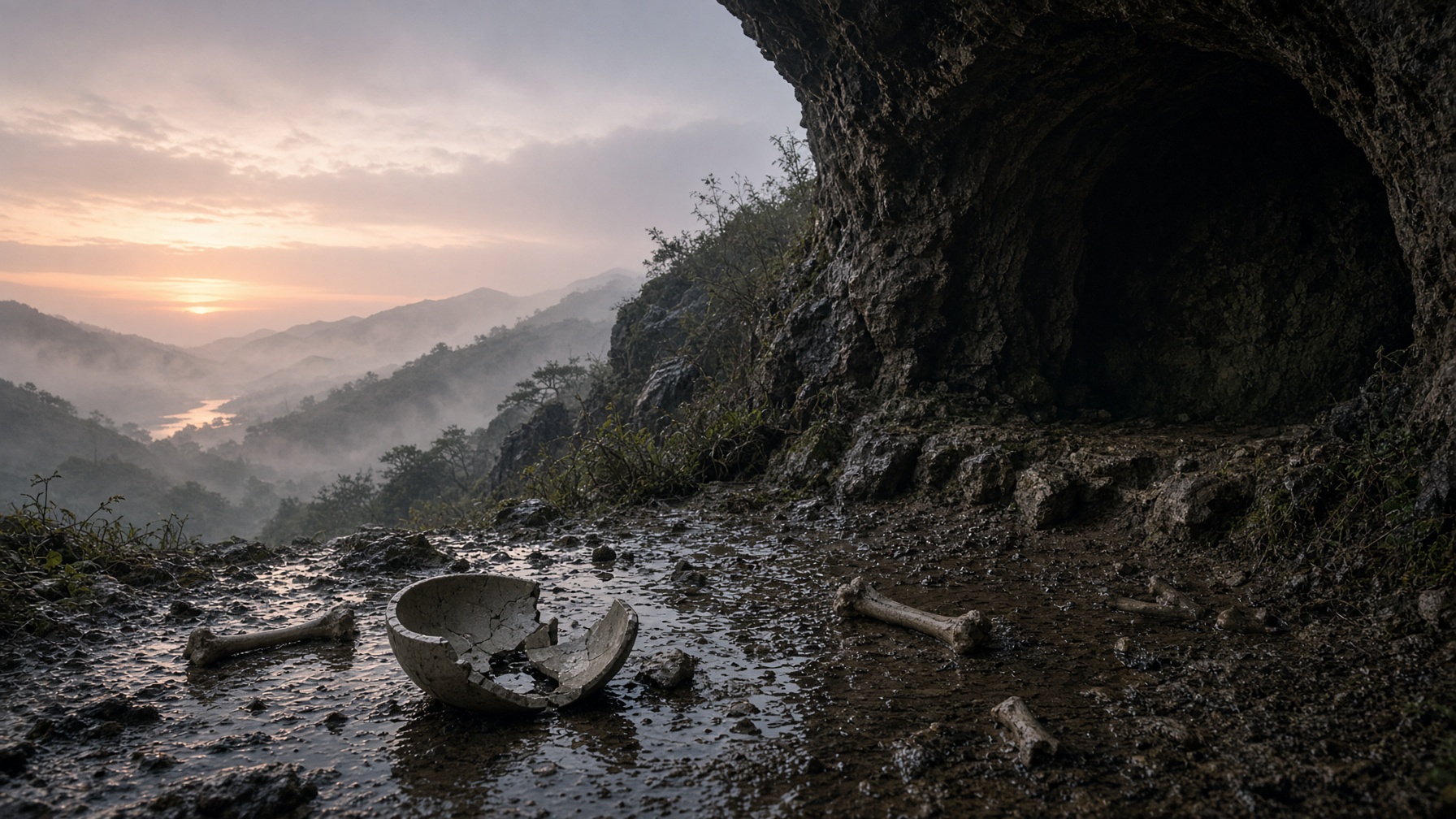
Plate · Generated interpretation
A bowl at dawn. What was last night’s drink, before the story names it?
Listen · Eve
0:00 / —:—
Wonhyo (617–686) is a major Silla Buddhist writer. A famous awakening story, told in later biographies, places him and Ŭisang in a tomb on the way to China: thirst, a gourd of sweet water, dawn, a skull. He turns back, the story says, because the mind makes the world. Wonhyo’s own treatises exist. This scene is hagiography.
Later lives of Wonhyo, not an autobiographical note. Distinguish the historical writer from the tomb tale. Robert Buswell and others treat the corpus; the skull story is popular, not a laboratory.
The tale is doing Buddhist work: appearance depends on the mind that takes it. That is a teaching. It is not evidence that a particular night in 661 happened as told.
Hagiography is not falsehood merely because it is hagiography. It is a different office from chronicle.
Whether a mind that can sweeten a skull can also be trusted with the rest of the world is the tale’s pressure.
Distant echoes

Echo
Warring States China · The state of Song, traditionally
The butterfly
Zhuangzi wakes unsure. Wonhyo, in the tale, wakes too sure of the night’s water. Two dawns.
One question remains
Perception · What does sensing give us?
If the sweet and the foul can be one drink, what was the thirst?