
Portrait · Knowledge · 1691
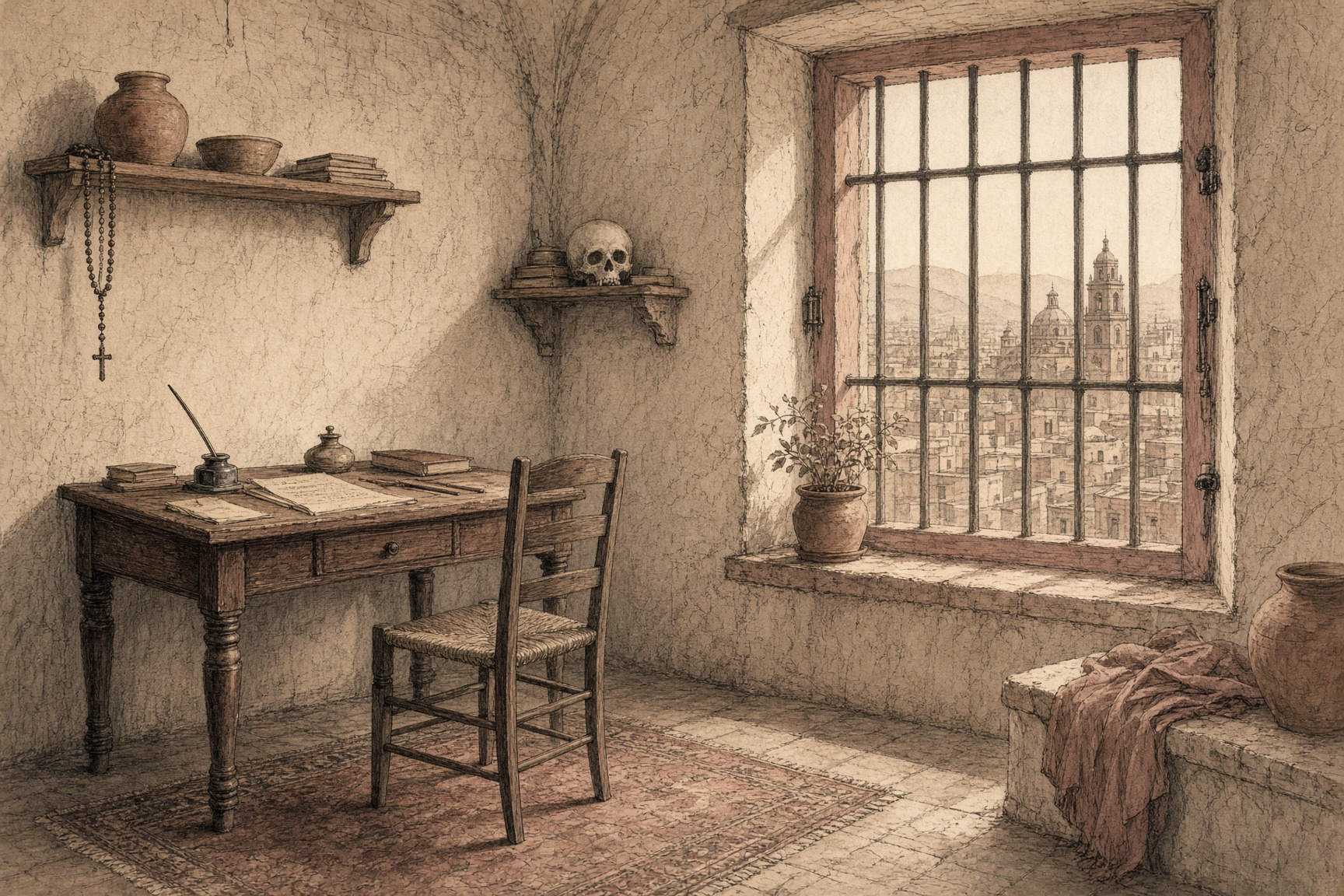
Plate · Generated interpretation
The Hunger to Know
A nun in New Spain defends a woman’s right to letters. The mind, in her argument, is not a luxury of men.
- Mexico City, convent of San Jerónimo
- Baroque New Spain
- 19.43°N 99.13°W
A barred window. What is the hunger in the room?
Listen · Eve
0:00 / —:—
Mexico City, convent of San Jerónimo, 1 March 1691. Sor Juana Inés de la Cruz dates a letter to “Sor Filotea de la Cruz.” Filotea is not a nun. She is a mask. Behind it is Manuel Fernández de Santa Cruz, bishop of Puebla, who had published, the year before, Sor Juana’s critique of a sermon by the Jesuit Antônio Vieira, “Carta atenagórica,” and then written to her as a sister, praising her wit and telling her to leave letters that were not her office. The Respuesta is her answer. It is not a European salon. It is New Spain, a convent, a woman answering a bishop in a woman’s name.
She was born Juana Inés de Asbaje y Ramírez de Santillana, at San Miguel Nepantla. Baptismal records put her in 1651; later tradition sometimes says 1648. As a child, she later writes, she followed a sister to school and begged to be dressed as a boy so she might study at the university. She was not. She cut her hair, she says, as a forfeit when a lesson was not learned. She served in the viceregal court. She entered religious life, first briefly with the Carmelites, then, in 1669, with the Hieronymites at San Jerónimo, where a nun might keep a library and a desk.
“Respuesta de la poetisa a la muy ilustre Sor Filotea de la Cruz,” dated 1 March 1691. Spanish text: Wikisource. English: Electa Arenal and Amanda Powell, The Answer / La Respuesta. The “Carta atenagórica” (1690) is the occasion. Primero sueño is another work, a long poem, not this letter. This plate is the letter.
The “Respuesta” is autobiography used as argument. She tells Filotea that she does not study in order to write, still less to teach, which in her would be arrogance, but only to see whether by studying she may become less ignorant. She describes a hunger that would not wait for permission: thought arriving while she cooked, while she was forbidden books, the mind going on with its work in the kitchen. Descartes had a stove. Sor Juana has a convent kitchen and a library she will be pressured to set aside. The hunger to know is the same word only in English.
I do not study in order to write, and even less to teach (which, in me, would be excessive arrogance) but rather only to see if by studying I become less ignorant.
This is not “consciousness” as a research program. It is intellect as a lived claim under constraint. The letter cites Paul, Jerome, and learned women the Church had already allowed, not as a modern rights pamphlet, but as a nun answering in the only language that could be heard. Later readers will call it feminist. She is defending a vocation.
What followed is less clear than the letter. The “Respuesta” was not printed in her lifetime in the way the “Atenagórica” had been. In the last years she was pressed to set study aside. Estimates of a library of thousands of volumes belong to later counting; the pressure on the desk is not in doubt. She died on 17 April 1695, in an epidemic, having nursed sisters in the convent. The letter remains. The hunger is the letter’s word, not the house’s.
Whether a mind can be forbidden its food, and still be called a mind, is the letter’s heat.
Distant echoes
Echo
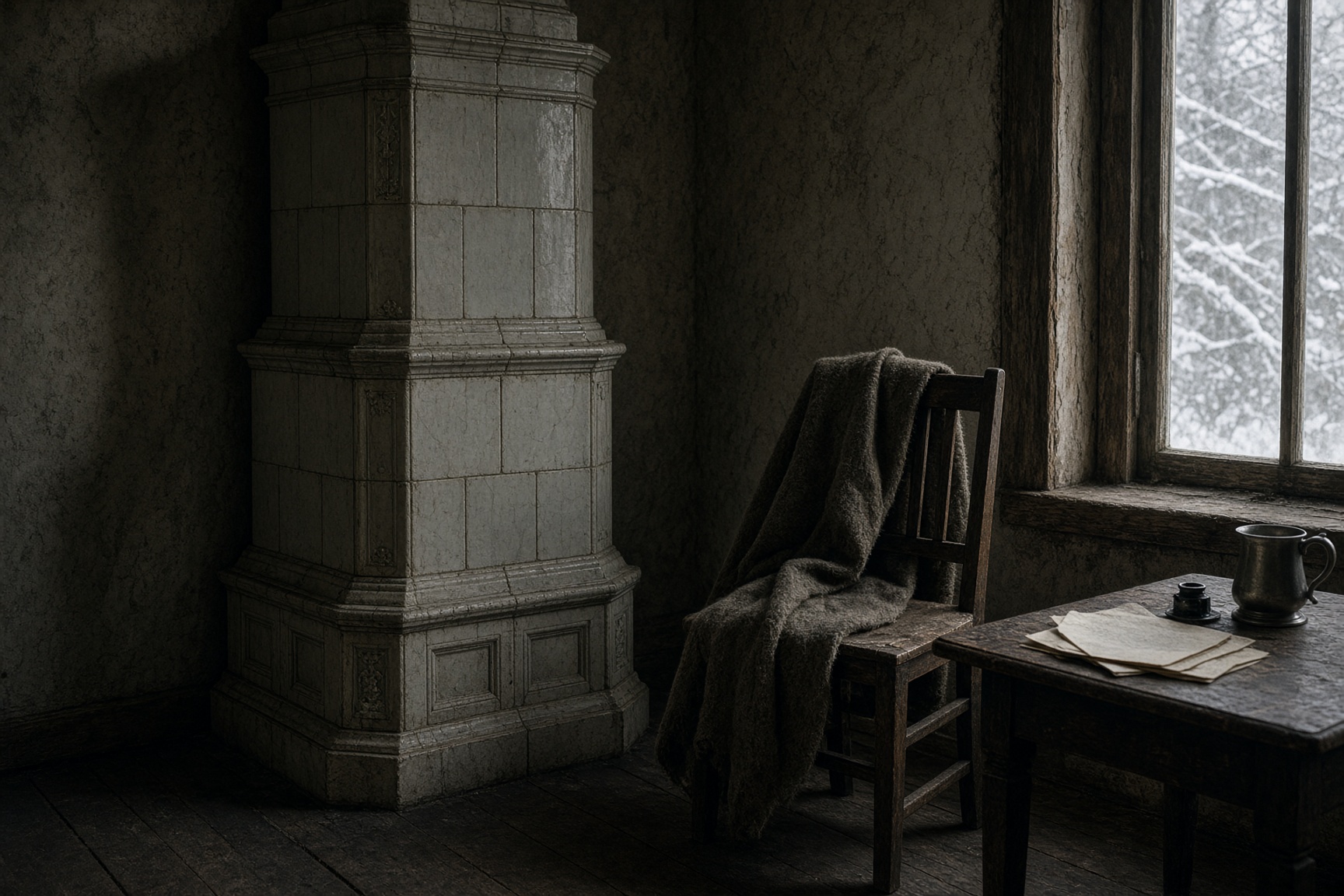
Early modern Europe · A stove-heated room in Germany, later on the page from the Netherlands
Beside the stove
Two seventeenth-century rooms of thought. Only one had to justify being in the room.
Echo
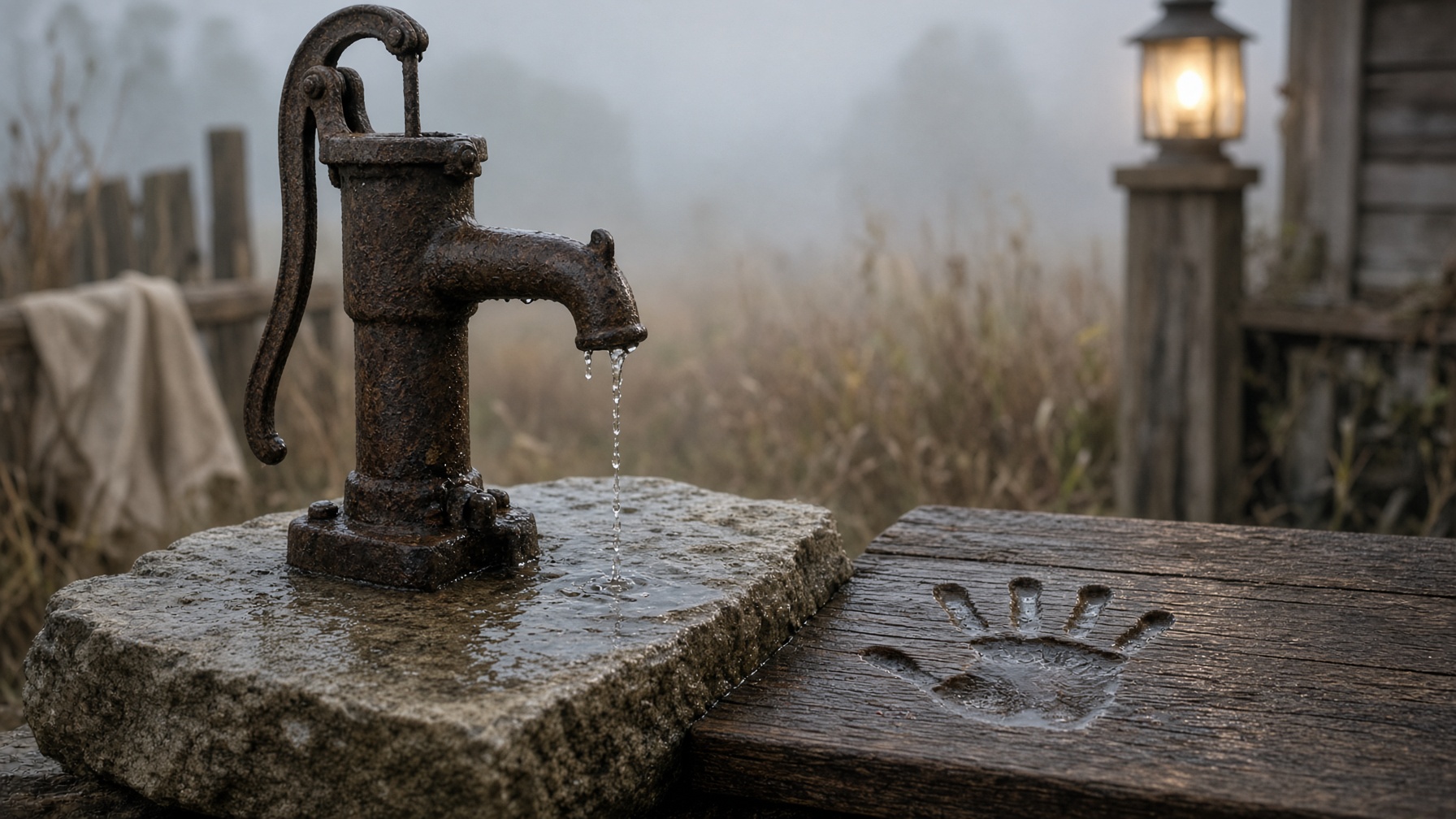
Late nineteenth-century Alabama · Ivy Green, Tuscumbia
The word at the pump
Helen Keller’s water is a first word arriving from outside. Sor Juana’s hunger is a mind that will not wait for a first word to be allowed. Two scenes of language under constraint.
One question remains
Knowledge · What counts as knowing?
If study is a hunger, what is a mind that is told not to eat?