
Event · Memory · 1913
The Cake Was Not a Theory
A narrator dips a small cake in tea and a whole childhood arrives without being asked. The book is a novel, not a paper on memory.
- Paris, remembering Combray
- Early twentieth-century France
- 48.86°N 2.35°E
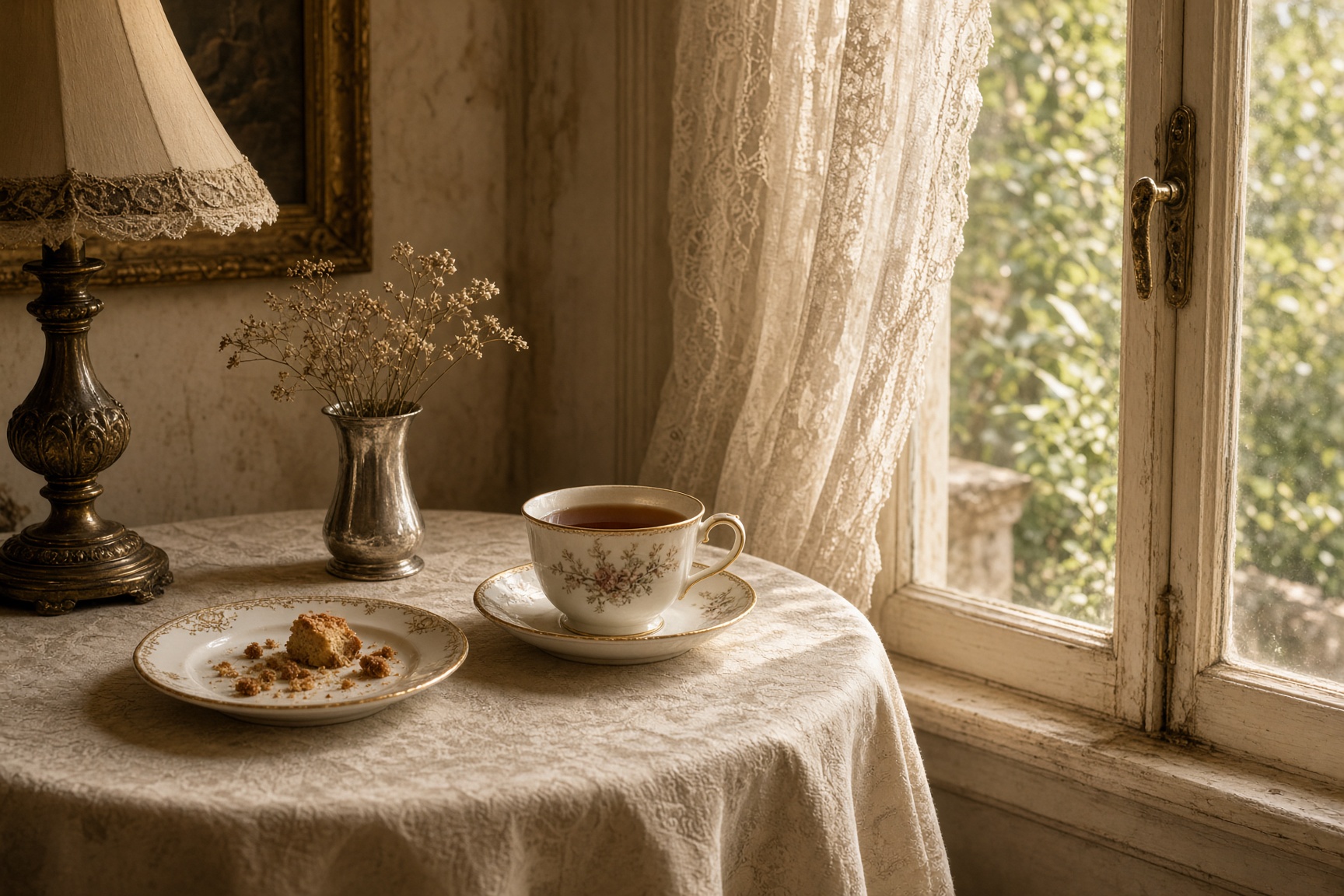
Plate · Generated interpretation
Before any childhood is named, notice what the cup is doing to the table.
Listen · Eve
0:00 / —:—
Marcel Proust, Du côté de chez Swann (1913), the overture: tea, a petite madeleine, and Combray rising. Later volumes will spend thousands of pages trying to understand what that rise was. Neuroscience likes the scene. The novel does not owe it a hippocampus.
À la recherche du temps perdu, beginning 1913. Gutenberg and other public-domain doors exist for early volumes. The madeleine is a literary device inside a fiction with a memoir’s manners.
Involuntary memory, as Proust’s readers name it, is not a retrieval you command. It is an arrival. It is not “the real memory” as opposed to the willful kind. Both are work on the page.
Tulving’s episodic memory, Proust’s madeleine, Augustine’s palace: three rooms. Do not knock the walls through.
Whether what arrives is the past, or a present that has learned to feel like a past, is the novel’s open work.
Distant echoes

Echo
Late antiquity · Hippo Regius
The palaces of memory
Augustine walks rooms inside the skull. Proust is ambushed in the mouth. Two architectures of remainder.
One question remains
Memory · What remains, and what is reconstructed?
When a taste returns a world, is the world stored, remade, or something English has no tidy word for?